Rio Abajo Conservation Area preserves wildlife habitat near Belen
South of Belen, Rio Abajo protects bosque and uplands, with public access planned around habitat restoration, invasive plant removal and a rare river-edge sanctuary.
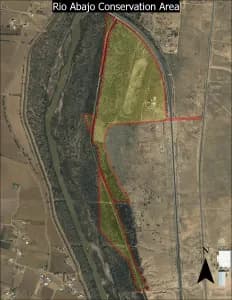
South of Belen, the Rio Abajo Conservation Area protects a 240-acre stretch of Rio Grande land where bosque and uplands meet. Its goal is to preserve the land as a wildlife sanctuary while keeping public access in place.
A close-to-home river landscape
The property was donated in 2006 and is held in joint conservatorship with the New Mexico Department of Game and Fish. Rio Abajo is a defined conservation tract with a public mission south of Belen.
The area’s mix of bosque and uplands gives it value beyond a single habitat type. Along the Rio Grande corridor, that means space for birds, mammals and native plants, while also giving families and weekend visitors a nearby place to experience the river landscape without leaving Valencia County. The site’s public-access goal makes it one of the county’s few close-to-home outdoor spaces where conservation and recreation are meant to coexist.
Why the bosque matters
Rio Abajo sits inside the broader Middle Rio Grande system, where the bosque is the most extensive remaining cottonwood forest in the Southwest. Native cottonwoods in the bosque cannot regenerate without periodic flooding, so the health of the corridor depends on river processes that are often disrupted by dams, channel changes and development pressure.
When the land remains connected to the river, it can function as habitat, educational space and a buffer against the kind of urban encroachment that has narrowed riparian land across central New Mexico.
What restoration looks like on the ground
The restoration plan includes removing nonnative species such as salt cedar and Russian olive, then replanting native grasses, trees and shrubs. That work is central to how the site can support wildlife over time, because invasive woody plants can change water use, shade, and the structure of habitat.
In 2005 testimony on New Mexico riparian restoration, state funding for salt cedar and Russian olive control had totaled more than $10.1 million over four years, and more than 34,000 acres had been treated to date. Rio Abajo uses invasive removal and native planting as the basic tools of restoration.
A property with a complicated land history
Rio Abajo also has a complicated administrative history. A New Mexico Game and Fish presentation dated October 2, 2014, in Socorro listed the Rio Abajo property at 192 acres, owned in conjunction with the Valencia County Soil and Water Conservation District and purchased in 2009 with state funds under the Natural Lands Protection Act.
That same presentation listed the management issues that came with the land: cultural resources, limited wildlife habitat potential, access to the Rio Grande, water rights, a utility right of way tied to a Public Service Company of New Mexico high-voltage line, and urban encroachment. It also referenced discussion of split ownership and termination of ownership.
The acreage figures in the district materials and the 2014 commission presentation do not match. Rio Abajo has been shaped by layered transactions, agency agreements and public-purpose decisions over time.
What matters for visitors and nearby neighborhoods
Rio Abajo keeps a river-edge landscape in public hands for people in Belen, Los Lunas and the surrounding valley. The district’s stated long-term goal is not a developed recreation complex or a commercial attraction. It is a wildlife sanctuary with public access, supported by habitat work that protects the bosque while keeping the land open to the community.
In a county where access to open space can be limited by private ownership, water-rights debates and development pressure, a protected parcel south of Belen gives local families a place where the Rio Grande corridor is still being managed for habitat first, with public use built around that purpose.
This article was produced by Prism’s automated news system from verified source data, official records, and press releases, then run through automated quality and moderation checks before publishing. The system is built and supervised by the people who set the standards it runs under. Read our full AI policy.
Did this article answer your question?