Iron Furnace Trail Run Draws Runners to Lake Hope State Park
After a 2025 rain cancellation, the Iron Furnace Trail Run returned to Lake Hope State Park on April 4, testing parking limits and delivering a spring economic boost to McArthur.
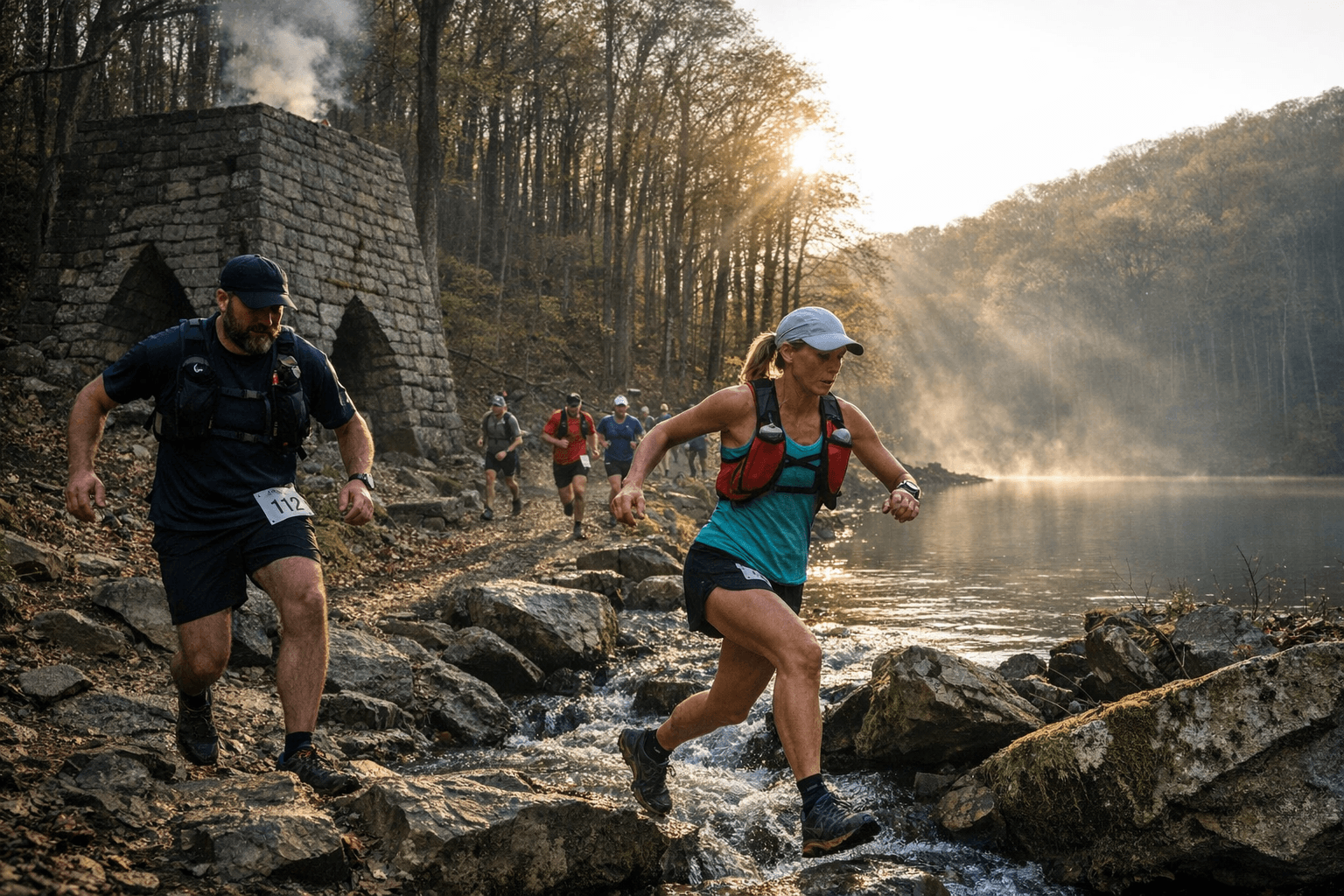
The Iron Furnace Trail Run made its return to Lake Hope State Park on April 4 after a rain-forced cancellation erased the 2025 event, sending competitors back into Zaleski State Forest for the first time in two years and putting renewed pressure on the narrow roads, limited parking, and publicly maintained trails that absorb the weight of organized racing in one of Ohio's most remote state parks.
Directed by Michael Owen of SEOTR Events (Southeastern Ohio Trail Runners), the race pushed competitors over 13.1 miles of single-track threading through Lake Hope State Park and Zaleski State Forest, navigating rock, roots, stream crossings, and ridge-top trail through the hollows and narrow ridges of the Appalachian plateau, a course that has earned a reputation as one of Ohio's hardest half marathons. A 4.5-mile option ran the same rugged terrain on a shorter loop.
The 2026 field carried demand built up from the previous year. When Owen cancelled the 2025 race just before the start due to persistent rain, he wrote that it was, "aside from the covid cancellations in 2020, the first time in 12 years of directing races" that he had been forced to cancel an event. Participants were offered the option to roll their entry forward to 2026, meaning many runners who had trained through two Ohio winters arrived at the starting line on April 4.
Start and finish operations ran from the Lake Hope State Park Beach Parking Lot, the location SEOTR moved the race to beginning in 2025 after years of staging at the Lake Hope Lodge. The switch was driven by logistics: parking attendants position vehicles across multiple lots near the beach area on race morning, and SEOTR's race materials explicitly urge competitors to carpool, an acknowledgment that a concentrated arrival of regional runners can overwhelm the roads and lot capacity of a park not designed for large-scale event staging.
Those same runners represent a concentrated burst of spending in McArthur and the surrounding county. Competitors traveling from Columbus, Dayton, and other regional metros for well-known southeastern Ohio trail events bring fuel stops, restaurant orders, and overnight lodging with them, converting a Saturday race into modest but real revenue for communities with few large economic drivers. Lake Hope and Zaleski together form one of Vinton County's primary outdoor tourism assets, and events like the Iron Furnace Trail Run extend that draw onto regional trail-running calendars throughout the year.
SEOTR launched in 2014 with the Iron Furnace Trail Run as its founding event. Owen's organization has since grown to direct seven annual races drawing more than 1,400 runners per year across southeastern Ohio, with trail maintenance built into its stated mission alongside race production.
The April 4 event marked the 11th running of the race, counting the COVID cancellation in 2020 and the 2025 rain-out. Each year the course reopens to competition, trail systems that have spent the winter recovering get a fresh round of foot traffic, and the question of whether spring maintenance can keep pace with April race calendars falls back to Ohio DNR staff at Lake Hope and the Zaleski State Forest office.
This article was produced by Prism’s automated news system from verified source data, official records, and press releases, then run through automated quality and moderation checks before publishing. The system is built and supervised by the people who set the standards it runs under. Read our full AI policy.
Did this article answer your question?