Lawmakers back Momnibus push to improve Black maternal health
Raleigh lawmakers backed a $20 million Momnibus as Wake County data showed Black women facing the county’s highest severe pregnancy-complication rates.
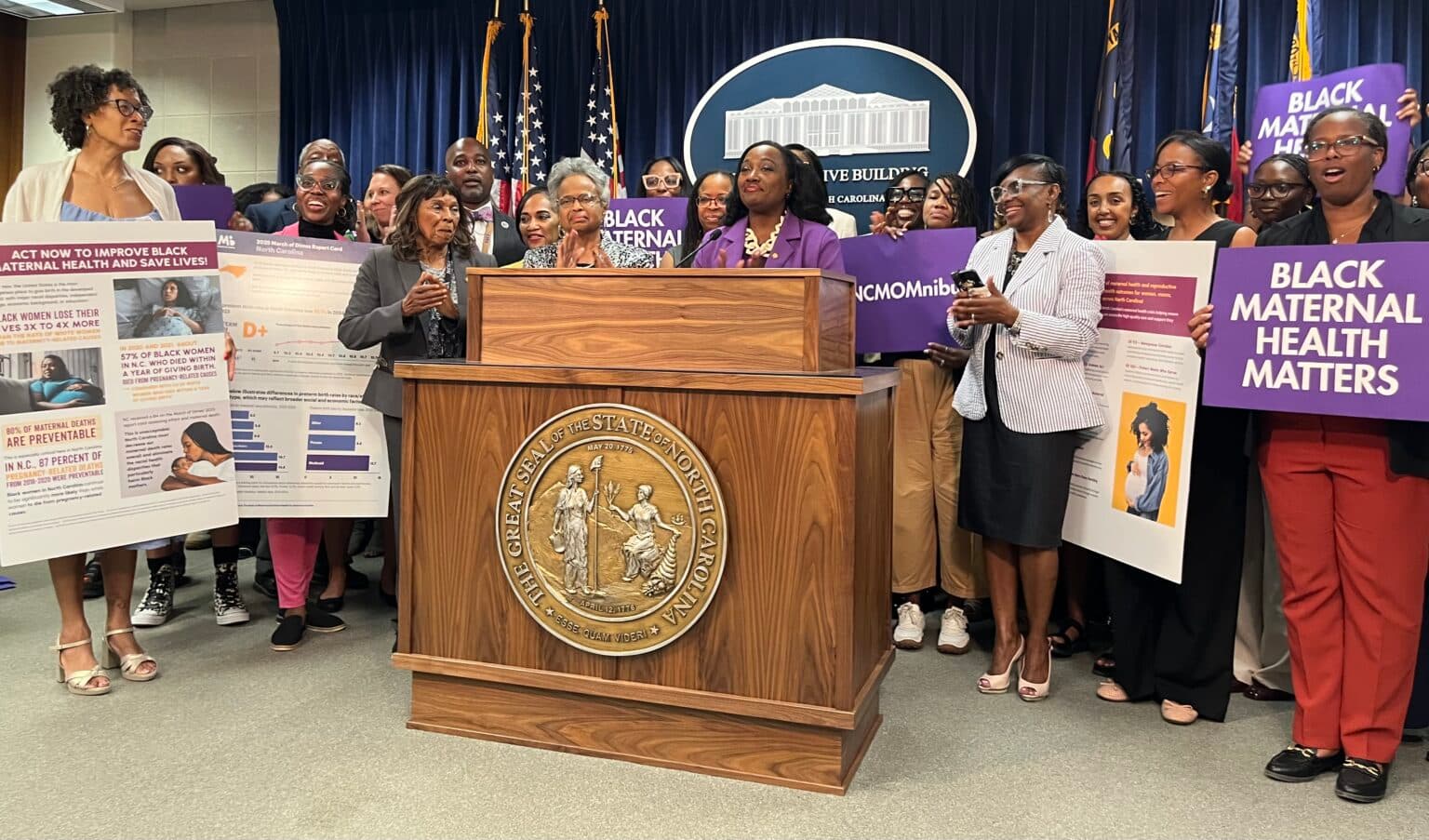
Black mothers in Wake County still face the state’s sharpest maternal-health gaps, and lawmakers gathered at the North Carolina General Assembly in Raleigh on June 10 to press a bill they say would move money, training and referrals into the places where care breaks down. The latest Momnibus package would direct roughly $20 million toward community-based maternal-health programs, implicit-bias training for providers, lactation training at HBCUs, perinatal education grants and a Momni-Bus to reach rural communities.
The pitch is especially pointed in Wake County, where the county’s Maternal and Infant Mortality Workgroup says Black women had the highest rates of severe pregnancy complications between 2020 and 2024. That makes the proposal more than a Capitol-side statement. It speaks to whether women in Raleigh, Cary and the rest of the county can get earlier prenatal attention, faster referrals during high-risk pregnancies, safer delivery care and the follow-up support many families need after birth.

The package is the latest version of a long-running effort by Wake-area lawmakers Natalie Murdock, Sydney Batch and DeAndrea Salvador in the Senate, along with Monika Johnson-Hostler and Maria Cervania Hawkins in the House. Earlier legislation, MOMnibus 3.0, was filed March 25, 2025 as Senate Bill 571 and sent to the Senate Rules committee the next day. Its findings said the United States has the highest maternal mortality rate in the developed world, that most pregnancy-related deaths are preventable, and that North Carolina does not require implicit-bias training for health-care providers.
The 2026 version, filed as SB 906 and HB 1195, adds the Ciji Graham Initiative Act, named for a North Carolina police officer who died while 12 weeks pregnant. It would expand care navigation, telehealth, a statewide provider hotline and standardized referral pathways for high-risk pregnancies, changes supporters say could help close the gap between a warning sign in an exam room and the next level of care.
The numbers driving the push remain stark. North Carolina’s maternal mortality rate was 44 deaths per 100,000 live births in 2021, up from 22 in 2019. The rate for Black women was 69.9 deaths per 100,000 live births, compared with 26.6 for white women. NCDHHS says its dashboard tracks those inequities by race, ethnicity, age, education, Medicaid status, region and county, and 2025 infant data showed Black babies dying at three times the rate of white babies.
At the rally, Murdock said, “We will continue filing the North Carolina MOMnibus until outcomes for Black moms and their children improve.” In a state capital where health policy is written a few miles from the hospitals and clinics it shapes, the bill’s measure will be whether it changes care before, during and after birth.
This article was produced by Prism’s automated news system from verified source data, official records, and press releases, then run through automated quality and moderation checks before publishing. The system is built and supervised by the people who set the standards it runs under. Read our full AI policy.
Did this article answer your question?