Colorado River hits record low in Yuma, raising water fears
Yuma’s river flow has fallen to a record low, and local growers warn that the next water fight could hit farms, jobs and irrigation reliability.
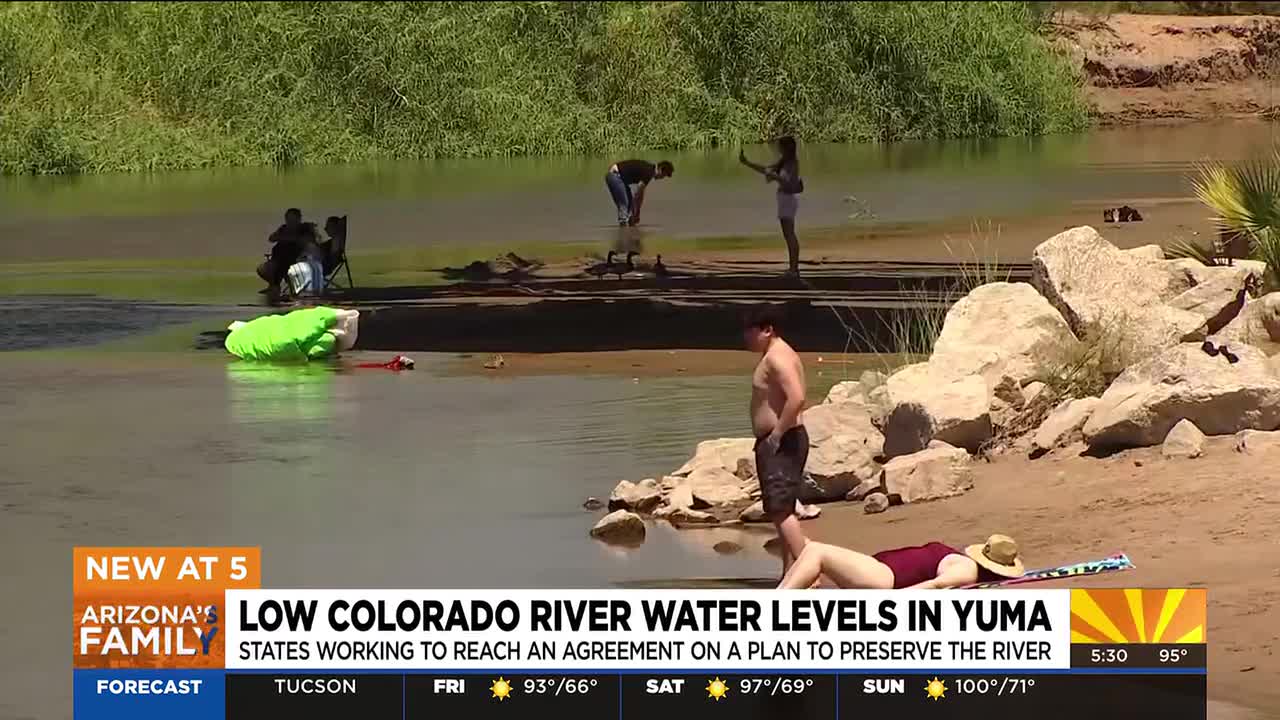
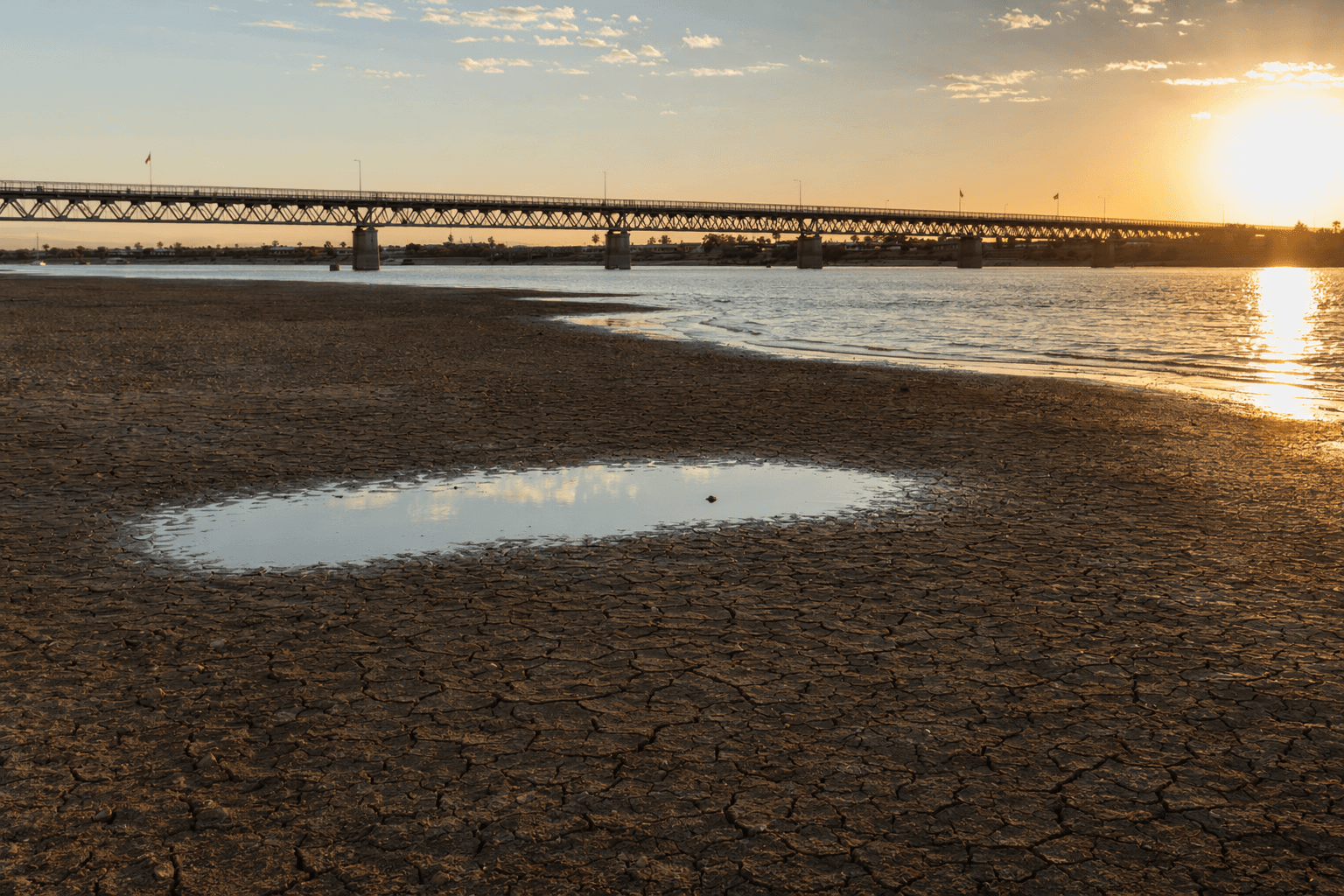
The Colorado River is running at a record low rate at Yuma, a warning sign for an economy that depends on dependable water for farms, packing sheds and the winter vegetable harvest.
USGS monitoring data show the river at Yuma has fallen to its lowest recorded flow rate, adding pressure to a county where agriculture is built around senior Colorado River rights and efficient irrigation. A University of Arizona Water Resources Research Center factsheet published Feb. 25 said Yuma County’s location on the historical floodplains of the Lower Colorado and Lower Gila rivers helped turn it into one of Arizona’s most prominent agricultural centers, with water rights and management decisions now central to its future.
The concern is not abstract. ABC15 reported that Yuma County has about 210,000 acres of farmland, including roughly 170,000 acres devoted to vegetables. KTAR reported that Yuma supplies most of the nation’s winter vegetables, with about 80% of U.S. winter vegetables coming from the area. For growers, any uncertainty around river deliveries quickly becomes a question of irrigation reliability, labor demand and whether the region can keep its position as the country’s cold-weather produce hub.
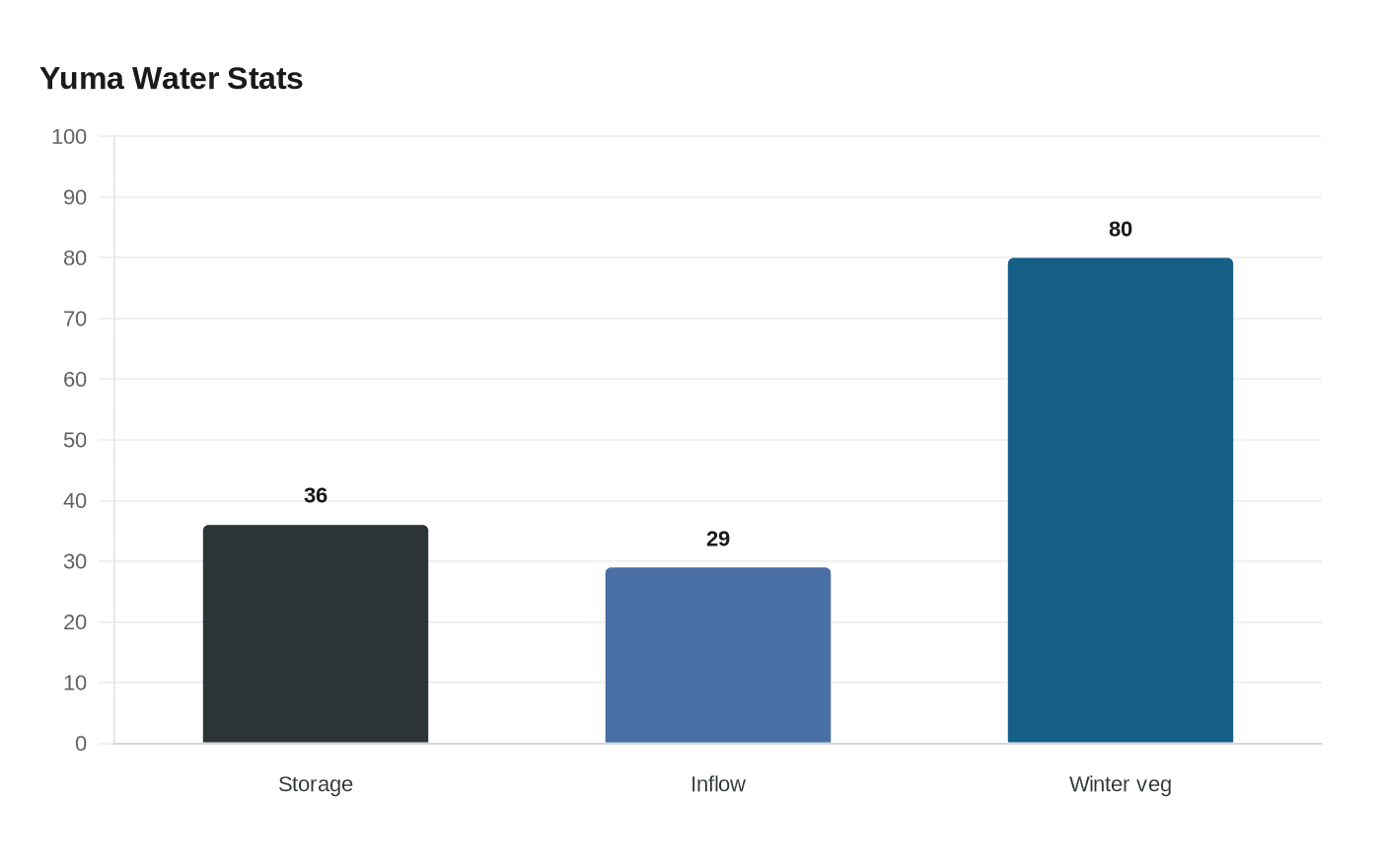
Federal officials are also sounding alarms across the basin. On April 17, the Bureau of Reclamation said long-term drought, the lowest winter snowpack on record and record-breaking March heat had pushed Colorado River system storage to about 36% of capacity. The agency said Lake Powell’s minimum probable inflow for water year 2026 was forecast at 2.78 million acre-feet, or 29% of the historical average, and warned the reservoir could drop below the 3,490-foot minimum power pool level by August without intervention. Reclamation said it planned to move water from Flaming Gorge Reservoir and reduce Lake Powell releases to help stabilize the system.
Yuma officials are trying to protect the county’s place in that system. Mayor Doug Nicholls and the Yuma City Council submitted formal comments asking federal leaders to safeguard Yuma’s senior water rights. Nicholls said the process was happening at the “11th hour” and warned that less water would affect farming as well as power generation, parks and recreation tied to the river.
The broader stakes are still being negotiated. The current Colorado River operating rules expire at the end of 2026, and basin states have yet to reach consensus on what comes next. The WRRC factsheet said a local Technical Advisory Committee included Yuma County, the Bureau of Reclamation, the Yuma County Water Users Association and the Wellton-Mohawk Irrigation District, underscoring how local and federal decisions are being coordinated as the river enters another volatile season.
Know something we missed? Have a correction or additional information?
Submit a Tip