Cooling technology tested in Yuma fields could help beat extreme heat
A cooling system in Yuma open fields could help crops survive desert heat and protect a farm economy that produced $4.4 billion in 2022.
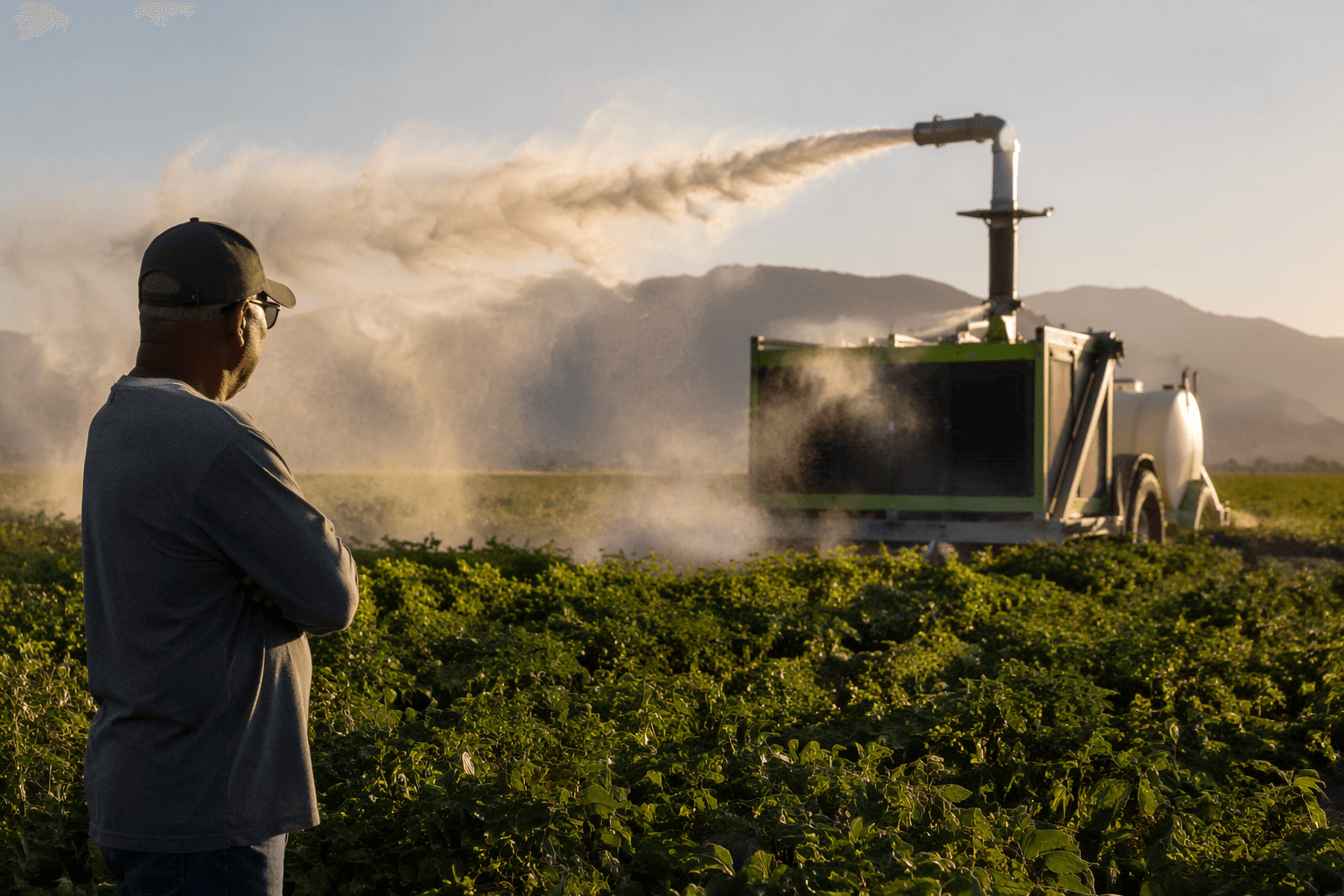
A large-scale evaporative cooling system is being tested in Yuma open fields, aiming to give growers a more controlled growing environment without moving production into a greenhouse. In a county where summer heat can reach 124 degrees and winter vegetables anchor the economy, the trial carries stakes well beyond one piece of equipment.
The potential payoff is local and immediate. University of Arizona research says Yuma County agriculture and agribusiness generated $4.4 billion in economic activity in 2022, while Yuma agriculture alone produced $1.3 billion in direct sales. That makes heat protection more than a farming issue. If crops hold up better through extreme temperatures, the benefit can reach harvest crews, packing sheds, truck drivers and the businesses that depend on farm income.
The system is being evaluated at the University of Arizona Yuma Agricultural Center, which operates two sites, Valley Farm four miles west of Yuma and Mesa Farm four miles south of the city. The Valley Farm headquarters covers 274 acres and supports research on lettuce, broccoli, cotton and small grains. That footprint helps explain why Yuma has become a logical place to test a cooling method meant for open fields rather than enclosed growing spaces.
That distinction matters in a region built on field production. Local and university sources describe Yuma as the Winter Lettuce Capital of the World, and one agricultural source says that between October and April, 90% of the U.S. and Canada’s leafy greens and other vegetables are grown there. A system that can moderate heat in open rows could help preserve yield and quality during the months when the region supplies much of North America’s produce.
The climate pressures are not abstract. National Weather Service records show Yuma’s all-time high temperature is 124 degrees, set on July 28, 1995. For field workers and growers alike, that level of heat turns every summer into a test of endurance, water use and crop survival.
Water efficiency gives Yuma a strong starting point, but also raises the bar for new technology. A University of Arizona summary said Yuma accounted for 18% of crop sales in the Colorado River Basin while using only 8% of the irrigation water. Arizona Farm Bureau figures put Yuma’s economic water productivity at $1,581 per acre-foot of water used, compared with a basin average of $692. Any cooling system that helps protect those gains without driving costs too high would draw close attention from smaller growers as well as larger operations.
University of Arizona research materials describe Yuma as a global leader in precision agriculture, and the Yuma Center of Excellence for Desert Agriculture has helped link scientists with local growers. In Yuma, the next test for desert farming may be whether open fields can be cooled well enough, and affordably enough, to keep the county’s crops, workers and farm economy productive through hotter years ahead.
This article was produced by Prism’s automated news system from verified source data, official records, and press releases, then run through automated quality and moderation checks before publishing. The system is built and supervised by the people who set the standards it runs under. Read our full AI policy.
Know something we missed? Have a correction or additional information?
Submit a Tip