Early virus outbreak threatens Yuma County melon crops
A warm winter let virus-carrying pests spread early through Yuma melon fields, threatening yields, labor schedules, and packing work across the county.
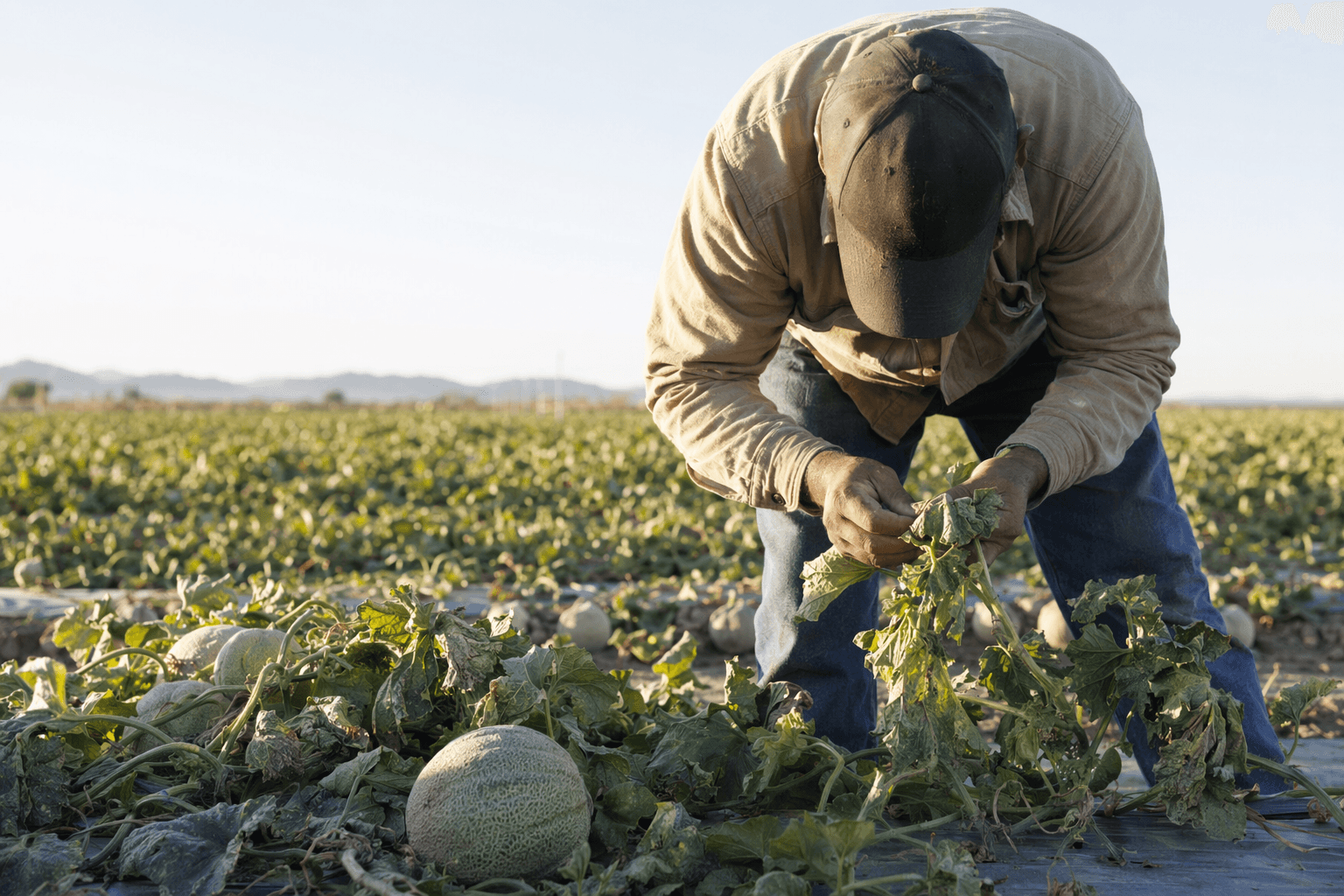
An early virus outbreak is pushing into Yuma County’s melon fields just as spring production is supposed to hit stride, raising the risk of lower yields, disrupted harvest schedules and added pressure on packing and labor crews. Agricultural experts say the outbreak moved in sooner than usual because winter stayed too warm to knock back the insects that carry cucurbit viruses.
University of Arizona Yuma County Cooperative Extension specialists said the unusually warm winter created a better environment for virus-carrying pests to survive and multiply before growers normally face that level of pressure. A University of Arizona agricultural IPM notice said the lack of hard freezes this winter allowed key cucurbit vectors to arrive early across Yuma County. That matters in a region where a virus can quickly move from an agronomic problem to an economic one, especially when crews are already counting on a fast spring melon run.
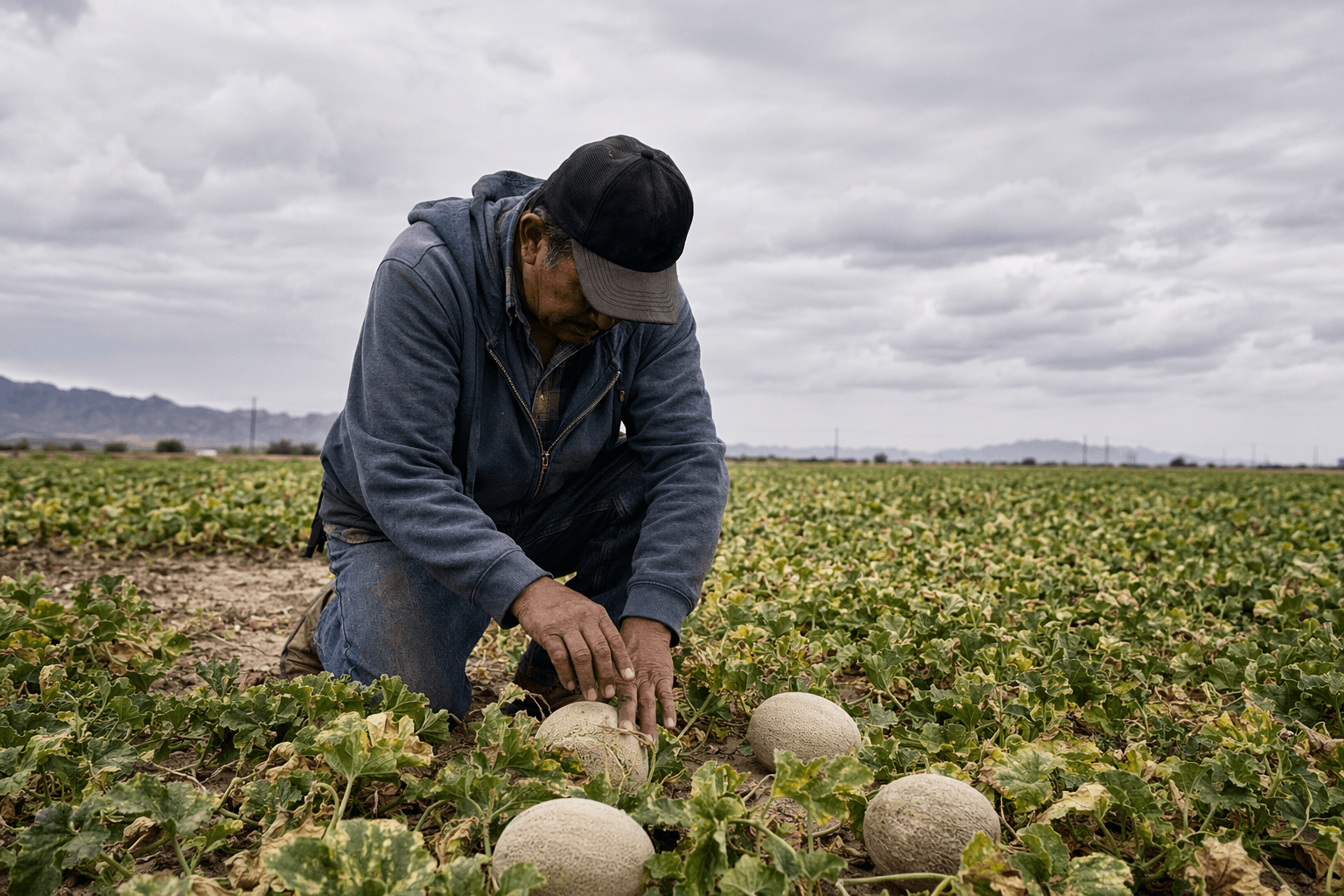
The timing is especially sensitive because Yuma Valley has been running hot. University of Arizona researchers said the valley has seen an unusually warm spring pattern since late February 2026 for daily maximum temperatures and since January 2026 for nightly lows. Extension specialists say that kind of weather can speed crop development, raise irrigation demand and complicate pest management at the exact moment growers need fields to stay clean and productive.
The risk is not new, but this year’s timing is. University of Arizona guidance says sweet potato whitefly has vectored cucurbit yellow stunting disorder virus and cucurbit chlorotic yellows virus in fall melons in Arizona and southern California since 2007. In Yuma, where cantaloupe growers often try to fill contracts as early as possible in spring to capture higher prices, any slowdown can cut into the narrow window that gives local fruit its market edge.
That is why the outbreak carries consequences beyond the field. If the virus continues spreading, growers may have to keep monitoring more aggressively, treat more often or replant parts of fields, all of which can change labor needs and strain packing and shipping schedules. Yuma County agriculture and agribusiness contributed $4.4 billion in economic activity to Arizona and $3.9 billion to Yuma County in 2022, according to a University of Arizona study, underscoring how much rides on a strong melon season.
USDA National Agricultural Statistics Service materials also show vegetables and melons remain a major part of Yuma County agriculture. University of Arizona says the region is among the world’s most productive areas for leafy vegetables and melon crops, which is why a virus moving through spring melon fields is never just a farm problem. It is a countywide economic warning sign.
Know something we missed? Have a correction or additional information?
Submit a Tip