New olive orchard takes root amid solar fields near Dateland
Dateland’s first olive orchard is planting roots beside a 1,411-acre solar project, a sign Yuma County farms may be chasing both water savings and new income.

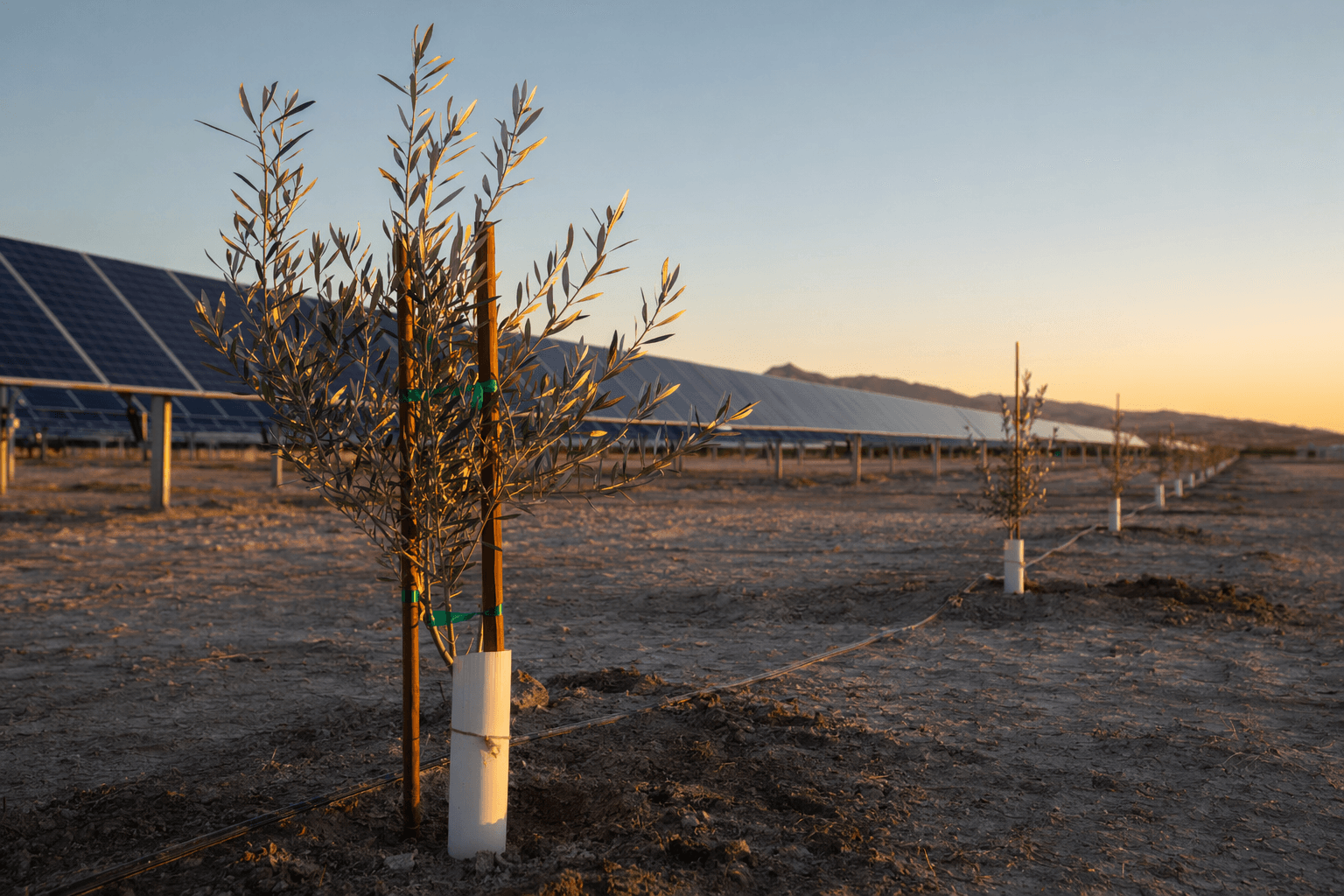
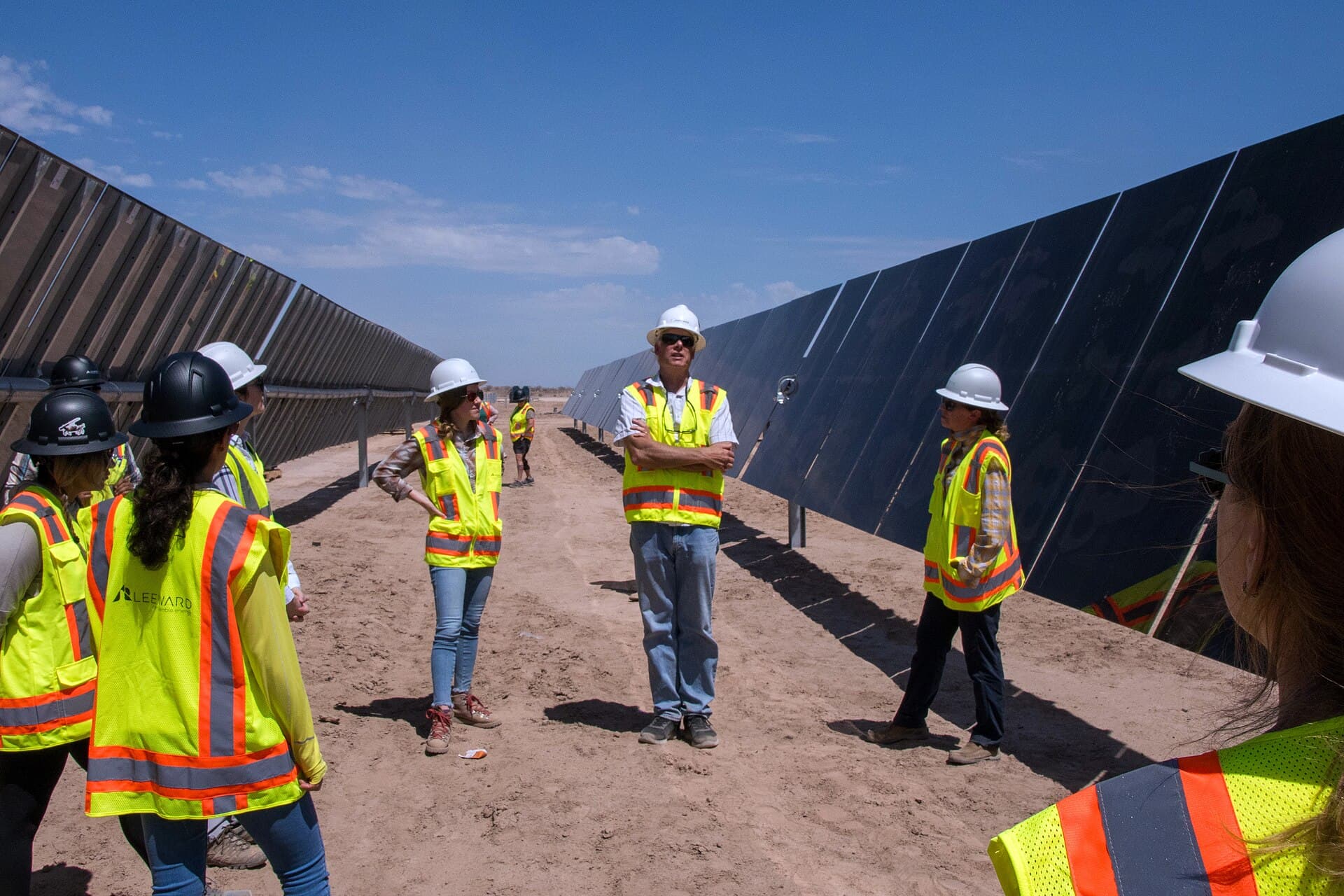
An olive orchard has taken root beside a 1,411-acre solar project near Dateland, giving eastern Yuma County a new test case for how desert land can earn money when water is tight and power development is moving fast.
The Elisabeth Solar Project, approved by the Bureau of Land Management in April 2025, was planned on public land in the Agua Caliente Solar Energy Zone about 12 miles north of Dateland and roughly 65 miles east of Yuma. The utility-scale facility is expected to generate up to 270 megawatts of electricity and store up to 300 megawatts of battery power, making it one of the larger energy developments in the area.
What makes the orchard notable is not just that olives are being planted in the desert. It is that the orchard became Dateland’s first such venture, in a place long identified with date farming rather than olives. Dateland Date Gardens has helped define the community for decades with Medjool dates, so the arrival of an olive orchard marks a clear diversification move in a part of Yuma County where farming, land use and energy production are increasingly overlapping.
That overlap is becoming more visible across the county. BLM first sought public comments on a draft environmental assessment for the Elisabeth project in July 2024, then held a virtual public meeting in August 2024 before moving ahead with approval. The project’s placement in a federally designated solar-energy zone reflects how public land in the desert is being steered toward large power facilities even as local growers continue to look for crops that can survive heat and competition for water.
The business question for Yuma County is whether olives can become a stronger desert crop than traditional plantings in a landscape where every acre has value. Solar development already has a foothold near Dateland and Hyder through White Wing Ranch Solar, another sign that land once viewed mainly through an agricultural lens is now being measured against energy revenue as well.
For Dateland, the orchard is more than a new planting. It is a signal that the county’s next agricultural model may be built on fewer assumptions about what the desert can grow, and more on what the desert can still profitably support.
This article was produced by Prism’s automated news system from verified source data, official records, and press releases, then run through automated quality and moderation checks before publishing. The system is built and supervised by the people who set the standards it runs under. Read our full AI policy.
Did this article answer your question?