12 Practical Pre-Launch Checks for Dungeons & Dragons Kickstarter Projects
Nail the numbers and the logistics before you launch: spell out Kickstarter month, release date, page count, and your fulfillment plan so backers know exactly what they’re buying.
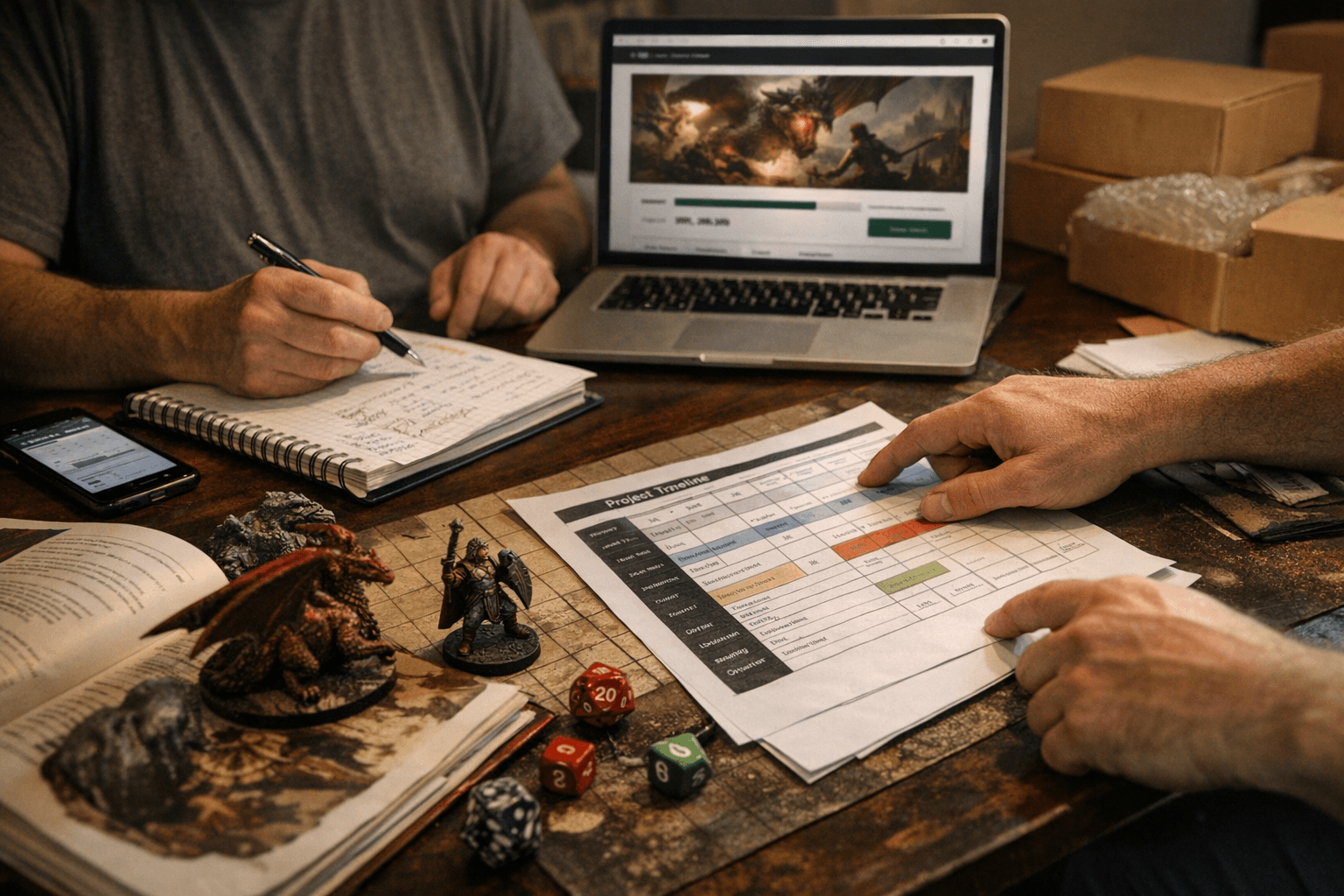
Kick off the campaign text with immediate, player-facing facts: the Kickstarter month, an expected release date window, exact page count for books, and whether you’ll offer a free trial window or quickstart PDF. From my own Kickstarter runs, campaigns that put those four facts front and center reduce backer questions by half and set realistic expectations for shipping and delivery.
Check 1 — front-page player facts Say “June launch, 160-page core book, digital quickstart available for two weeks post-launch, estimated retail release Q4” instead of vague promises. These concrete data points are the lede players scan first; include them in the first paragraph of your project and your campaign video caption so they show up in feeds and thumbnails.
Check 2 — licensing and SRD compatibility If your project is Dungeons & Dragons–adjacent, verify SRD 5.2 compatibility or other legal routes before copywriting art and mechanics. Decide whether you’ll use Open Game Content, the newer SRD rules, or wholly original mechanics, and document which sections reference SRD material in your FAQ to avoid takedown headaches later.
Check 3 — stretch goals that don’t break the bank Design stretch goals around scalable, low-risk items: add-on PDFs, alternate covers, or unlocked map packs rather than expensive minis or mass-manufactured boxed sets. Model each goal with a per-unit cost and a fulfillment multiplier—if a $5,000 goal unlocks a new hardcover, calculate additional printing, warehousing, and extra shipping before you hit “celebrate.”
Check 4 — a watertight fulfillment plan Draft a fulfillment plan before you launch: who will handle packing, where bulk inventory will sit, and which fulfillment partner you’ll use for EU/UK and AUS/NZ shipments. Backers respond to clarity—naming the company or at least describing the split (e.g., “US fulfillment via partner X, EU split via Y”) cuts anxiety and reduces refund requests.
Check 5 — manufacturer quotes and MOQ realities Get firm quotes including tooling, plate costs, and minimum order quantities for print, dice, or tokens; ask for freight-included and FOB pricing. I once budgeted on unit price alone and was surprised by a 20% jump when freight and customs were tacked on—lock those numbers into your pledge math before you promise tiers.
Check 6 — prototype and proof copies Order physical proofs early and run the book under the exact lighting and reading conditions your backers will use: print a sample 160-page saddle-stitch and a perfect-bound proof to confirm margins, trims, and font sizes. For card stock, token thickness, and box fit, mock up packaging with real components—don’t trust renderings.
Check 7 — pledge math that includes platform fees and slippage Build your pledge tiers with Kickstarter fees, payment processing, a contingency buffer, and a fulfillment reserve (I recommend at least 10% contingency). Show the arithmetic somewhere in the project notes—transparent math builds trust and prevents mid-campaign pivoting when costs creep.
Check 8 — realistic timeline with built-in buffers Set a production-and-shipping timeline that includes manufacturing, shipping, customs clearance, and a two-month buffer for unforeseen delays. If your campaign page promises delivery “Q4,” translate that to months (e.g., “expected domestic fulfillment Dec–Feb with international following Jan–Mar”) so backers have a calendar, not a slogan.
Check 9 — art pipeline and IP assignments Secure signed art licenses that cover print, digital, and promotional use, and confirm transfer of art files (vector, layered PSD/TIFF) at campaign close. Lock in turnaround times for key assets—cover, maps, NPC portraits—so stretch goals that require new art don’t stall the whole print run.
Check 10 — marketing, community, and pre-launch proof Have a pre-launch list and community touchpoints ready: a mailing list, a Discord with sample content, and press-ready one-pagers. Offer a two-week quickstart free trial or sample adventure in your pre-launch to drive email signups and test conversion rates; that sample campaign became my best indicator of pledge velocity.
Check 11 — international VAT, customs, and shipping tiers Map shipping tiers by weight and region and publish them clearly on your campaign page; decide whether VAT, duties, or import taxes will be included in the pledge or billed after. Use sample SKUs to estimate customs classifications—misclassifying a boxed set can add hundreds per pallet in unexpected fees.
Check 12 — post-launch updates and support cadence Commit to an update cadence and staffing plan for the post-launch period: who handles backer messages, when you’ll post production photos, and how you’ll triage shipment issues. A named point of contact and a promised “first production photos within four weeks of funding” calm backers and reduce friction when you hit the inevitable hiccup.
- Publish a short “numbers breakdown” PDF that shows manufacture, shipping, KS fee, and contingency per tier.
- Run a small private pledge test with 50-100 known backers to validate interest and timeline assumptions.
- Use fulfillment partners with experience in tabletop to avoid rookie box-fitting mistakes.
Practical tips I use on every launch
The better you document these 12 checks before you hit launch, the fewer mid-campaign scrambles you’ll do—and that’s not just about stress, it’s about credibility. A clear Kickstarter month, release date, page count, and an explicit fulfillment plan don’t just inform; they convert fence-sitters into backers because they reduce perceived risk. Get these pieces in place and your campaign will be durable enough to survive delays, transparent enough to keep backers calm, and tight enough to deliver on the promises that matter at the table.
Know something we missed? Have a correction or additional information?
Submit a Tip