£165m spent to fix Dawlish line - storm chaos returns in 2026
Storm Ingrid closed the Dawlish coastal rail link in January 2026, reigniting questions about whether £165m of taxpayer money has bought resilience.
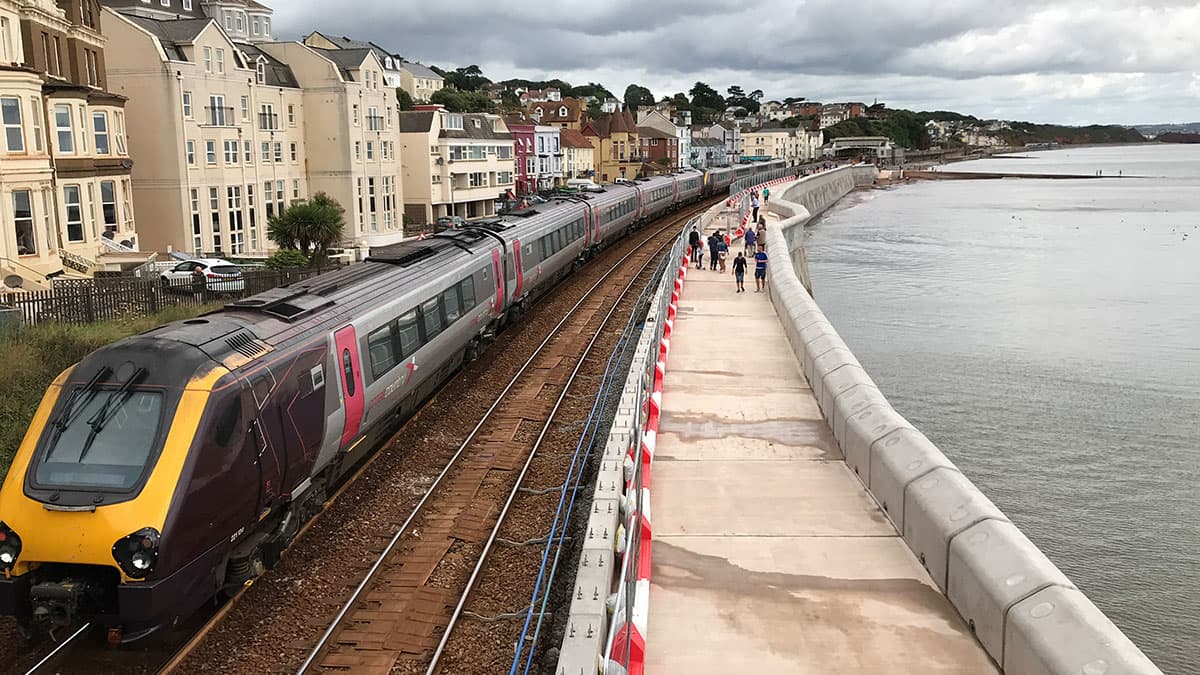
Train services on the Dawlish coastal line were once again suspended during Storm Ingrid in January 2026, leaving thousands of passengers facing cancellations on the only rail route that links Plymouth and Cornwall with the rest of Britain. The disruption came despite a post-2014 rebuilding programme that has cost taxpayers £165m and completed four of five planned phases by 2024.
"Train departure boards were littered with cancellations when Storm Ingrid battered the South West of England last month - and for many, it all felt quite familiar," wrote Martyn Oates of BBC South West. The image of the line clinging to the sea has long symbolised the vulnerability of Victorian-era infrastructure: the track, which opened in 1846 and runs alongside the sea at Dawlish, was catastrophically damaged in ferocious storms in February 2014. Then, Plymouth and much of Cornwall were cut off from the national rail network for eight weeks.
Plymouth City Council leader Tudor Evans described the 2014 scenes as the line "hang[ing] like a Peruvian rope bridge." In response, authorities embarked on a five-phase programme that included a new sea wall in Dawlish and a large rock shelter further along the route. Four phases were completed under several Conservative governments by 2024; public spending on the work is reported at £165m. Yet the closure during Storm Ingrid has reopened a fierce local debate about whether those measures are sufficient.
"It sometimes gives you the feeling of being cut off from the rest of the country," an unnamed woman said, capturing the social and economic anxiety local communities express when the line fails. As one assessment in the coverage put it: "This beautiful but fragile line … remains at the centre of a furious debate about whether it can really withstand the elements." Others noted the remediation effort has not fully resolved the problem: "Much like trains south of Exeter in the recent storm, the project appears to have hit the buffers."

The recurrence of closures raises immediate policy and fiscal questions. For ministers and Network Rail, the issue is not only whether recent works met appropriate engineering standards, but whether continuing to pour public money into coastal defences is the optimal long-term strategy. Economically, repeated closures impose direct costs on commuters, tourism and regional supply chains; they also carry reputational and political costs for whoever is responsible for funding and delivering resilience.
Key technical and fiscal details remain unclear. Public reporting so far has not supplied a full breakdown of how the £165m was allocated across phases, nor has it specified the exact engineering cause of the January 2026 closure or the scope and timetable of the unfinished fifth phase. Those gaps matter for assessing value for money and setting a durable investment strategy.
The episode spotlights a broader challenge for national infrastructure planning: whether to maintain and harden historic coastal lines against increasingly volatile weather, or to consider alternative inland routes and a different spending profile that internalises rising climate risk. Local people and businesses want swift answers; taxpayers need transparent accounting and an engineering assessment that explains whether further public spending will reduce future disruption or simply buy time against a changing climate.
This article was produced by Prism’s automated news system from verified source data, official records, and press releases, then run through automated quality and moderation checks before publishing. The system is built and supervised by the people who set the standards it runs under. Read our full AI policy.
Did this article answer your question?