2026 Evidence-Based Testing and Buyer Priorities for Choosing Yoga Mats
Major reviewers today test six core metrics, grip, cushioning, durability, material safety, size/weight and portability, and buyers should prioritize only the two that match their practice.
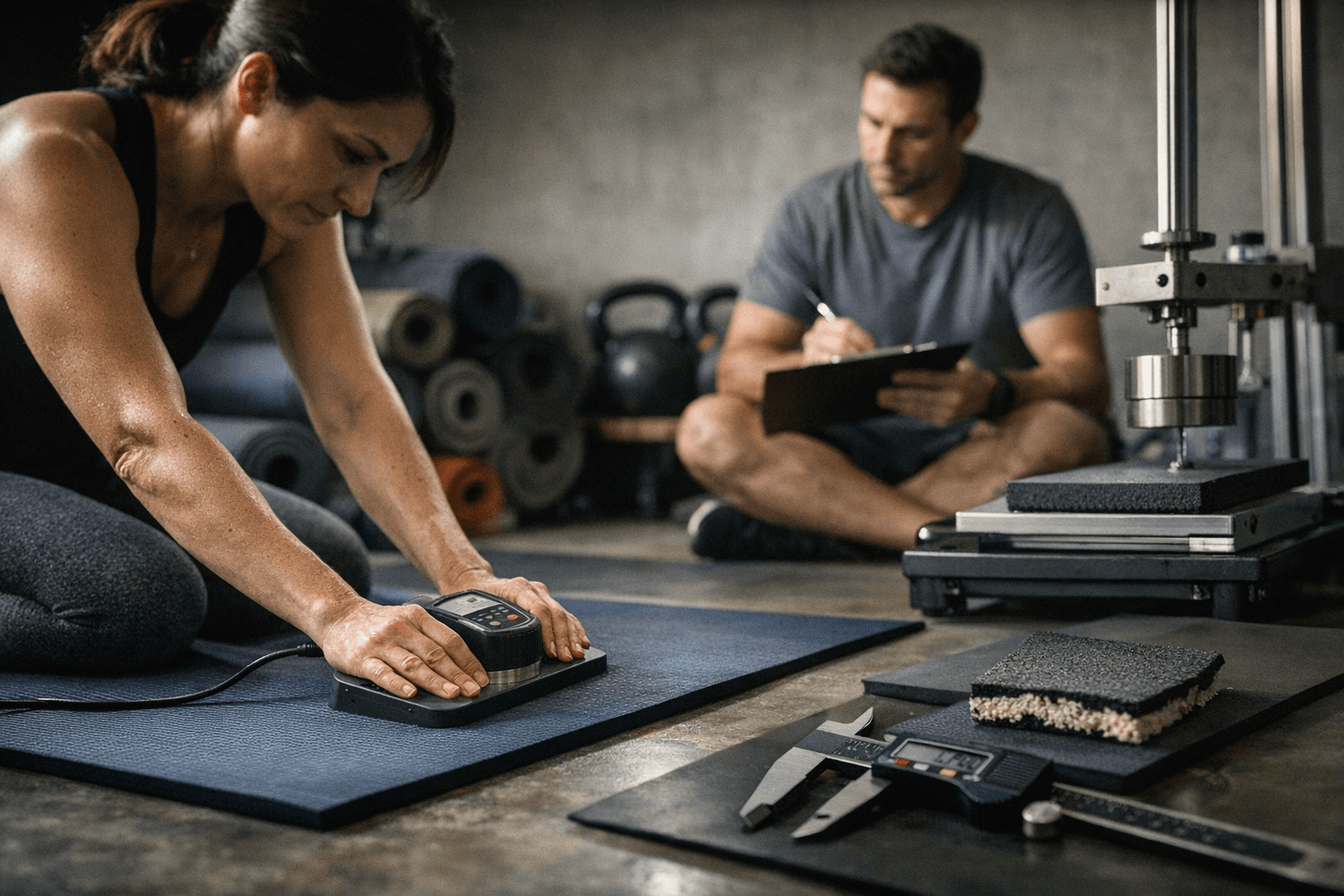
Major reviewers and expert testers converge on six core, evidence-backed metrics for yoga mats: grip, cushioning, durability, material safety, size/weight, and portability. Below I break each one down into how testers evaluate it, what you should prioritize based on real-world practice, and the practical pitfalls I see after years of testing mats on studio floors, studios that sweat a lot, and airport layovers.
1. Grip
Major reviewers treat grip as a primary pass/fail metric: they evaluate initial slip-resistance under dry and sweaty conditions, and whether the mat maintains traction after repeated use. For you that means testing mats on flat surfaces and after a short sweat session; if a mat feels secure for sun salutations but becomes slick after 20 minutes of heat, reviewers mark it down. My rule: if you teach or practice hot power classes, prioritize a mat that testers report retains grip after moisture, otherwise plan to top it with a towel.
2. Cushioning
Testers measure cushioning for joint protection and stability, looking at thickness and compression behavior over time. Cushioned mats should protect knees and wrists without making standing balance poses feel unstable; reviewers flag mats that compress too much under a single downward dog. If your practice includes heavy kneeling (Iyengar, prenatal or restorative work), choose a mat reviewers find to have resilient, slowly recovering foam; if you favor balance or alignment, choose lower-profile mats that reviewers praise for firm feedback.
3. Durability
Durability is assessed by reviewers through abrasion, repeated folding/rolling cycles and real-world mileage, whether seams lift, texture wears, or foam shreds after months of daily practice. Major reviewers downgrade mats that show surface breakdown after 50–200 hours of use; they reward liners and closed-cell materials that resist breakdown. For buyers, durability translates directly to cost-per-use: if reviewers report a mat lasting two years of daily practice, that beats a cheaper mat needing replacement in six months.
4. Material safety
Material safety is now a baseline test for reputable reviewers: they screen for harmful additives and off-gassing and note whether mats are closed-cell (less porous) or open-cell (more absorbent and often harder to sanitize). Expert testers flag mats made with known problematic chemicals and highlight those certified by independent labs. If you teach classes or rent mats, prioritize mats reviewers report as closed-cell or lab-tested to limit microbial growth and minimize chemical odor after unboxing.
5. Size and weight
Reviewers list size and weight as straightforward but decisive trade-offs: longer and wider mats improve coverage for taller practitioners but add bulk; heavier mats often correlate with dense materials and greater durability. Test reports typically include exact mat dimensions and grams per square meter; when reviewers recommend mats for travel they point to models under a specific weight threshold. Match your height and travel frequency to the dimensions reviewers report rather than buying based on marketing photos.
6. Portability
Portability testing by major reviewers covers rollability, carry options, and real-world transport, whether a mat fits into a gym locker, rolls without durably creasing, or packs into a suitcase without springing apart. Reviewers penalize mats that absorb sweat and end up heavy and odorous in a bag; they reward designs with removable straps, vegan carry options, or materials that compress for travel. If you commute to studio classes or travel, make portability a top-two priority using reviewer notes on pack-down size and weight.
7. Testing protocols reviewers use (what to look for in a test report)
Expert testing protocols synthesize objective and subjective measures: grip under both dry and wet conditions, repeated compression cycles for cushioning, abrasion and folding endurance for durability, and lab screening for volatile compounds or restricted substances for safety. Look for review write-ups that report both bench-style counts (e.g., number of fold cycles, abrasion passes) and real-world hours of use, reviewers who combine both give you the clearest picture of long-term performance. If a review lacks a clear protocol section, treat its conclusions as less reliable.
8. How to prioritize those six criteria for your practice
Buyers should choose two primary priorities and one secondary priority from the six metrics, depending on practice style. For example, teachers who carry mats daily should put portability and durability at the top; hot-yoga practitioners should make grip and material safety primary; restorative practitioners should lead with cushioning and size. This two-plus-one approach mirrors how reviewers score mats: high overall scores come from excellence in core metrics, not middling performance across every single one.
- Choosing a mat solely on thickness, reviewers note thick mats can feel mushy and unstable for balance.
- Ignoring material safety when buying open-cell eco mats, reviewers often find these absorb sweat and grow odors faster.
- Overvaluing initial grip without testing after moisture, many mats feel grippy first use but fail during a sweaty vinyasa.
9. Common pitfalls reviewers flag that you can avoid
I’ve bought and returned several “ultra-thick” studio mats that shredded after three months; listening to reviewer durability data would have saved me replacement costs.
- Confirm which two metrics you need most (e.g., grip + portability).
- Read reviewer protocols: did they test grip both dry and wet? did they report hours of use?
- Check if material safety is lab-tested or closed-cell for shared use.
- Compare reported dimensions and packaged weight against your height and commute method.
- Look for reviewer notes on long-term texture changes and compression behavior rather than single-session impressions.
10. A practical buyer checklist (use while shopping)
This checklist mirrors what experienced reviewers do; use it in-store and when reading product pages to separate marketing from measured performance.
11. Final verdict for 2026 buyers
Major reviewers are unanimous that no single mat is perfect for every practitioner, the six evidence-based metrics above are how they separate hype from durable performance. Your smartest buy is the mat that scores highest in the two metrics you actually use daily (and a reasonable secondary). Spend a little more where reviewers demonstrate real-world longevity or lab-verified safety, and cut cost where reviewers show easy trade-offs, for example, a lightweight travel mat that sacrifices a bit of cushioning but preserves grip and material safety can be the right call for a commuting teacher.
I test mats the same way: match the reviewer data to your practice demands, pick your two priorities, then buy the model reviewers prove can survive real use. That approach ends the cycle of returns and disappointment and gets you to better classes, not better Instagram photos.
Know something we missed? Have a correction or additional information?
Submit a Tip