3D-Printed Weapon Replicas Reproduce Rifling and Aid Forensic Autopsies
Researchers at the University of Pécs Medical School used 3D-printed replicas to reproduce rifling and assist autopsies, helping pathologists compare wounds to weapon geometry without safety risks.
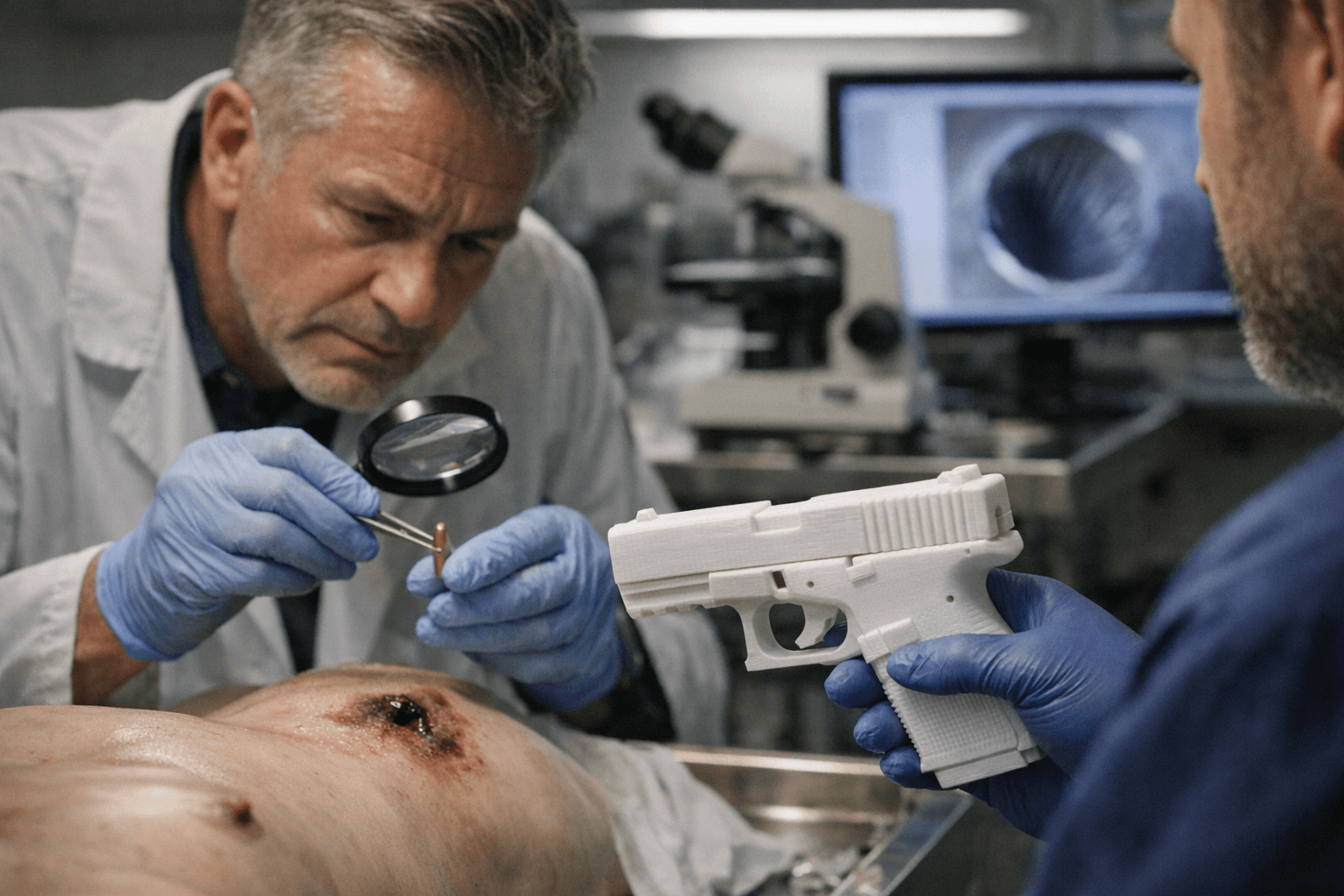
Researchers at the University of Pécs Medical School published a study on January 17, 2026, showing that 3D-printed replicas of homicide weapons can faithfully reproduce dimensions and tool-marks, including rifling patterns, and improve visualization during autopsy and forensic analysis. The work demonstrates a practical scan-to-print workflow that lets pathologists compare wound geometry to a safe, nonfunctional copy of a weapon without handling live ammunition or risking damage to original evidence.
The team began with high-resolution scans of original firearms and produced print-optimized models that preserved critical surfaces and tool-mark detail. The study reports several case examples in which replicas enhanced a pathologist’s ability to match wound tracks and identify correspondence between weapon geometry and injuries. Researchers noted that replicas may be suitable as courtroom demonstrative exhibits when produced under rigorous calibration and validation protocols to ensure forensic admissibility and dimensional precision.
For the 3D printing community this research matters for a few concrete reasons. First, it highlights the value of precision scanning and careful print preparation when the goal is evidentiary comparison rather than simple visual display. Second, it underscores the need for strict validation, documentation, and quality control if a replica will feed into a legal process. Makers and lab operators should treat forensic replicas like any other metrology project: record scanner settings and resolution, preserve original dataset files, document slicer settings and layer heights, and include post-processing steps in the file trail so results can be reproduced and audited.
The study also points to material and process considerations. Achieving rifling fidelity requires sufficient surface resolution and stable post-cure finishing to avoid introducing new tool marks. That makes higher-resolution resins and careful cleaning workflows preferable for demonstration replicas, while emphasizing that a replica is not a substitute for original ballistic testing unless calibration benchmarks exist. Importantly, the researchers stressed that a validated chain of custody and independent verification are essential if replicas are used in court.
Local makerspaces, forensic labs, and coroners can take immediate steps: develop standard operating procedures for scan capture, set minimum resolution and calibration tests for printers, and agree on documentation templates to accompany any replica submitted for forensic review. Collaborative projects between medical examiners and trusted printing labs can speed adoption while preserving scientific rigor.
This work charts a path where hobbyist skills and forensic needs meet without compromising safety or evidence integrity. Expect follow-up studies and standards work focused on calibration protocols and courtroom acceptability; for now, verify your measurements, document everything, and treat forensic replicas as precision tools, not props.
Sources:
Know something we missed? Have a correction or additional information?
Submit a Tip