40 Years After Chernobyl, Wildlife Rebounds as War Deepens Risks
Chernobyl’s wildlife is returning unevenly, but war, mines and fire are now threatening the long-running radiation experiment scientists still cannot fully decode.
A landscape that never became simple wilderness
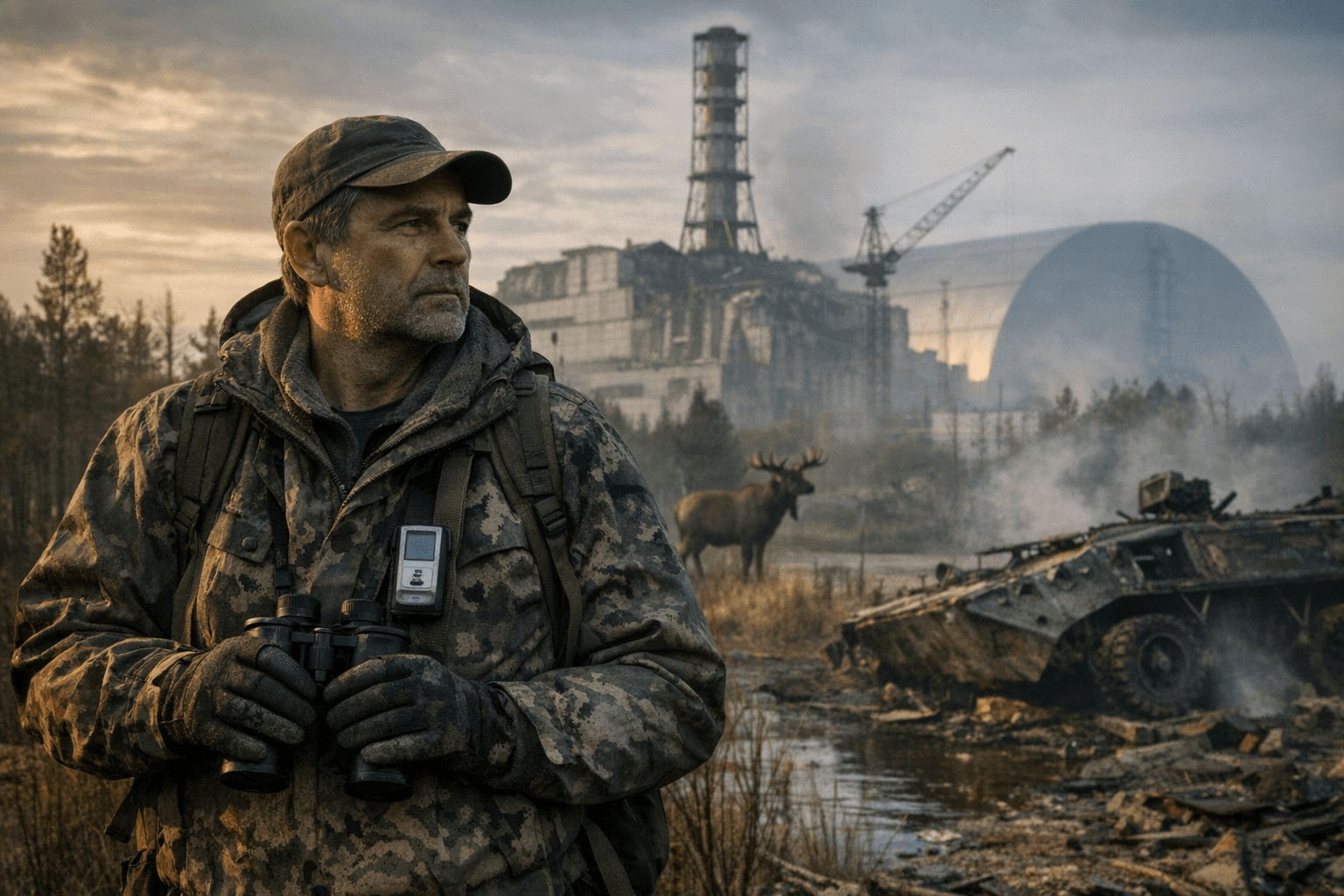
The Chernobyl exclusion zone is not a clean story of nature healing itself. Four decades after the nuclear disaster of April 26, 1986, the 2,600 square kilometer zone remains too dangerous for people in many areas, even as wolves, bears, lynx, wild boar and Przewalski’s horses have moved back into the landscape. The real lesson is more complicated than a viral image of abandoned streets filled with animals: some species have adapted, some have been introduced, and some of the biggest scientific questions remain unresolved.
That complexity matters because Chernobyl has become one of the world’s most important long-term natural laboratories for radiation ecology. Scientists have used the exclusion zone to study how chronic exposure shapes wildlife over time, but there is still no consensus on the longer-term effects. The site is a place where absence, contamination and adaptation all coexist, often in ways that cannot be neatly separated.
What has actually rebounded, and what has not
The most visible comeback has come from large mammals. Wolves, bears, lynx and wild boar have recolonized much of the zone, taking advantage of the reduced human presence across a region that is larger than Luxembourg. Przewalski’s horses are the most striking symbol of this rebound, but they are not a spontaneous miracle of nature. They were introduced in 1998 as a conservation experiment, and recent reports describe them grazing across the exclusion zone.
That detail matters because it cuts against the easy myth that Chernobyl simply “returned to nature” on its own. In reality, the landscape is shaped by abandonment, active management, and ecological pressure all at once. Some animals benefit from the lack of hunting, farming and urban development, while the underlying radiation burden, habitat fragmentation and contamination continue to shape which species can persist and how they fare.
The result is a patchwork recovery, not a universal one. Animal numbers and behavior can look encouraging in one place and reveal stress in another. For scientists trying to understand the zone, that unevenness is the point: Chernobyl is not a pristine refuge, but a damaged ecosystem where adaptation, risk and survival are unevenly distributed.
Why scientists still cannot give a clean answer
The hardest question in Chernobyl science is not whether wildlife is present. It is what chronic radiation exposure is doing to animals over generations, and how much of the pattern can be separated from other environmental forces. Researchers still do not have a consensus on the long-term effects, in part because the zone is not controlled like a laboratory experiment. It is a vast, changing landscape where species move, forests burn, people intervene and the background conditions keep shifting.
That uncertainty is why the exclusion zone remains such an important scientific site. A multi-year project in Ukraine is focused on uncovering the health effects of chronic radiation exposure, and a separate long-running study of abandoned dogs near the reactor is helping researchers examine low-dose radiation exposure and possible health effects. Those dogs matter because they offer a rare look at a domestic species living for years in a contaminated environment, making them especially valuable for genetic and health studies.
The science is also difficult because visible abundance can be misleading. A wolf pack or a herd of horses tells you that an animal can survive in the zone. It does not tell you whether radiation is shortening lifespans, affecting reproduction, altering genetics or shifting disease patterns in ways that are hard to observe in the field. That gap between what can be seen and what can be measured is central to Chernobyl’s legacy.
How the war turned a long-term experiment into a hazard zone
Russia’s full-scale invasion of Ukraine on February 24, 2022 changed the meaning of the Chernobyl zone again. The Chornobyl area became a front line, and scientific work was disrupted after the initial chaos of war. Nature described the area surrounding the reactor as a science hotspot, then one that suddenly sat on the front line of a new conflict. The disruption did not just slow data collection. It altered the conditions under which any future data can be trusted.
War brought additional hazards into a place already burdened by contamination. Mines now complicate field access, and the risk of forest fires has grown in contaminated forests, where burned vegetation can spread radioactive material and make monitoring harder. The practical consequences are severe: researchers, workers and emergency teams must deal with radiation, unexploded threats and fire at the same time.
This is where the public health stakes become impossible to ignore. The exclusion zone is not only a wildlife refuge or a research site. It is a landscape where human safety remains fragile, where emergency access can be blocked, and where every delay in monitoring can increase risk. The war has added another layer of exposure and uncertainty to communities and institutions already living with the legacy of 1986.
The institutions and people keeping watch
The work that continues is anchored by Ukrainian institutions, including the Chornobyl Center for Nuclear Safety, Radioactive Waste and Radioecology in Slavutych and the Chornobyl Radiation and Ecological Biosphere Reserve in Ivankiv. Their role is not only scientific but civic. They help preserve long-term observation in a place where the evidence base is fragile and the need for it is urgent.
That local grounding matters for social equity as well. Chernobyl research is often discussed as if it belongs only to global science, but the burden of monitoring, firefighting, demining and access control falls on Ukrainian workers and institutions living with the zone’s consequences every day. The people closest to the site are also the ones most likely to absorb the cost of interrupted research, damaged infrastructure and ongoing danger.
What Chernobyl now teaches, 40 years on
The clearest lesson from Chernobyl is not that nature conquers disaster. It is that ecosystems can rebound in partial, uneven ways while still carrying deep wounds. Wolves and horses can be visible in the same place where radiation, war damage and land contamination continue to shape survival. A landscape can be full of animals and still remain scientifically unsettled, politically vulnerable and dangerous for people.
Forty years after the meltdown, Chernobyl is still teaching a hard truth: recovery is not the same as safety, and the absence of people does not erase the costs of contamination. With war now layered on top of radiation, the zone stands as both a warning and a test of whether long-term ecological science can survive the very crises it was created to study.
This article was produced by Prism’s automated news system from verified source data, official records, and press releases, then run through automated quality and moderation checks before publishing. The system is built and supervised by the people who set the standards it runs under. Read our full AI policy.
Did this article answer your question?