49 die of thirst after truck breaks down in Niger desert
Forty-nine Nigeriens died of thirst after a truck failed in the Sahara, and two survivors walked more than 50 kilometres to raise the alarm.

A truck breakdown in northern Niger’s Sahara turned into a mass death event when at least 49 people died of thirst after being stranded for days in extreme heat, more than 80 kilometres west of Assamaka near the borders with Mali and Algeria.
Only two people survived. Authorities said they walked more than 50 kilometres across the desert to reach a water source and then continued on to Assamaka to alert Nigerien authorities. By the time help reached the site, the victims had been buried in mass graves, the Agadez governorate said.
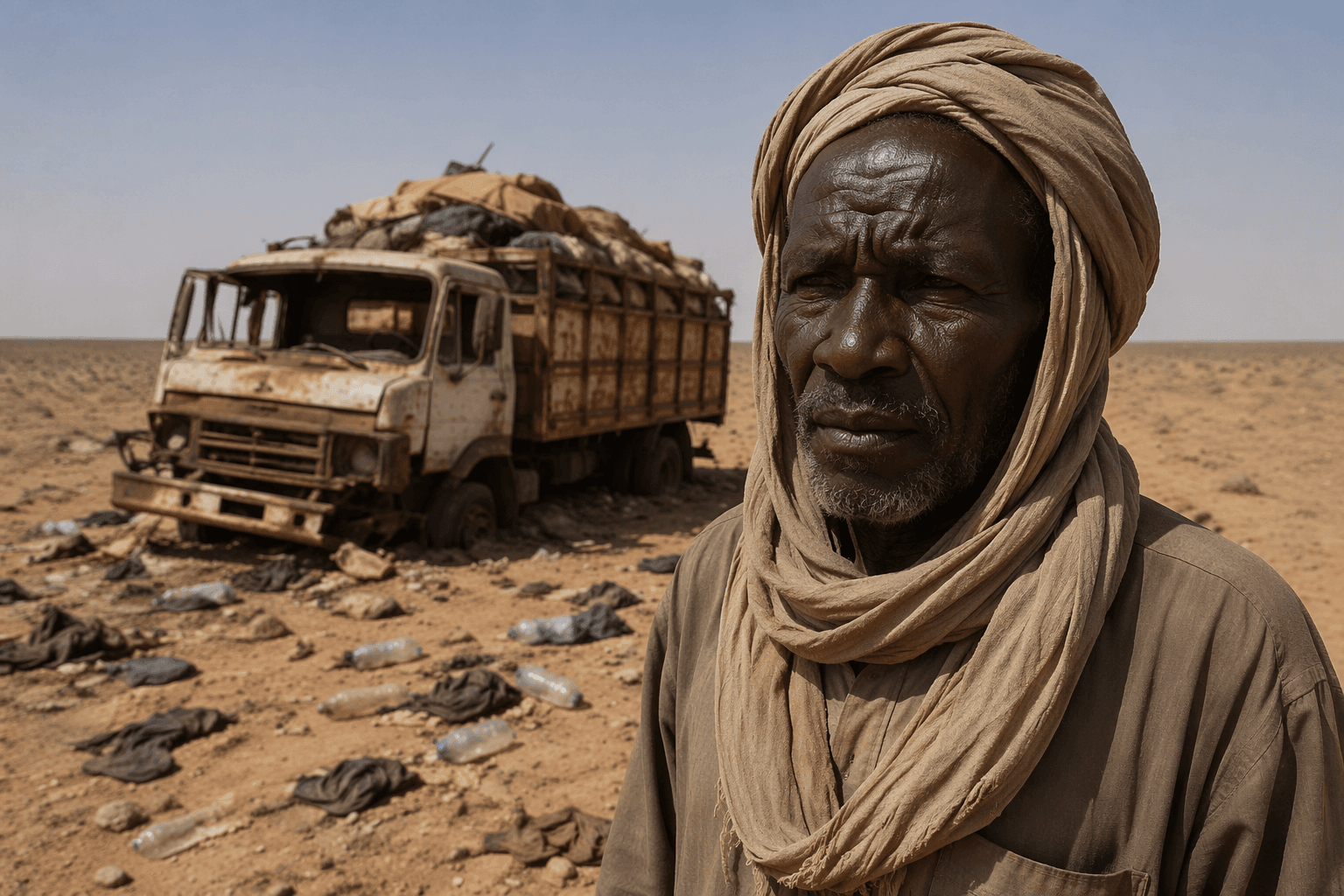
The dead were Nigeriens returning home from Mali after a Muslim festival, later identified in reporting as Eid al-Adha. Authorities said the driver, the driver’s assistants and the passengers tried repeatedly to repair the truck over several days, but the vehicle could not be made to move again. With no supply points nearby and no water in reserve, the group was left exposed in one of the harshest stretches of the Sahara.
The tragedy laid bare the route’s lethal conditions, not just the failure of one vehicle. The desert corridor through northern Niger is a known transit path for migrants heading toward Europe, and reports have long recorded deaths from thirst and starvation in the same zone. Here, the same geography that carries smuggling flows and stranded travelers turned a mechanical breakdown into a fatal wait.
The rescue effort also exposed how common such emergencies are. On the same mission, responders found another truck carrying more than 60 people that had been immobilized for three days by a battery failure. Those passengers were given water, the vehicle was repaired and the group was evacuated. The contrast was stark: one stranded convoy survived because help arrived in time, while another vanished into the desert before assistance could reach it.
This article was produced by Prism’s automated news system from verified source data, official records, and press releases, then run through automated quality and moderation checks before publishing. The system is built and supervised by the people who set the standards it runs under. Read our full AI policy.
Know something we missed? Have a correction or additional information?
Submit a Tip
