6.9 earthquake strikes northeast Japan, no tsunami warning issued
A 6.9 quake off Japan’s northeast coast triggered fast damage checks, train halts and nuclear safety inspections, but no tsunami warning and no immediate injuries.

A magnitude 6.9 earthquake jolted Japan’s northeast coast at about 7:30 a.m. on June 25, 2026, with its epicenter offshore near Iwate prefecture and a depth of roughly 50 kilometers. No tsunami warning was issued, no injuries were immediately reported, and the first emergency response focused on rapid damage checks rather than evacuation.
The strongest shaking was recorded in Aomori prefecture, where Japan’s 0-to-7 seismic intensity scale reached 6-plus, a level that can make it difficult to stand without crawling. The quake was felt hundreds of kilometers away in Tokyo, underscoring how quickly a northern offshore rupture can ripple through daily life on Honshu even when it does not produce a tsunami.
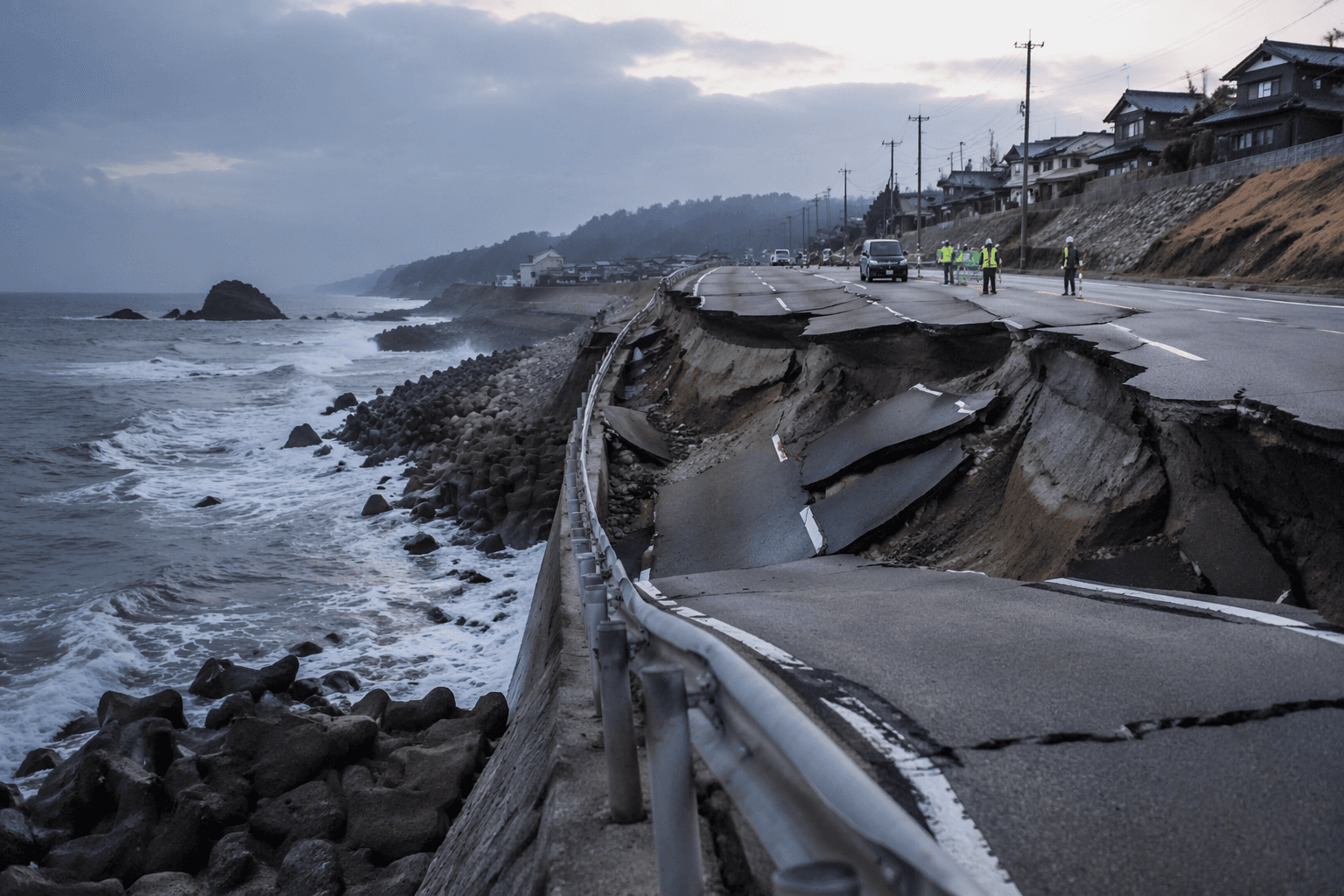
Japan’s government set up an emergency team to gather information and prepare a response, and the Prime Minister’s Office moved within minutes. At 07:32, officials were instructed to assess the state of damage as soon as possible, a reminder of how tightly the country’s central government is wired into its quake-response system. Prime Minister Sanae Takaichi’s office also pressed for rapid coordination across transport, safety and infrastructure agencies.
The Japan Meteorological Agency said no tsunami damage was expected beyond slight sea-level changes, and the Nuclear Regulation Authority reported no abnormalities at nearby facilities, including Tohoku Electric Power’s Onagawa Nuclear Power Station and the idled Higashidori Nuclear Power Station. Those checks matter in northeastern Japan, where coastal infrastructure, transport corridors and nuclear plants sit close to major fault zones.
Transport systems began reacting immediately. East Japan Railway halted some services, including Tohoku Shinkansen trains, while expressway routes in Aomori were closed for inspections. That combination of train stoppages and road checks showed how Japan’s quake-readiness is designed to slow movement before damage can spread, protecting passengers and drivers from secondary risks.
The quake struck in a region that has seen repeated strong earthquakes in recent months, including one that triggered a weeklong mega-quake caution advisory in December. Japan sits among the world’s most seismically active countries and accounts for about one-fifth of all magnitude-6-or-greater earthquakes worldwide, which is why even a sharp but contained event quickly activates warning systems, inspections and public safety protocols. In this case, those systems appeared to work in real time, limiting the impact of a powerful morning tremor.
This article was produced by Prism’s automated news system from verified source data, official records, and press releases, then run through automated quality and moderation checks before publishing. The system is built and supervised by the people who set the standards it runs under. Read our full AI policy.
Know something we missed? Have a correction or additional information?
Submit a Tip