Extreme heat makes life harsher for South Asia's textile workers
Sibaram Pradhan woke before dawn in a room with nine other men, then spent the day tending 15 loom machines as Surat’s heat and humidity turned work and sleep punishing.

Sibaram Pradhan began his day before sunrise in a cramped room he shared with as many as nine other men, then headed into a power loom factory in Surat, where sweat was already beading on his forehead by 6 a.m. The migrant worker from Odisha, about 2,000 kilometers away, spent the shift monitoring yarn, checking for breakage and keeping pace with up to 15 machines at once in deafening noise.
Pradhan works in a city that has become one of the world’s largest hubs for synthetic fabrics, and this summer’s heat has made the job harder to bear. Temperatures in Surat reached 38 degrees Celsius, while the city climbed to 45 degrees Celsius, with steam, boilers and stenter machines adding more heat to factory floors. Pradhan said he wore only a sleeveless undershirt and shorts to endure the shift and kept drinking water as he wiped sweat from his clothes.
More than 200 workers lived on two floors of housing divided into plywood cubicles, with only a few ceiling fans, two toilets and a few taps shared by as many as 100 people a day.
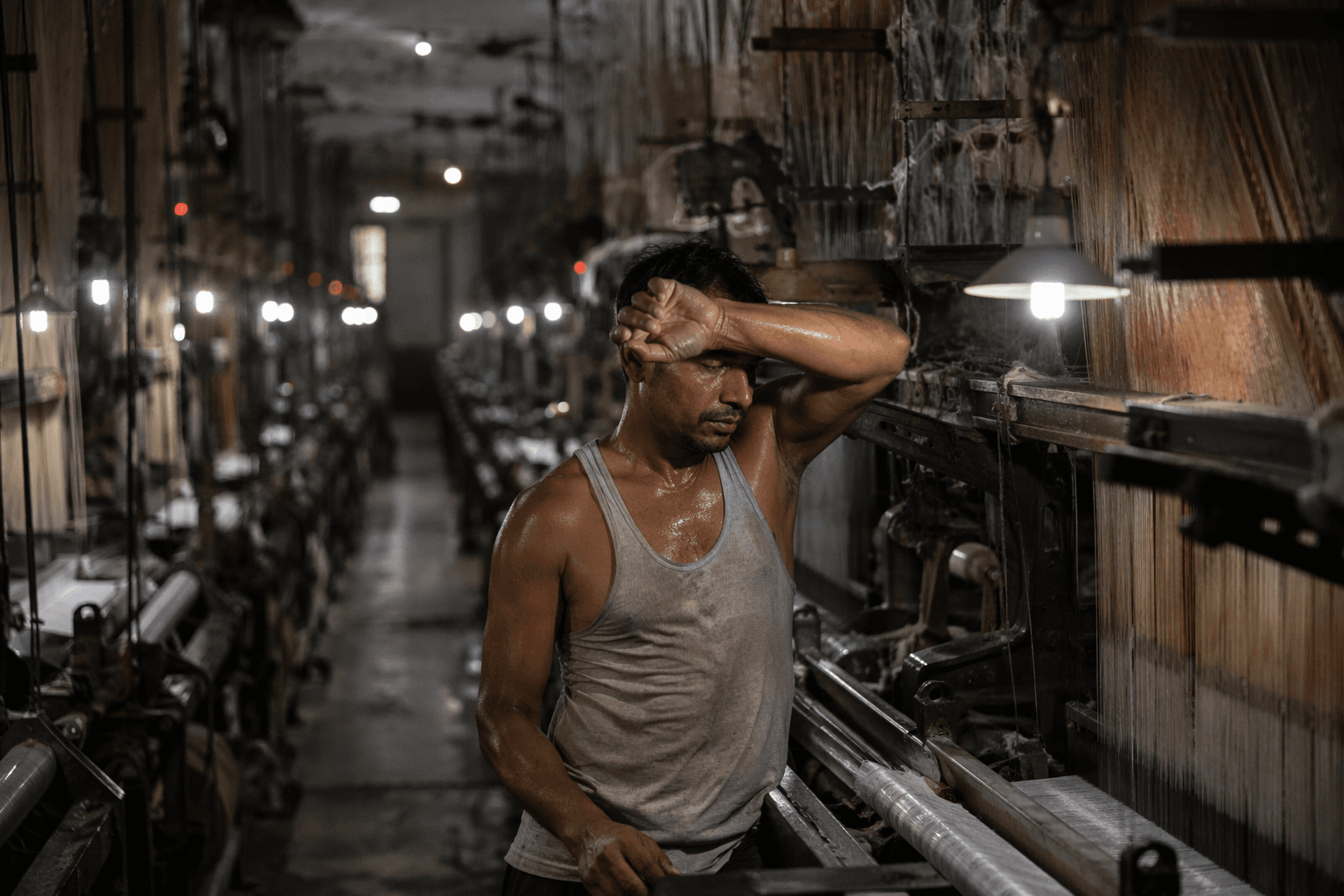
WRI India documented similar conditions in Surat’s textile-processing units, where workers describe fatigue, dehydration, fainting and dizziness during the hottest months. Summer absenteeism in some units can rise as high as 35 percent, according to WRI India. For Pradhan and other low-wage workers, being late can mean losing part of a daily wage, and an injury can bring another penalty, with workers covering their own costs and forfeiting pay while they recover.
A 2022 World Bank report found that up to 75 percent of the country’s workforce, about 380 million people, depends on heat-exposed labor, and warned that India could account for 34 million of the projected 80 million global job losses from heat-stress-related productivity decline by 2030. In April 2025, India’s Labour Ministry told states to protect workers from heat waves by rescheduling hours and ensuring drinking water, ventilation, cooling, rest areas and health checks. The National Disaster Management Authority has had national heatwave guidance since 2016, revised in 2019.
This article was produced by Prism’s automated news system from verified source data, official records, and press releases, then run through automated quality and moderation checks before publishing. The system is built and supervised by the people who set the standards it runs under. Read our full AI policy.
Know something we missed? Have a correction or additional information?
Submit a Tip