7 Tactical Steps Editors Need to Turn Brand Collaborations into Commerce Wins
Editors: strip the fluff — use these seven commerce-first steps to turn influencer collabs into predictable revenue and stop watching CPA climb.
1. Name the partner and lock a commerce-first brief
This practical how‑to is "a commerce-first checklist for editorial teams and content strategists that want to maximize engagement and conversion from collaboration stories." Start every collaboration by naming the partner and framing the story as commerce — the Original Report even begins its checklist with the fragment "1) Name the partner and concrete p", which is the point: be explicit. If the partner, target audience, and conversion action aren’t spelled out in the brief, the content will perform like a pretty postcard and not a revenue engine.
2. Transition from one-off activations to an always-on system
"To maximize your brand’s impact in 2026, transition from one-off activations to a continuous, always-on system for coordinating with influencers." That line isn’t a trend-toast — it’s an operational mandate. Swap sporadic product pushes for a cadence of coordinated posts, ambassador moments, and content pillars that feed month-to-month commerce goals. Always-on doesn't mean flooded feeds; it means predictable touchpoints, planned content arcs, and a pipeline where editorial and brand work to the same calendar and KPIs.
3. Align SMART objectives to collaboration structures (yes, brand ambassador programs)
"Success begins by aligning SMART objectives with specific collaboration structures—such as brand ambassador programs—to ensure every partnership adds tangible value." Translate editorial briefs into SMART targets: specific conversions, measurable traffic pathways, attainable revenue windows, relevant audience segments, and timed windows. Match those objectives to a structure — one-off creative drops for awareness, ambassador programs for retention and direct commerce — so every partnership has an operational role, not just a moment.
4. Pick creators by audience demographics and engagement intent — not follower counts
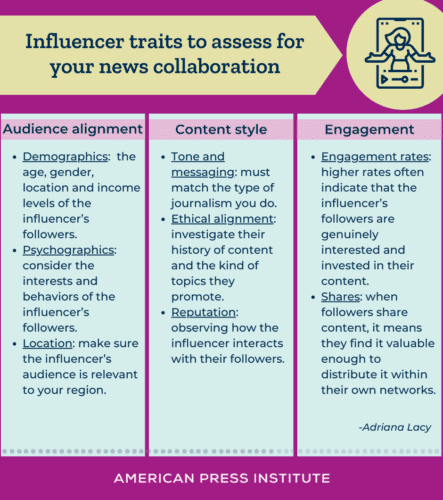
"Efficiency is driven by selecting creators based on audience demographics and engagement intent rather than vanity metrics." That means you care about who their audience is and what those people do when they see a post, not the follower total. "Even if they don’t have the largest following, these kinds of creator relationships increase efficiency and build deeper audience trust." Micro- and niche creators will often drive lower CPA and higher conversion intent; editorial teams should map audience demos and engagement signals into the talent brief before any fee is negotiated.
5. Protect the investment with contracts and hybrid compensation
"Protect these investments through comprehensive contracts and hybrid compensation models that reward performance while allowing for creative freedom." Contracts should lock basic deliverables, usage rights, disclosure rules, measurement windows, and performance incentives; hybrid pay keeps creators safe and aligns incentives — guaranteed fee plus performance upside rather than zero-sum gifting or opaque influencer-only deals. Protecting creative freedom inside those guardrails is how editors keep content authentic while keeping finance sane.

6. Document what works: refined briefs, repeatable workflows, and benchmarks
"Capturing what works, whether that’s refined briefs, repeatable workflows, or proven performance benchmarks, makes it easier to expand programs across teams, regions, and markets." Turn successful briefs into templates, standardize the handoff between editorial and commerce ops, and log the benchmarks that mattered (click-to-convert, CPA ranges, AOV uplift). Documented best practices "ensure consistency while allowing successful strategies to be replicated and optimized over time" — and they’re the only way you scale editorial-led collaborations without reinventing the wheel every campaign.
7. Measure for ROI — move past vanity metrics before CPA kills your program
"If you want to move past vanity metrics and drive real return on investment (ROI), you need a proven strategy for how to collaborate with influencers effectively." This is the bottom line: measurement saves programs. "That transformation—from transactional posts to performance-driven systems—is the defining shift in influencer marketing for 2026." Editorial must own attribution touchpoints (UTMs, landing pages, affiliate codes) and fold creator performance into CPA and revenue reporting. "The brands mastering the art of coordinating with influencers are turning brand partnerships and creator collaboration into a predictable and scalable growth channel. The brands that aren’t are watching their cost-per-acquisition (CPA) climb while wondering why 'influencer marketing doesn’t work.'"
Conclusion: Treat collaborations like product launches, not press releases — name partners and goals, build always-on systems, choose creators for fit, protect investments contractually, document the playbook, and measure like your bottom line depends on it. Do that and editorial becomes a repeatable commerce channel; ignore it and you’ll be the brand quietly paying more for less.
Know something we missed? Have a correction or additional information?
Submit a Tip