AAPI adults report fewer anti-Asian attacks, but discrimination fears persist
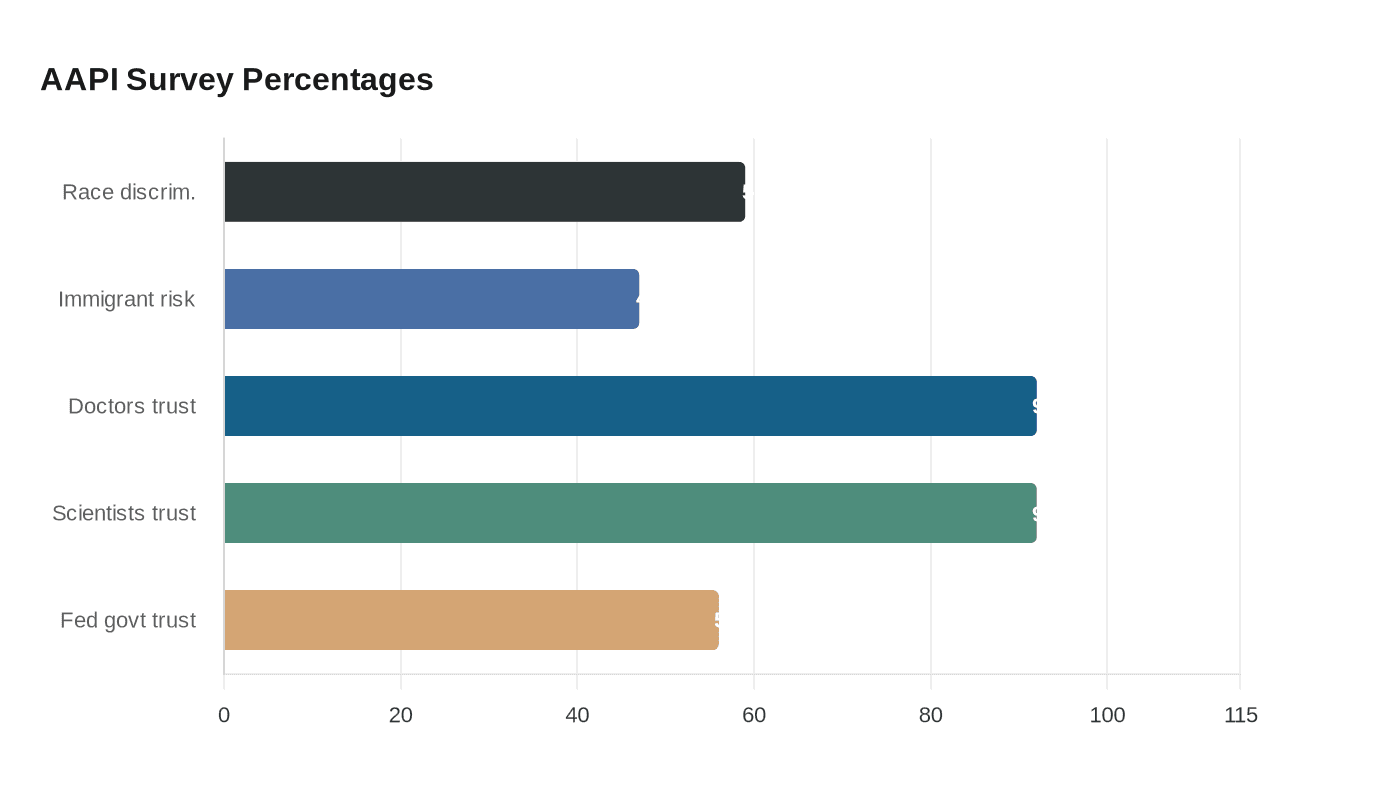
AAPI adults reported fewer overt attacks than at the pandemic peak, but 59% still expect race-based discrimination in the next five years.
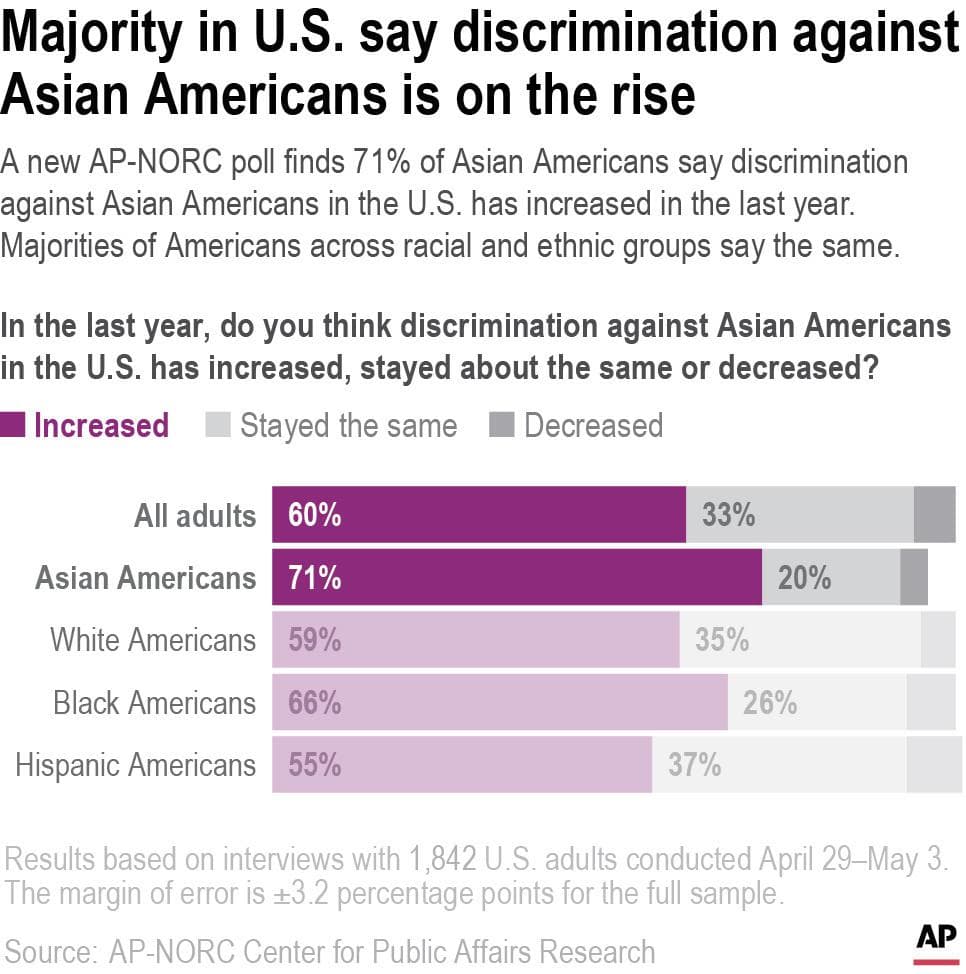
Fewer Asian American and Pacific Islander adults said they were hit by overt anti-Asian attacks than at the height of the pandemic, but the sense of vulnerability has not eased. In a new AP-NORC and AAPI Data poll released as AAPI Heritage Month began, about 1 in 4 AAPI adults said they experienced a hate crime or hate incident in the past year, even as many said the threats feel more tied to immigration rhetoric than to the pandemic-era language of 2020 and 2021.
The gap between lower incident reports and persistent fear was clear in the numbers. About 3 in 10 AAPI adults said it was extremely or very likely they would face discrimination because of their race or ethnicity in the next five years. In the April 2026 AAPI Data and AP-NORC issue brief, 59% said discrimination on the basis of race or ethnicity was at least somewhat likely over that period, and 47% said the same about immigrant background or status. Roughly 1 in 10 said they had been called a racial or ethnic slur in the past year, down from about 2 in 10 in 2023, while 15% said they had been verbally harassed or abused because of their race or ethnicity, down from 23% two years earlier.

The pattern suggests that the form of hostility has changed more than it has disappeared. Karthick Ramakrishnan of AAPI Data said the central takeaway was that hate has declined but then stabilized rather than vanished. Stephanie Chan of Stop AAPI Hate warned that harsh immigration enforcement rhetoric was helping sustain anti-AAPI hostility. One community member described being pushed in a restaurant line in Los Angeles, a reminder that public harassment and physical intimidation still overlap in ordinary spaces.
That anxiety is unfolding against broader concern over immigration policy. In AP-NORC and AAPI Data polling from December 2025 and January 2026, 41% of AAPI adults named immigration as a top policy issue heading into 2026. In February and March, 73% said they had unfavorable views of Immigration and Customs Enforcement, and 67% said Donald Trump had gone too far on deporting immigrants living in the United States illegally.
The poll also showed that discrimination fears coexist with high trust in medical professionals. In the April brief, 92% of AAPI adults said they were confident in doctors and nurses, and 92% said the same of scientists and medical researchers, but 56% were not confident in the federal government to do what is best for public health. That split reflects a community that still places faith in care providers even as it remains wary of institutions, rhetoric, and public life.
The AP-NORC and AAPI Data survey series was launched to address the historic underrepresentation of AAPI communities in public opinion research. It comes amid a wider national picture in which the Federal Bureau of Investigation said hate crime incidents fell slightly to 11,679 in 2024 from 11,862 in 2023, while race, ethnicity and ancestry remained the largest motivation category at 53.2% of single-bias incidents. Stop AAPI Hate said 53% of surveyed AAPI adults experienced a hate act in 2024, up from 49% in 2023, with online spaces, public spaces and businesses among the most common settings. The message across the surveys is consistent: visible attacks may have eased, but for many AAPI adults, fear of discrimination still shapes daily life.
This article was produced by Prism’s automated news system from verified source data, official records, and press releases, then run through automated quality and moderation checks before publishing. The system is built and supervised by the people who set the standards it runs under. Read our full AI policy.
Did this article answer your question?