Mother's Day 2026 falls May 10, as families plan meaningful gifts
Families will mark Mother’s Day on Sunday, May 10, with spending set to hit $38 billion as time together rivals flowers and cards in the gift economy.

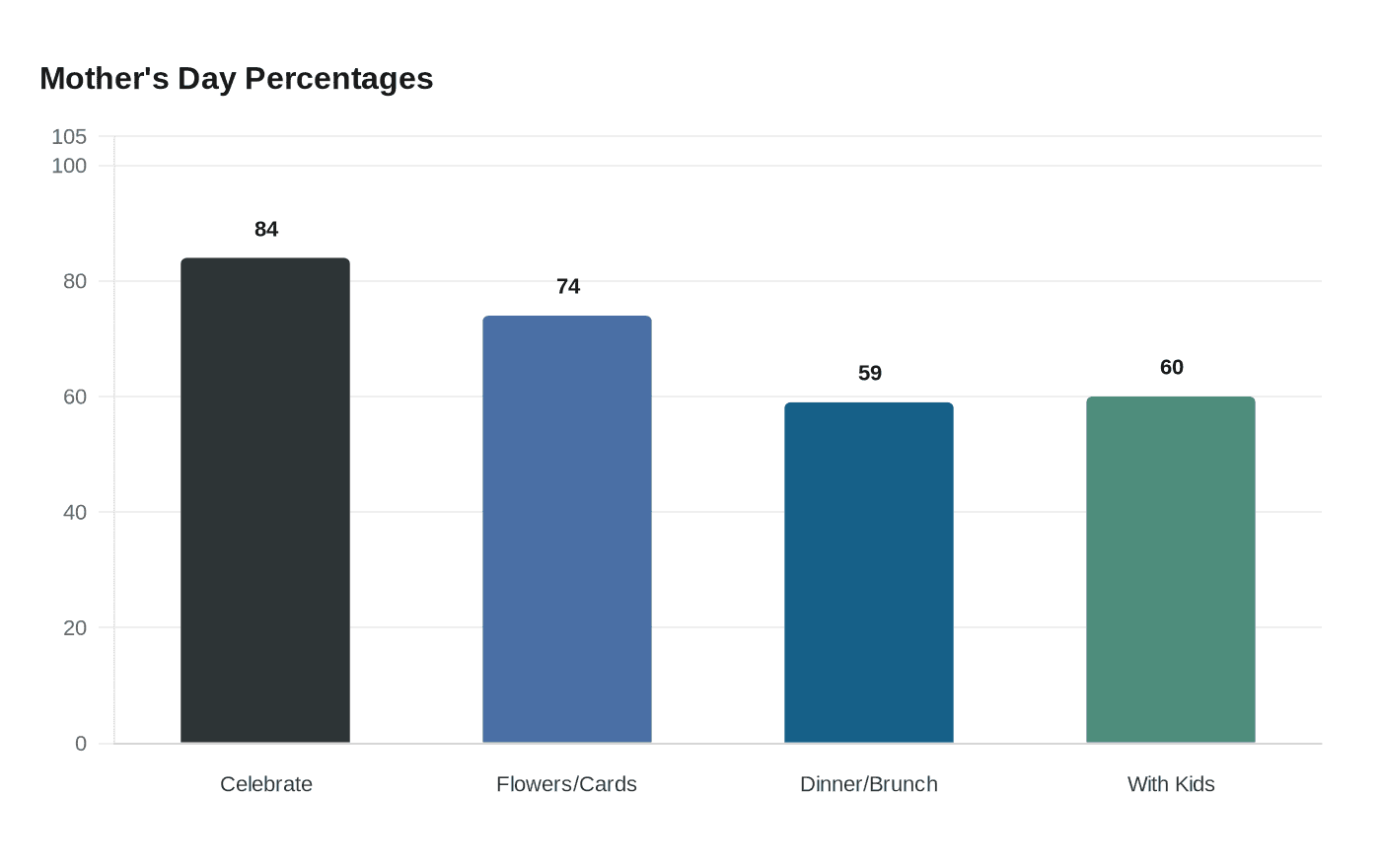
Mother’s Day arrives Sunday, May 10, and the holiday’s biggest story is no longer just what families buy, but what they choose to spend their time on. The National Retail Federation says 84% of U.S. adults planned to celebrate in 2025, with total spending projected to reach a record $38 billion and average spending at $284.25 per person, a sign that the day remains one of the country’s most durable consumer occasions even as households weigh value more carefully.
The gifts that keep rising to the top show that tension clearly. Flowers and greeting cards each ranked as the most popular Mother’s Day gifts at 74%, while special outings such as dinner or brunch followed at 59%. Those choices point to a holiday built less around status purchases than around gestures that can feel personal, practical and shareable. In an economy where families are watching prices closely, a meal together or a simple bouquet often carries more weight than a bigger-ticket present.

That shift also fits what many mothers say they want most. YouGov found that 60% of moms want to spend Mother’s Day with their children, reinforcing the idea that time itself has become a central part of the celebration. For many families, the day now blends sentiment with scheduling: a brunch reservation, a phone call, a handwritten card or a plan to be together may matter as much as anything wrapped in paper.

The holiday’s roots make that evolution especially striking. Anna Jarvis is generally recognized as the founder of Mother’s Day in the United States, after the first formal church service was held in 1908. The day became an official U.S. holiday in 1914. Jarvis later denounced the commercialization that followed, and her objections echo in a modern celebration that now sits at the intersection of affection, retail and family ritual.
What families are choosing this year suggests a broader cultural shift. Mother’s Day remains a major spending event, but the most valued gestures are increasingly the ones that feel individualized, useful or shared. In that sense, the holiday is becoming a clear measure of how Americans are balancing inflation, family expectations and the simple desire to spend the day together.
This article was produced by Prism’s automated news system from verified source data, official records, and press releases, then run through automated quality and moderation checks before publishing. The system is built and supervised by the people who set the standards it runs under. Read our full AI policy.
Did this article answer your question?