Abandoned Nabatieh, paramedics risk lives amid deadly strikes
Nabatieh’s last ambulances were still moving as strikes killed two medics, emptied streets and left hospitals and rescue crews under relentless pressure.
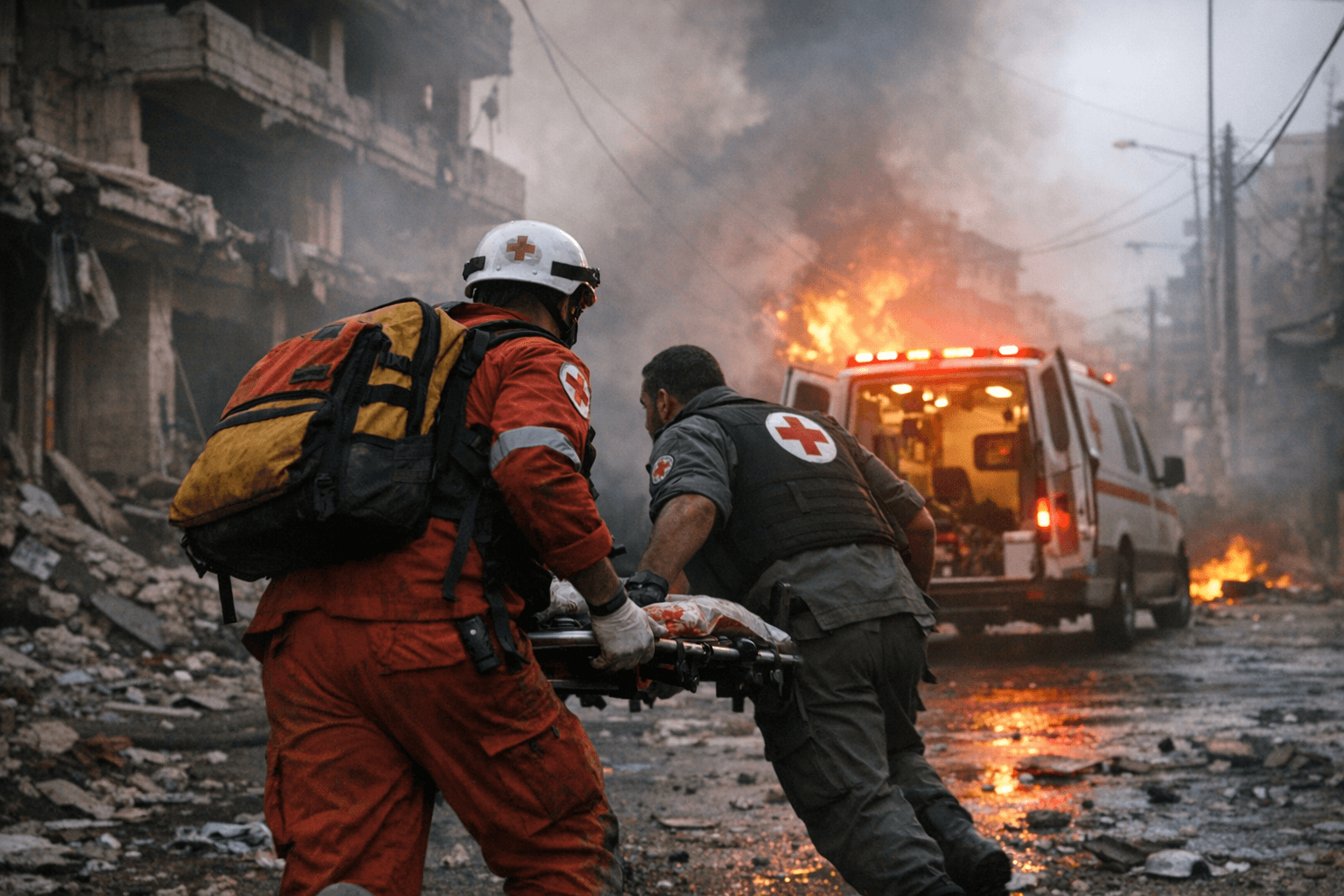
Ambulance lights were among the few signs of life left in Nabatieh, where paramedics kept moving through streets emptied by strikes and evacuation orders. In a city that was once busy and vibrant, the rescuers were now working inside a landscape of shuttered storefronts, damaged buildings and silence, with emergency calls becoming the main routine that still bound the city together.
That fragility sharpened on March 25, 2026, when two paramedics, Ali Jaber and Joud Sleiman, were killed in Nabatieh while heading out on a rescue mission. Lebanon’s Public Health Ministry said both men were wearing uniforms and that their motorcycle carried medical insignia and warning lights. Their deaths added to a widening toll on the emergency network that has been trying to function under fire.
The ministry said at least 42 paramedics had been killed by Israeli strikes on Lebanon since March 2. It later said the overall death toll in the health sector had reached 51, including 46 rescuers and five health care workers. The World Health Organization said there had been 64 attacks on health care facilities across Lebanon since March 2 and that five hospitals were out of service, a direct blow to care for wounded civilians and to the chain of response that starts with an ambulance and ends at a hospital bed.
The Lebanese Civil Defense in Nabatieh said an Israeli strike on March 17 hit a building about 10 yards from its station, injuring 12 emergency workers. The station normally has 32 staff members, but only 15 were present because the rest were already out on rescue missions. That gap showed how quickly the system had been stretched past its limits: the same crews were being called to fires, injuries and recoveries even as the roads and stations they depended on came under attack.
The wider picture in southern Lebanon was just as severe. PBS reported that the war between Israel and Hezbollah had killed more than 1,000 Lebanese people, including 40 emergency workers, and said the Israeli evacuation zone reached up to the Zahrani River. In the evacuated areas, ambulances were among the few vehicles still moving through streets lined with burned cars and bombed-out structures. Lebanese officials and rescue workers accused Israel of targeting emergency responders and obstructing rescue operations, turning the people meant to preserve civilian life into casualties themselves.
This article was produced by Prism’s automated news system from verified source data, official records, and press releases, then run through automated quality and moderation checks before publishing. The system is built and supervised by the people who set the standards it runs under. Read our full AI policy.
Did this article answer your question?


