Trump declares Israel barred from bombing Lebanon, shocks Netanyahu
Trump publicly told Israel to stop bombing Lebanon, catching Netanyahu off guard and testing who sets the rules when a cease-fire is live.
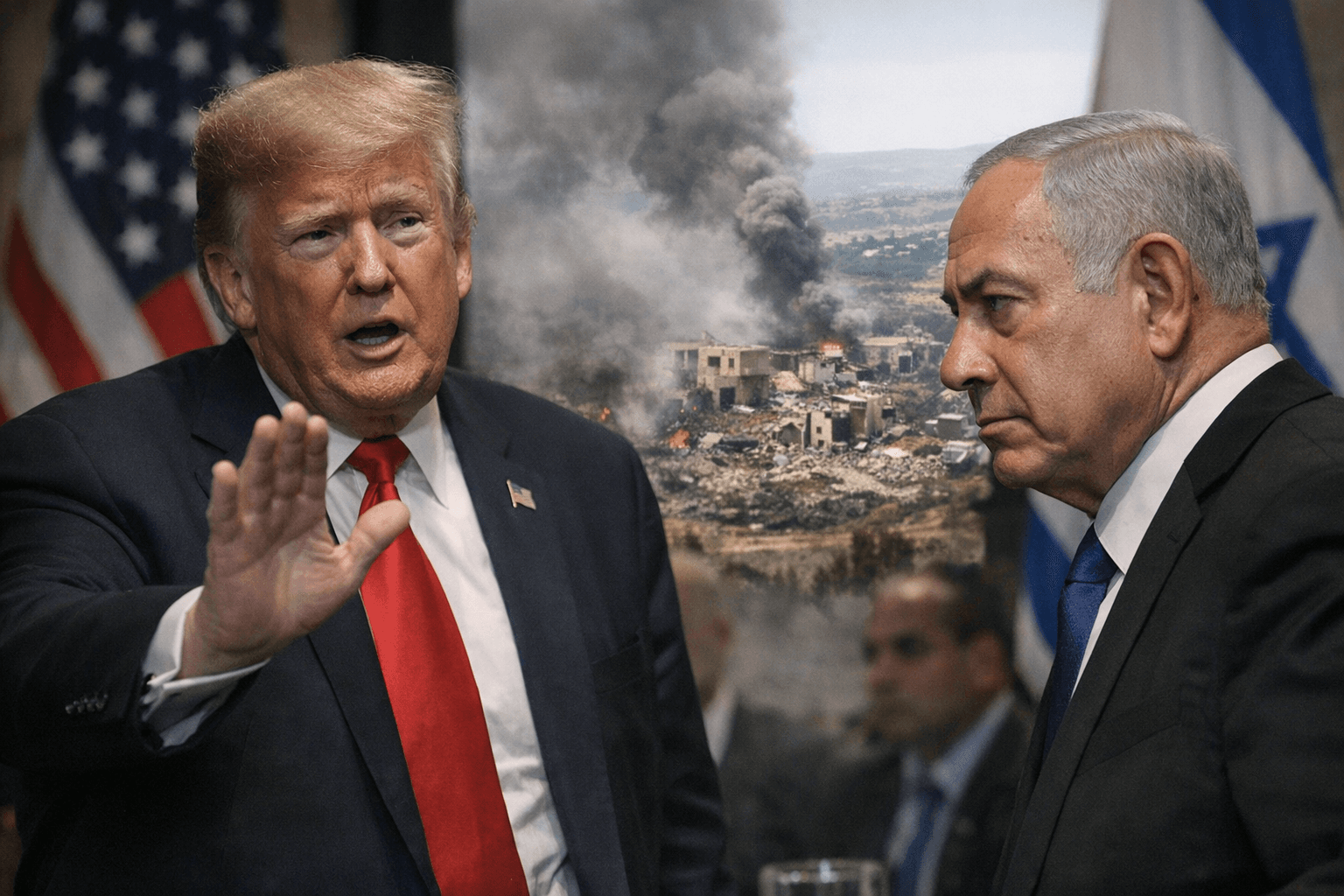
Donald Trump put Israel on notice in public, declaring that airstrikes in Lebanon were “prohibited” and that “enough is enough,” a striking display of U.S. leverage that startled Benjamin Netanyahu and forced his office to seek clarification. The intervention turned a fragile cease-fire into a test of command, not just diplomacy, with Washington effectively telling an ally in real time what it could no longer do.
The cease-fire between Israel and Lebanon began on April 16, 2026, at 5:00 p.m. EST and was set for an initial 10 days as a goodwill step aimed at opening the way to a longer security and peace arrangement. The U.S. State Department said the deal was intended to help create space for broader negotiations, including talks that could also ease the path for U.S.-Iran diplomacy. Reuters said the agreement was meant to support those wider discussions, raising the stakes beyond the border itself.
Trump’s wording went further than the formal cease-fire language. Reuters reported that he said, “Israel will not be bombing Lebanon any longer. They are PROHIBITED from doing so by the U.S.A. Enough is enough!!!” He also said any U.S. deal with Iran was “in no way” tied to Lebanon. Axios reported that Netanyahu and his advisers were shocked by the use of the word “prohibited,” which appeared to imply an explicit U.S. order rather than a negotiated pause. Israel asked the White House for clarification, underscoring how unusual the public pressure was from a U.S. president toward Israel.
The political response in Beirut was notably different. Lebanese President Joseph Aoun said the cease-fire should become “permanent agreements” and that Lebanon would no longer be an “arena for anyone’s wars.” He also spoke by phone with Trump, and Lebanese media reported that Aoun thanked him for his efforts and stressed the need for long-term peace and stability. Hezbollah, meanwhile, warned before the truce that any arrangement must not give Israel freedom of movement inside Lebanon, keeping unresolved the question of Israeli forces in the south.
The cease-fire largely appeared to hold on April 17, though Lebanese media reported an Israeli strike on a motorcycle, a reminder of how easily the arrangement could unravel. The immediate effect was relief on both sides of the border and a possible opening for diplomacy. The larger question is whether Trump’s intervention marks a durable change in U.S.-Israel crisis management, with Washington willing to impose limits in public, or whether it was a one-off move shaped by the narrow timing of this Lebanon truce and the higher-value goal of keeping U.S.-Iran talks alive.
This article was produced by Prism’s automated news system from verified source data, official records, and press releases, then run through automated quality and moderation checks before publishing. The system is built and supervised by the people who set the standards it runs under. Read our full AI policy.
Did this article answer your question?


