ABC Journalists Strike for First Time in 20 Years Over Pay Dispute
Sixty per cent of ABC staff voted down a 10% pay deal, sending journalists and producers onto the picket line for the first time since 2006 — with AI replacing reporters now a central sticking point.
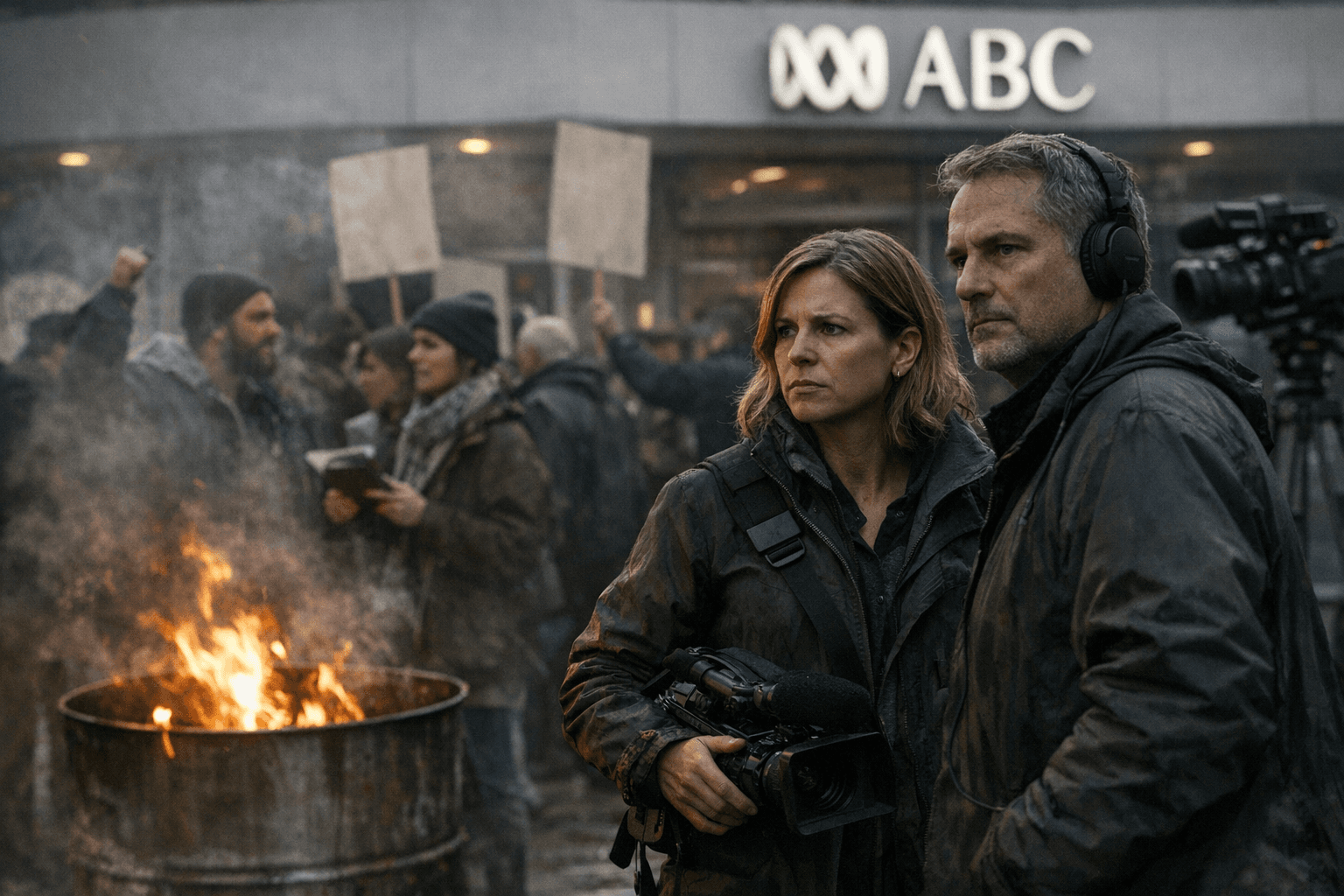
The industrial action began at 11am on Wednesday, 25 March, making it the first combined walkout by ABC journalists and technical and production staff in two decades. Sixty per cent of ABC staff who voted rejected the offer, paving the way for industrial action, including a 24-hour strike. The ABC has about 4,500 staff, just over three-quarters of whom voted on the offer.
The strike won 90 per cent support among voting media union members. While non-media staff walked off the job in 2023, journalists were not involved. It is the first major strike by media employees since 2006.
The rejected deal sat below the cost of living. The latest offer included 3.5%, 3.25% and 3.25% pay rises across three years — a total of 10% — while Australia's annual inflation rate stood at 3.8% in January, meaning the offer would have fallen behind inflation in years two and three. Workers rejected the deal because it offered a pay rise below inflation, along with concerns about career progression, night-shift penalty rates and reproductive health leave, the union said. Unions also demanded written protections against replacing journalists with artificial intelligence.
"We can't accept a deal that cuts conditions, sends pay backwards against inflation and refuses to rule out replacing ABC journalists with AI bots," said Michael Slezak of the Media, Entertainment and Arts Alliance, the union representing ABC journalists.
Media, Entertainment and Arts Alliance chief executive Erin Madeley said: "Experienced journalists and media workers are being asked to do more with less — with fewer opportunities for pay progression, less certainty about their future, and growing workloads." She framed the stakes in terms that extended well beyond any individual pay packet. "This isn't just a workforce issue. When skilled, experienced staff are forced out, communities lose trusted local voices, particularly in regional Australia where the ABC is often the only local newsroom."
The strike was expected to affect live broadcasts on television and radio. Without producers, camera operators and directors, programs including the prime-time current affairs flagship 7.30 faced severe difficulty getting to air. The MEAA said exemptions were in place to ensure emergency broadcasting continued, a significant provision given that ex-Tropical Cyclone Narelle was still tracking around the country's north-west.
Strike action was also backed by a ballot of non-media ABC staff, represented by the Community and Public Sector Union. CPSU representative Jocelyn Gammie said disruptions were "inevitable" unless management put a fair offer on the table. "The last thing union members want to do is inconvenience loyal ABC audiences by disrupting programming and services, but key bargaining claims remain unresolved," Gammie said.
ABC managing director Hugh Marks defended the position taken by management. Marks believed the rejected offer "appropriately" balanced fairness to staff against the ABC's ability to continue to invest in content and services. "The offer was both sustainable and financially responsible," he said. Marks pointed out that the average tenure of an ABC staff member was more than 10 years, and more than 90 per cent of staff were ongoing employees.
The ABC announced it would make an application to the Fair Work Commission to assist with resolving bargaining.
The 2006 strike left a vivid operational memory at the broadcaster: the then director of radio, Sue Howard, personally read local traffic and weather reports on air, while Radio National and NewsRadio filled their schedules with BBC programming. The ABC reaches an estimated 65% of Australia's population each week across television, radio and online, according to its 2022-23 annual report, a scale of public impact that gives Wednesday's walkout consequences far beyond any single newsroom's contract dispute.
A similar 24-hour strike was called off in early 2023 after then-managing director David Anderson tabled an improved 11% pay offer at the last moment, alongside a $1,500 cash bonus. This time, management did not blink before the deadline, and the picket lines formed as scheduled.
Know something we missed? Have a correction or additional information?
Submit a Tip