Aberdeen faces test of UK just transition as North Sea oil jobs fall
Aberdeen is becoming the UK’s live test of a just transition, but the hard question is whether new energy jobs arrive fast enough, pay well enough and use the same skills.
Aberdeen becomes the measure of the UK’s transition
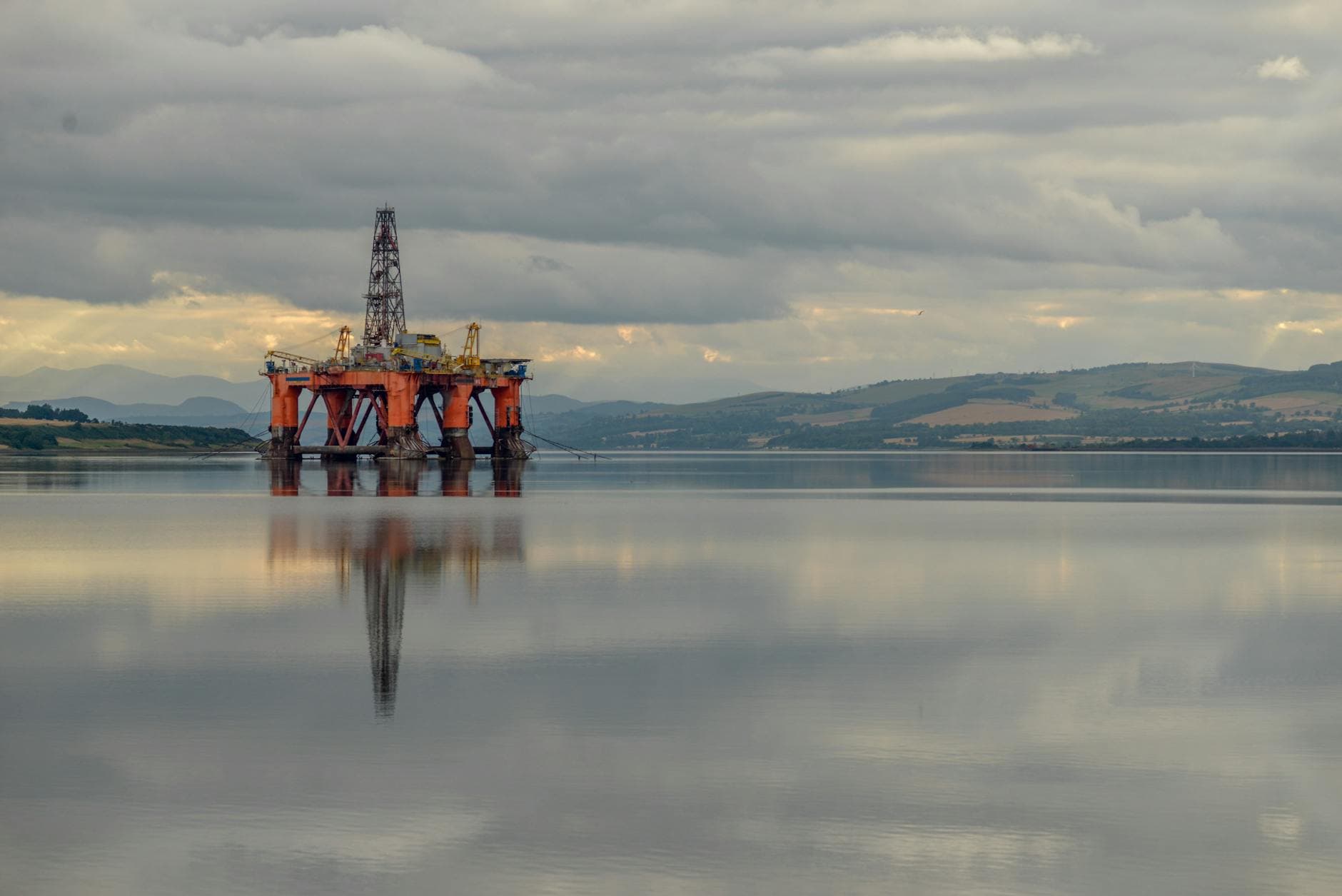
Aberdeen is no longer just a North Sea oil city. It is the place where the UK’s just-transition promise is being judged in real time, by workers, suppliers and local businesses that have lived through the basin’s decline. Ministers now present the city as a test case for whether the country can shrink oil and gas output without stripping away livelihoods, spending power and industrial capability.
That test is sharper because the debate is not abstract. It is about whether the next wave of energy work, from offshore wind to carbon capture and hydrogen, can actually replace the jobs that have sustained Aberdeen and Aberdeenshire for decades. The issue is not only how many new posts appear, but when they appear, what they pay, and whether the skills that exist in the oil patch can move cleanly into the industries meant to replace it.
The scale of the fall is already clear
The government’s own consultation material shows how steep the contraction has been. Oil and gas jobs fell from 191,000 in 2016 to 121,000 in 2023, a drop of about 37 percent. Over the longer term, North Sea oil and gas production fell by 72 percent between 1999 and 2023, a decline that has steadily undermined the basin’s workforce and the local economy built around it.
Officials say more than 70,000 jobs have been lost in the North Sea sector over the last decade. Aberdeen has felt that pressure directly, with recent reporting and industry commentary pointing to about 18,000 jobs lost since 2010. That is not just a line on a spreadsheet. It shows up in service firms, engineering businesses, port traffic, subcontracting work and the confidence of a city that once assumed the offshore economy would remain its defining strength.
The replacement economy is real, but the timing matters
The UK government argues that the transition can still be an industrial opportunity. Its late-2025 North Sea Future Plan, published on 26 November 2025, says existing oil and gas fields should be managed for their lifespan, with no new licences issued to explore new fields. The plan is designed, according to official material, to deliver a “fair, managed and prosperous transition” while also protecting energy security and climate obligations.
At the same time, the government says clean energy employment could grow from around 440,000 jobs in 2023 to 860,000 across the UK by the end of the decade. That is a large national expansion, but Aberdeen’s challenge is more immediate. A job total that rises across the country does not automatically solve the local problem if the new roles are elsewhere, if they arrive after layoffs, or if they require different work patterns and lower security than the offshore jobs they are meant to replace.
Decommissioning may offer one of the few near-term bridges. A 2026 report said urgent North Sea decommissioning could create as many as 25,000 UK jobs and generate £15 billion in economic benefit. That work is not a substitute for a healthy production base, but it does offer a way to keep some offshore skills, vessels and supply chains in use while the basin winds down.
Workers and unions are asking whether the transition is fair enough
The political dispute is not over the need to change, but over whether the change is being managed well. Unite the union, led by Sharon Graham, has blamed government policy for speeding up North Sea job losses, including after Harbour Energy announced hundreds of cuts. Campaign groups and some workers have made a different point: promised green jobs are not arriving fast enough, and they do not yet match oil and gas roles in pay, certainty or career progression.
That skepticism is rooted in experience. Offshore jobs often come with specialist pay structures, long rotations and well-established pathways for advancement. A clean-energy role may use some of the same engineering, marine or project-management skills, but that does not guarantee a like-for-like replacement for income, location or timing. Aberdeen’s reality check is therefore blunt: a just transition has to move people before the old jobs disappear, not after the city has already borne the shock.
The government is trying to build a bridge, not just make a promise
Ministers have responded with retraining and institutional support. In January 2025, the government launched a skills passport for oil and gas workers to identify routes into clean energy jobs. In July 2025, it announced £900,000 for an Oil and Gas Transition Training Fund in Aberdeen and Aberdeenshire, with support expected for around 200 workers moving toward offshore wind, hydrogen and carbon capture. Skills Development Scotland is part of that effort, and the aim is to make the handoff between sectors more practical for people who already work offshore or in the supply chain.
The institutional architecture widened further in the autumn and winter. In October 2025, Great British Energy launched an Aberdeen Energy Taskforce to help steer the city toward a clean energy role. In January 2026, the government convened a North Sea Future Board in Aberdeen with industry, trade unions and local leaders. The point of both bodies is to identify bottlenecks, shape investment and keep the region central to Britain’s industrial future.
That approach reflects pressure from multiple fronts. Michael Shanks, Ian Murray and Ed Miliband have all helped present the transition as an economic and industrial question, not simply a climate pledge. The North Sea Transition Authority, Offshore Energies UK and other sector bodies sit behind the workforce data that now frame the debate, while the Port of Aberdeen has warned of falling offshore activity and has explored voluntary redundancies as work slows.
Aberdeen’s outcome will shape the national verdict
The city’s experience now matters well beyond northeast Scotland. If Aberdeen can absorb the decline of oil and gas, keep supply chains intact and redirect skilled workers into offshore wind, hydrogen, carbon capture and decommissioning, the UK will have a model for how to manage a hard energy transition. If it cannot, the phrase “just transition” will sound less like policy and more like a slogan.
That is why Aberdeen remains such a revealing test case. The city shows both sides of the argument at once: a basin in long-term decline, and a still-credible industrial base that could be redirected if policy, investment and training arrive in the right order. The verdict will depend less on ambition than on timing, and on whether the jobs of the future can meet the standard set by the jobs that are disappearing now.
This article was produced by Prism’s automated news system from verified source data, official records, and press releases, then run through automated quality and moderation checks before publishing. The system is built and supervised by the people who set the standards it runs under. Read our full AI policy.
Did this article answer your question?