Ackman says Alphabet sale funded Microsoft stake, not bearish bet
Ackman said selling Alphabet funded a new Microsoft stake, trying to stop Wall Street from reading the move as a bearish call on Google’s parent.

Bill Ackman moved to blunt a signal that markets were eager to read into his latest trade: a sale of Alphabet shares was not, he said, a bet against the company. Pershing Square remained very bullish on Alphabet over the long term, but it used the position to help finance a new stake in Microsoft after that stock pulled back.
The move lands in a market where every shift by a prominent investor can be treated like a verdict on Big Tech’s future. Alphabet and Microsoft sit at the center of the AI and cloud-computing race, so a large rotation between the two could easily be mistaken for a relative call on which franchise has the stronger runway. Ackman’s message was more prosaic: capital had to be allocated somewhere, and Microsoft offered the more attractive entry point.

A first-quarter filing with the U.S. Securities and Exchange Commission showed Pershing Square owned about 5.65 million Microsoft shares valued at roughly $2.09 billion at the end of March. Over the same period, Alphabet Class C holdings fell from more than 6.1 million shares in the prior quarter to about 312,000, while Alphabet Class A holdings dropped from roughly 678,000 shares to about 32,000. The scale of the shift made clear that Pershing Square was not simply trimming around the edges.
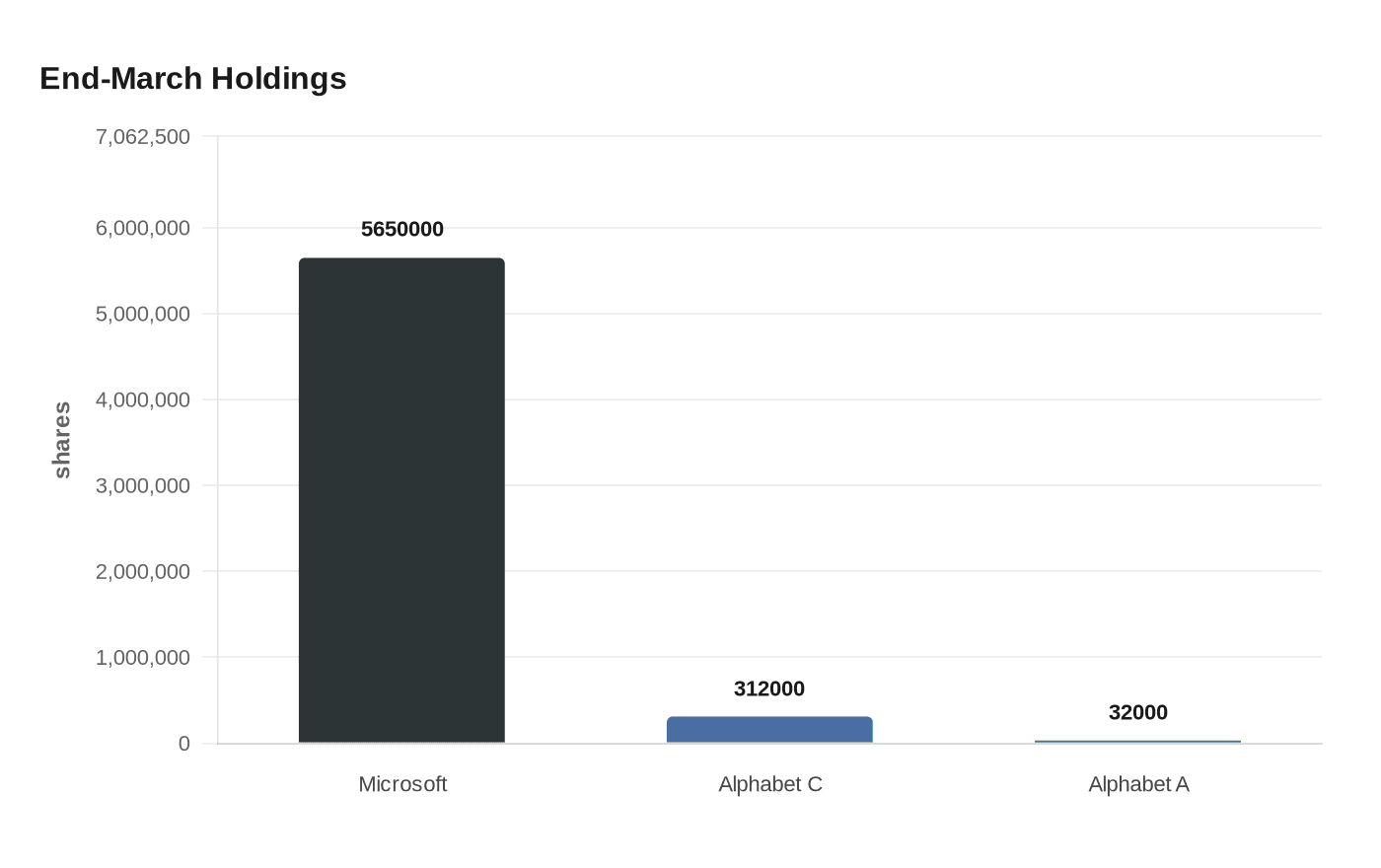
Ackman said he began buying Microsoft in February, after the stock fell following fiscal second-quarter earnings. He described Microsoft’s valuation as “highly compelling,” a formulation that points to the logic behind the trade: not a rejection of Alphabet’s prospects, but a judgment that Microsoft had become cheaper after a selloff. At the time of the disclosure, Microsoft shares were down more than 15% for the year, reflecting investor worries that its early lead in artificial intelligence was narrowing.
Pershing Square USA also counts Microsoft as a core holding, underscoring that the company is part of Ackman’s longer-term thesis rather than a one-off trade. The broader lesson is that high-profile investors now have to explain routine portfolio management in public, because a sale in one megacap tech name can instantly be read as a warning about the whole sector. In Ackman’s telling, the message was the opposite: both companies still look attractive, but valuation and funding needs determined where the money went first.
This article was produced by Prism’s automated news system from verified source data, official records, and press releases, then run through automated quality and moderation checks before publishing. The system is built and supervised by the people who set the standards it runs under. Read our full AI policy.
Did this article answer your question?

