ACLU seeks DNA testing in Tennessee death row murder case
Tennessee is set to execute Tony Von Carruthers on May 21, even as his lawyers seek DNA testing of evidence they say could point to another suspect.
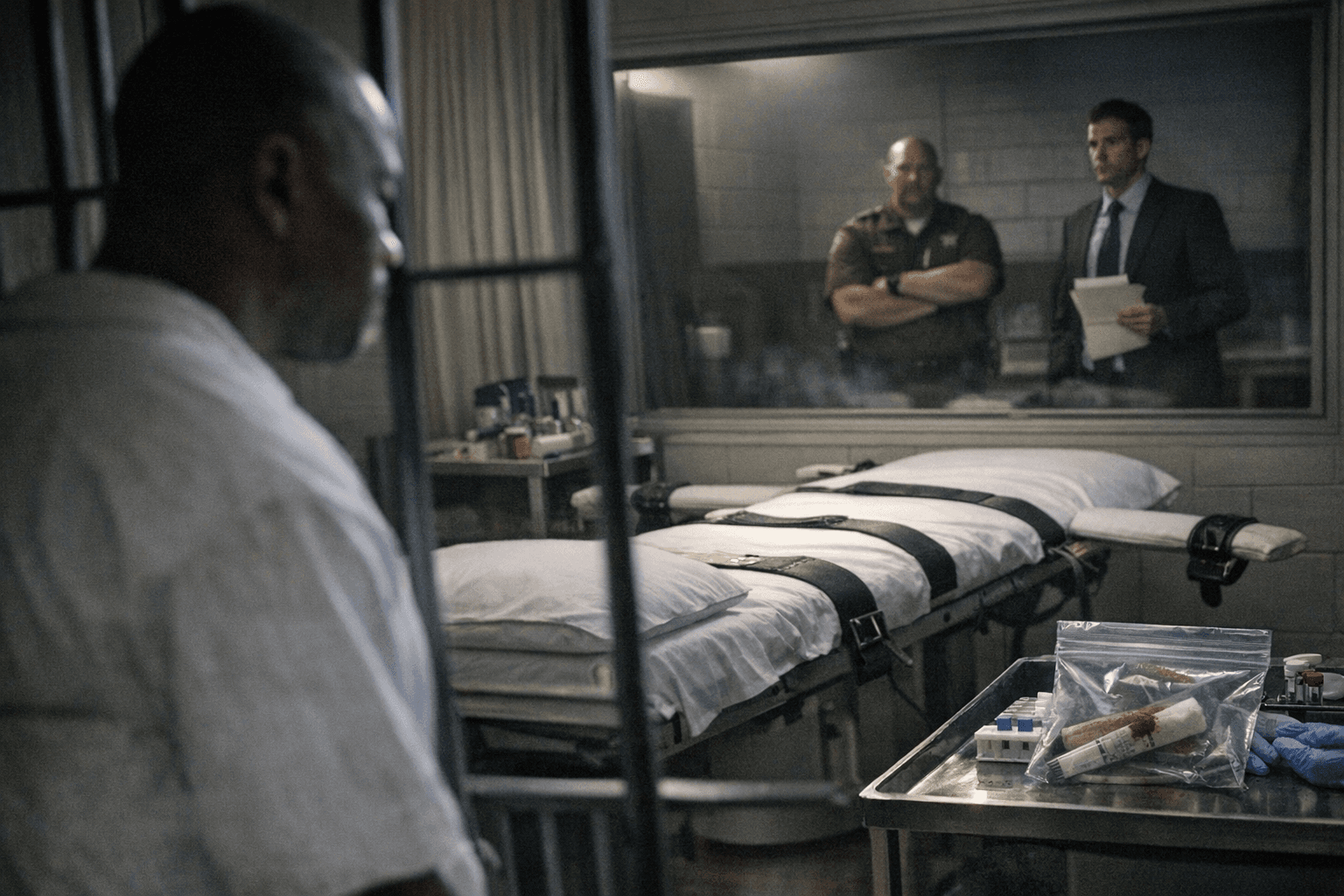
A month before Tony Von Carruthers is scheduled to be executed, his lawyers are pressing Tennessee’s highest court to pause the case long enough to test physical evidence they say could still identify the real killer. The emergency filing asks for DNA comparison of items recovered from the 1994 Memphis crime scene, including material the ACLU says has never been tested, along with unknown DNA that does not match Carruthers and has never been checked against Ronnie Irving, a man tied to the case as a possible alternative suspect.
Carruthers is set to die on May 21 for the kidnapping and murders of Marcellos Anderson, Delois Anderson and Frederick Tucker. A Shelby County jury convicted him in 1996 of three counts of first-degree murder, three counts of especially aggravated kidnapping and one count of especially aggravated robbery, after prosecutors said the victims were kidnapped, tortured and buried alive beneath a coffin in a Memphis cemetery.
The ACLU’s motion, filed April 9 with the Tennessee Supreme Court, argues that the case against Carruthers was built largely on jailhouse informant testimony rather than physical evidence. It says five fingerprints recovered from the crime scene still do not match him, and that evidence found with the victims includes unidentified DNA that also does not match him. That DNA, the filing says, has never been compared with Irving, whose fingerprints and DNA sample are reportedly on file with the Memphis medical examiner’s office.
The motion also says one of the people involved in the murders later said Carruthers was not part of the crimes and pointed investigators toward Irving. Co-defendant James Montgomery later accepted a reduced sentence, was released from prison in 2016 and signed a statement in 2010 backing Carruthers’ long-held claim that he was innocent and implicating Irving instead. Irving died in 2002.
The ACLU says the state also withheld for decades that key witness Alfredo Shaw was a paid career informant. Records disclosed in August 2024 showed Shaw had signed confidential agreements with law enforcement as far back as the mid-1980s and was paid through at least 2003. Carruthers’ legal team says his conviction rested almost entirely on Shaw’s testimony.
The DNA request comes on top of other pending litigation. Carruthers filed a 2021 fingerprint petition under Tennessee’s Post-Conviction Fingerprint Analysis Act, seeking comparison of prints from the victims’ home with Irving’s known prints, but that request was summarily dismissed. His federal lawyers have also raised a Ford v. Wainwright claim, arguing he is incompetent to be executed; the Shelby County Criminal Court rejected that challenge, and it remains on appeal. The Tennessee Court of Criminal Appeals has noted that Carruthers has already pursued direct appeals, post-conviction relief, federal habeas relief and motions to reopen, leaving his case once again before the courts as the state prepares to carry out a death sentence.
This article was produced by Prism’s automated news system from verified source data, official records, and press releases, then run through automated quality and moderation checks before publishing. The system is built and supervised by the people who set the standards it runs under. Read our full AI policy.
Did this article answer your question?

