AI boom fuels surge in demand for cybersecurity engineers
AI is flooding security teams with work: U.S. employers posted 514,359 cybersecurity jobs in 12 months, while staffing gaps and AI-driven threats keep widening.

Artificial intelligence is turning cybersecurity into one of the labor market’s clearest winners. U.S. employers posted 514,359 cybersecurity job listings over the prior 12 months as of June 2025, up by nearly 57,000 openings, or 12%, from the previous year, a sign that companies and public agencies were racing to build stronger defenses as AI expanded the attack surface.
The hiring surge reflects a simple but costly paradox: the same systems generating code at scale are also generating new security risks. Frontier models, including Anthropic’s Mythos, have sharpened concerns about how quickly AI can accelerate vulnerability discovery, automate attacks and force organizations to treat security as a gatekeeper before deploying new tools. NIST and CompTIA described the latest job data as evidence that employers were strengthening defenses across a broad range of threats.
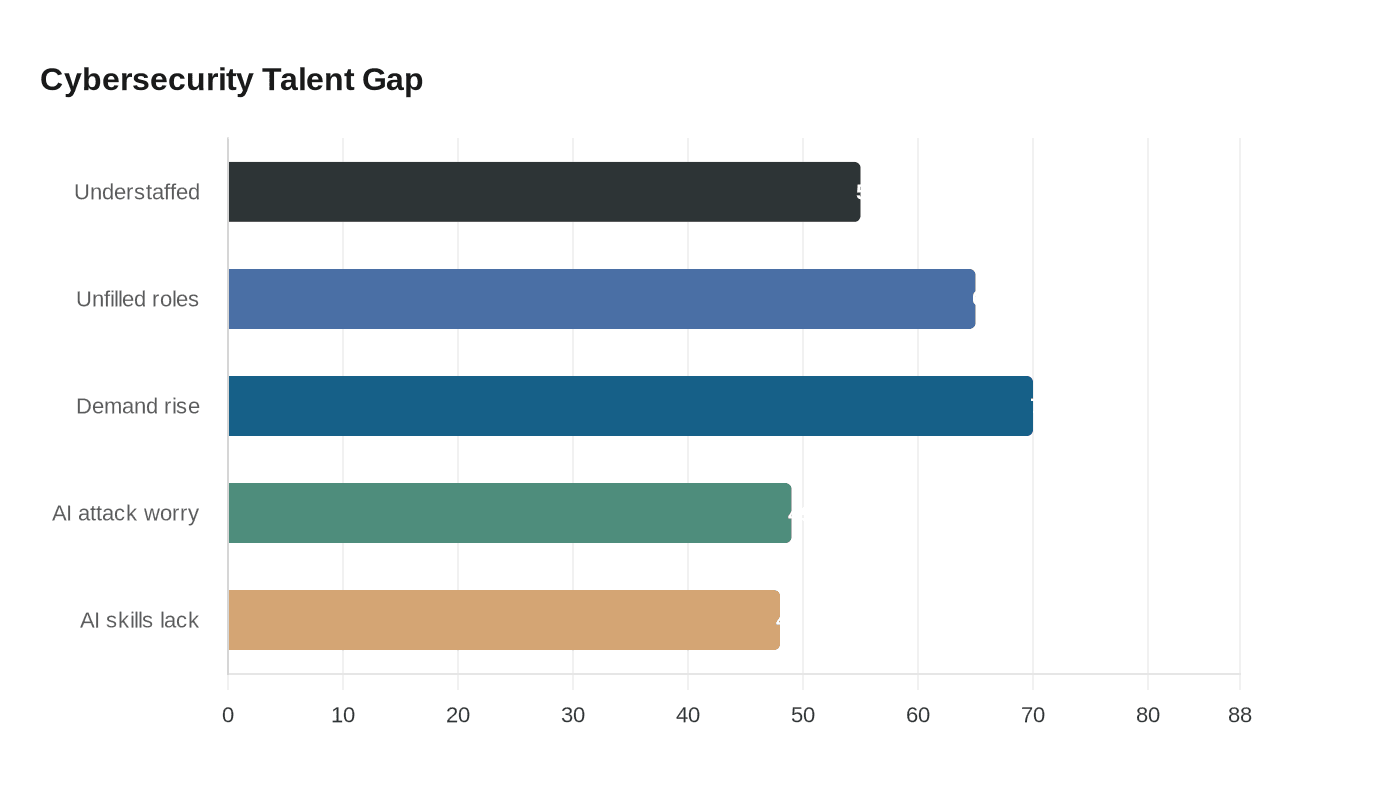
The talent shortage remains severe. ISACA’s 2025 State of Cybersecurity report found that 55% of cybersecurity teams were understaffed and 65% had unfilled cybersecurity positions. Even more telling, 70% of security professionals said they expected demand for technical cybersecurity workers to rise over the next year, suggesting that the problem is not a temporary hiring spike but a durable shortage of specialized labor.

AI itself is deepening the squeeze. Fortinet’s 2025 global cybersecurity skills-gap report found that 49% of cybersecurity leaders worried AI would increase the volume and sophistication of cyberattacks, while 48% said the biggest obstacle to implementing AI in cybersecurity was a lack of staff with enough AI expertise. That leaves security managers trying to hire people who can defend against machine-speed threats while also deploying machine-speed defenses of their own.
ISC2’s 2025 workforce study added a somewhat steadier backdrop: budget cuts, layoffs and hiring freezes had leveled off from the prior year, even as skill requirements kept rising. But the global mismatch remains stark. Related ISC2-linked research estimated the cybersecurity workforce at about 5.5 million from 2023 to 2024, while the need for workers climbed from just over 9 million to about 10.2 million.
For the broader economy, that gap carries a clear signal. AI may reduce demand in some clerical and routine technical roles, but it is increasing the premium on engineers who can harden systems, secure code and respond to faster-moving threats. In the AI boom, cybersecurity is not being displaced. It is being pulled deeper into the center of enterprise spending.
This article was produced by Prism’s automated news system from verified source data, official records, and press releases, then run through automated quality and moderation checks before publishing. The system is built and supervised by the people who set the standards it runs under. Read our full AI policy.
Did this article answer your question?