AI system mimics doctors to spot lung cancer earlier on CT scans
An AI CT reader topped 96% accuracy in tests, but the bigger question is whether it can catch lung cancer early enough to change survival.
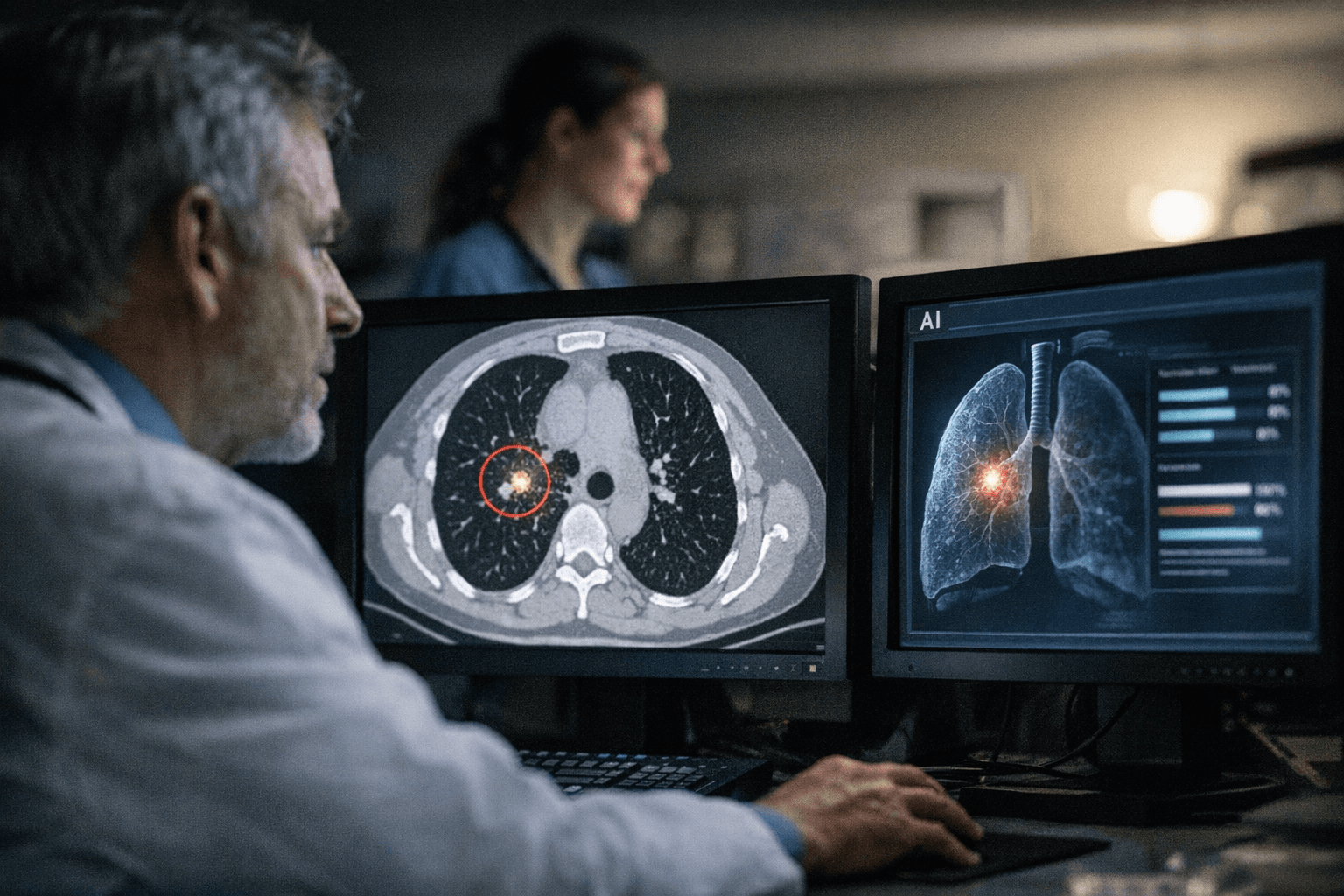
Too many lung cancers are still found after the best chance for treatment has passed, and that is the bottleneck this new CT-reading system is trying to break. Researchers at Kaunas University of Technology built an artificial intelligence model that reads scans the way doctors do, weighing tiny lung details against the full anatomical picture instead of forcing one or the other.
The system was trained on CT scans from healthy people and lung cancer patients so it could separate normal tissue, benign changes and malignant tumors. In the tests described by the researchers, the model reportedly cleared 96% accuracy and held steady across different checks, a sign the approach may be more robust than older methods in the same training setting. Inzamam Mashood Nasir, one of the study authors, described the idea this way: "you can think of it as having a magnifying glass and a full view of the scan at the same time."
That is the promise, but it is not yet the proof that matters most in practice. Lung cancer remains the leading cause of cancer death in the United States, with 218,893 new cases reported in 2022 and 131,584 deaths in 2023. Overall 5-year relative survival is about 29%, and the American Cancer Society says survival has improved to 28% for people diagnosed in 2015-2021, but the stage at diagnosis still drives the outcome. When lung cancer is caught early, 5-year survival can rise above 90%; in late-stage disease, it falls to around 10%. That gap is why a tool that finds subtler nodules matters so much.
The question now is who gets access to that earlier detection. The U.S. Preventive Services Task Force recommends annual low-dose CT screening for adults ages 50 to 80 with a 20 pack-year smoking history who currently smoke or quit within the past 15 years, a broader standard than the older 55-to-80, 30 pack-year rule. Even with that expansion, screening uptake remains uneven, and any AI system will still depend on whether patients reach a scanner in the first place and whether hospitals can absorb a new reading workflow without adding delays. The researchers said the dual-scale method could improve both accuracy and efficiency, but broad clinical validation will determine whether it truly reduces false alarms and helps radiologists catch cancers before they spread.
The stakes extend well beyond one hospital system. Kaunas University of Technology said lung cancer accounts for nearly one in five cancer deaths worldwide, or about 1.8 million deaths a year. That makes the next phase of testing decisive: if the model can hold up outside the lab, it could become a radiology assistant that helps clinicians prioritize uncertain scans and spot disease before the window for cure narrows.
This article was produced by Prism’s automated news system from verified source data, official records, and press releases, then run through automated quality and moderation checks before publishing. The system is built and supervised by the people who set the standards it runs under. Read our full AI policy.
Did this article answer your question?