Airports Warn EU of Systemic Fuel Shortage if Hormuz Shipments Don't Resume
European airports have three weeks before jet fuel runs out across the EU, with Italian airports already rationing and SAS cancelling 1,000 April flights.
Airports Council International Europe, the trade body representing more than 600 airports across the European Union, sent a formal warning to Brussels on April 9 that the continent is weeks away from a structural aviation fuel crisis. In a letter addressed to Transport Commissioner Apostolos Tzitzikostas and Energy Commissioner Dan Jørgensen, Director-General Olivier Jankovec set a stark deadline: if shipments through the Strait of Hormuz do not resume "in any significant and stable way within the next three weeks, systemic jet fuel shortage is set to become a reality for the EU."
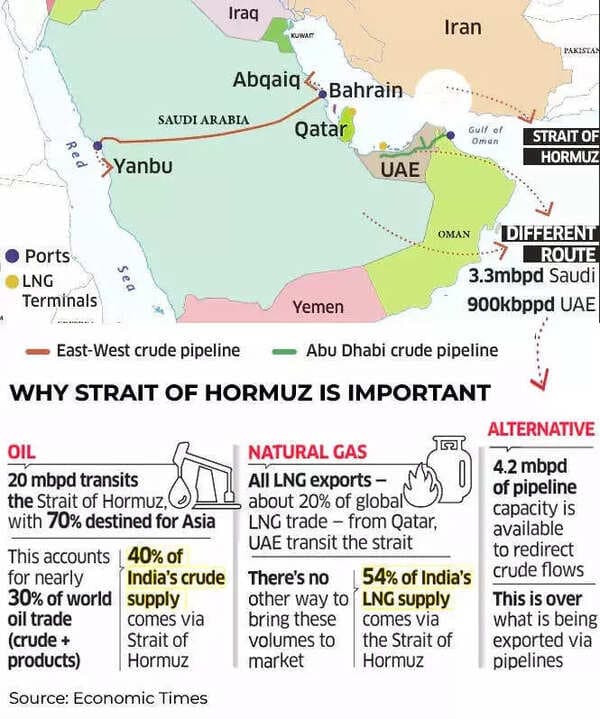
The Strait of Hormuz has been effectively closed to most tanker traffic since the United States and Israel launched a bombing campaign against Iran on February 28, 2026, collapsing throughput by an estimated 70 to 80 percent. The waterway normally carries roughly 20 percent of the world's oil supply. Though the US reached a two-week ceasefire agreement with Iran this week, the passage remains blocked in practice. Brent crude was trading near $96 a barrel on Thursday, while benchmark European jet fuel prices reached $1,838 per tonne, more than double the $831 per tonne recorded before the war began.
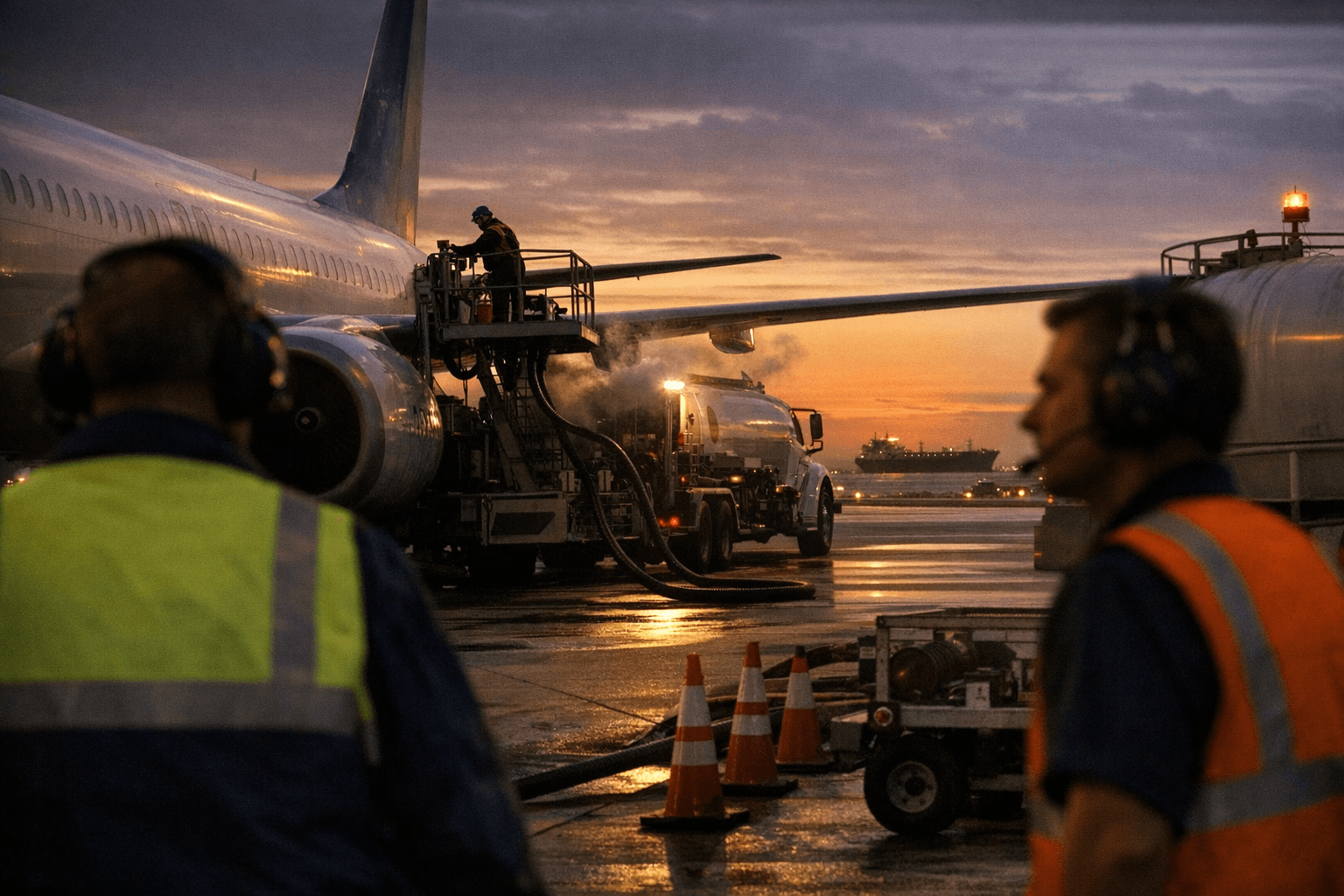
The consequences are already visible on the ground. Air BP Italia issued emergency notices capping refueling at seven Italian airports, including Milan Linate, Venice Marco Polo, Bologna, and Treviso, at just 2,000 litres per aircraft for non-priority short-haul flights. The restriction prioritizes medical, state, and long-haul services. Airlines operating into those hubs have turned to fuel tankering, loading extra supplies at airports where stocks remain adequate before flying into rationed Italian terminals, though that strategy only defers the problem.
Some European states hold strategic paraffin reserves covering as few as eight to ten days of consumption before rationing becomes unavoidable. The ACI letter underlined that no unified EU mechanism exists to track jet fuel production and availability across member states, a structural gap Jankovec called incompatible with a crisis of this scale. "Relying on market forces and adaptation alone is not an option," he wrote, "as pricing is likely to be the main lever used to manage the situation."
The carrier responses illustrate how quickly the calculus is shifting. Scandinavian airline SAS has already cancelled 1,000 flights in April. Ryanair CEO Michael O'Leary has warned of summer capacity cuts, with internal estimates pointing to the withdrawal of between 5 and 10 percent of the carrier's summer schedule if the disruption persists. Lufthansa CEO Carsten Spohr last week told employees the German carrier was building contingency teams that could ground up to 40 aircraft. Many airlines entered the crisis with substantial fuel hedging in place, covering roughly 80 percent of 2026 requirements at pre-crisis prices, but physical availability, not cost, is now the critical variable once those pre-war cargoes are exhausted around mid-April.
Passengers are already paying for the uncertainty. Average European airfares hit $465 this week, the highest for this period since at least 2019, up 24 percent against the same week last year. On April 6, nearly 7 percent of all global flights were cancelled in a single day, with North America absorbing the sharpest impact.
Jankovec urged the European Commission to pursue three immediate interventions: a continent-wide mapping of jet fuel production and availability, a temporary lifting of restrictions that limit airports' ability to import fuel, and the exploration of a collective EU-wide purchasing mechanism. He was explicit that the timing could not be worse: "The fact that we are entering the peak summer season is only adding to those concerns." Without coordinated action before the three-week window closes, the summer travel schedule that European airports and economies depend on faces cancellations that market forces, by ACI Europe's own analysis, are powerless to prevent.
Sources:
Know something we missed? Have a correction or additional information?
Submit a Tip