Albanese Assures Australians Fuel Supply Is Secure Amid Panic Buying
Petrol hit 238 cents a litre — up from 171 cents just four weeks ago — as Albanese called an emergency national cabinet meeting and urged Australians to stop panic buying.
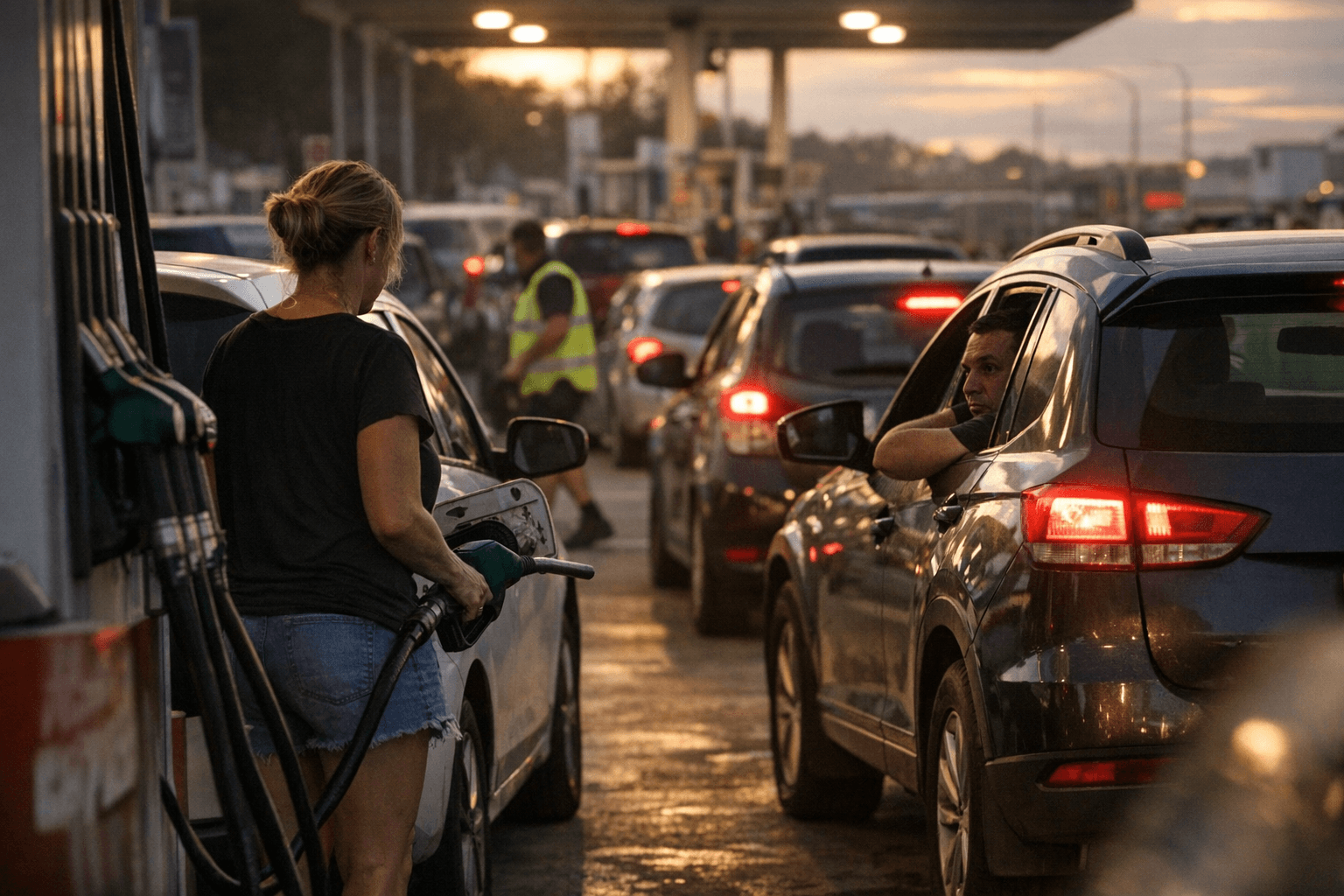
Australia imports about 90 percent of its fuel, and the bill for that vulnerability landed at every service station bowser this week. A deepening fuel crisis, triggered by the ongoing US-Israel war with Iran that has disrupted global oil flows through the Strait of Hormuz, sent petrol prices surging to record levels while regional shortages persisted despite government assurances of adequate national stocks.
Prime Minister Anthony Albanese moved to steady nerves on Friday, telling reporters that the nation's fuel supply remains "secure." Standing alongside him, Energy Minister Chris Bowen went further: "Our fuel supply is currently secure. However, I want us to be over-prepared," Albanese told reporters. Bowen put a specific timeframe on the guarantee: "For the next few weeks, Australia's supply of petrol, diesel, and oil will be the same, if not higher," with petrol reserves at 38 days and diesel and jet fuel at 30 days — figures Bowen said were bolstered by releases from the strategic reserve.
The numbers on the forecourt tell a harder story. Petrol prices surged to record levels, with the Australian Institute of Petroleum placing the average retail price at 238 Australian cents per litre as of Sunday, up from 171 cents four weeks earlier. The consumer watchdog's figures were just as stark: diesel prices across Australia's five largest cities rose by an average of 10 percent over the past week alone, while unleaded petrol was up 8 percent. In New South Wales, one in seven service stations had run out of at least one type of fuel.
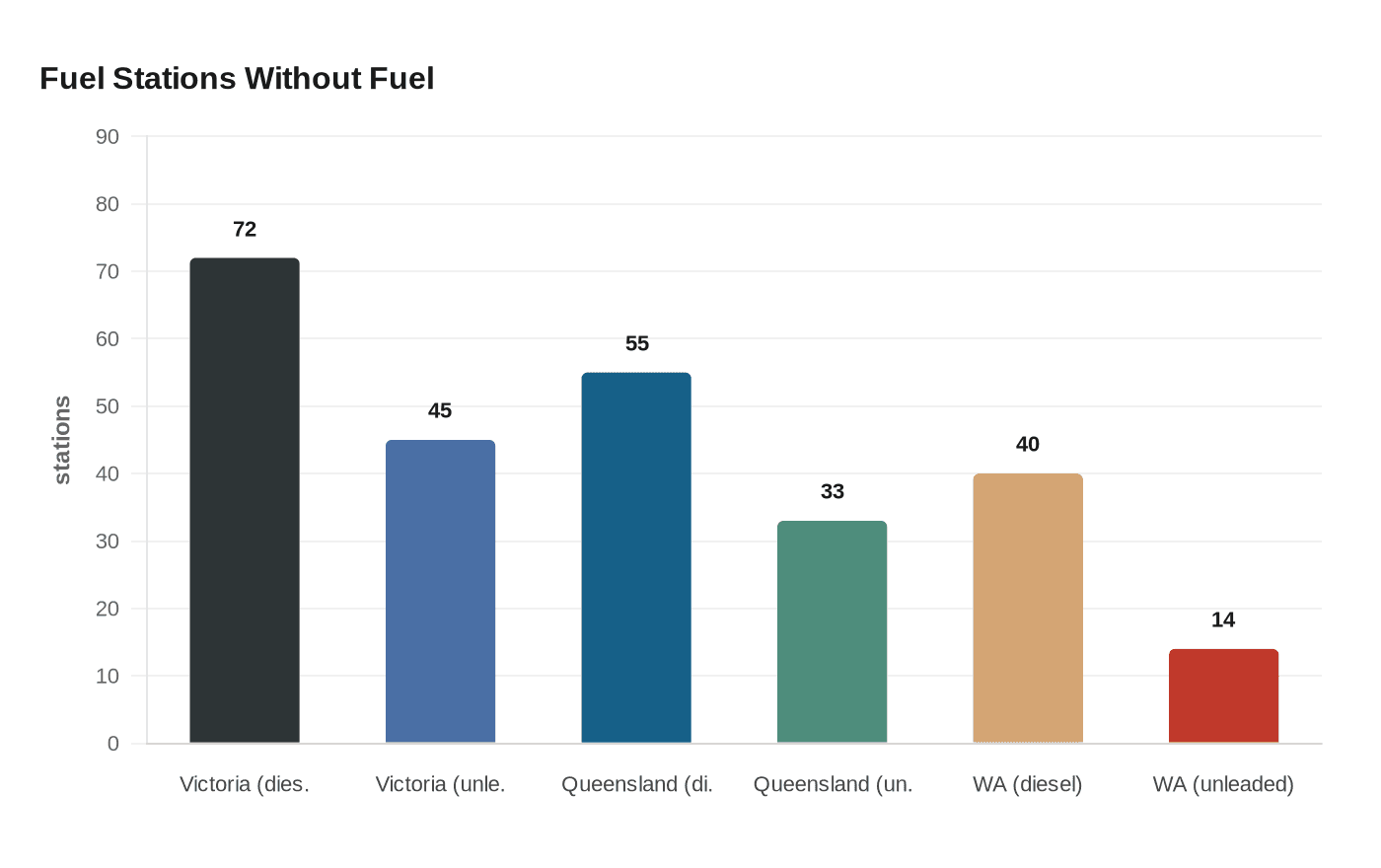
Across other states, the picture was uneven but broadly alarming. At least 600 retail sites across the country had run out of at least one type of fuel, with shortages mainly concentrated in New South Wales and Victoria, where they affected about 10 percent of total outlets. ABC News figures showed Victoria with 72 stations out of diesel and 45 without regular unleaded; Queensland recorded 55 and 33 respectively; Western Australia, 40 without diesel and 14 without unleaded. Farmers were battling to conserve fuel consumption as prices rocketed and petrol stations ran dry in regional areas.
The government attributed the shortages to demand and distribution failures rather than any reduction in the total volume of fuel entering the country. Energy Minister Bowen confirmed that six oil shipments bound for Australia had been turned back or deferred due to escalating tensions, compounding fears that key Asian suppliers may prioritise domestic needs over exports. Two domestic refineries, Bowen said, were "working full pelt," though he acknowledged it would be better to have more. The government has also released up to 20 percent of the baseline Minimum Stockholding Obligation for petrol and diesel, allowing the release of up to 762 million litres from Australia's domestic reserves, and lowered fuel quality standards to broaden available supply.
The Strait of Hormuz, a major maritime choke point for global energy trade, has experienced ongoing geopolitical and economic disruption since 28 February 2026, following joint military strikes by the United States and Israel on Iran. The strait has been effectively closed for almost four weeks, throwing global oil markets into chaos, with no clear end in sight. Adding to the pressure locally, a cyclone in Western Australia triggered outages at two of the world's largest LNG plants, Gorgon and Wheatstone, which together supply about 5 percent of the global LNG market, according to Chevron.
Albanese will convene a second emergency national cabinet meeting next week to coordinate the national response to the fuel crisis as the fallout from the Iran war continues to escalate. His government also appointed Anthea Harris, the former boss of the Australian Energy Regulator, as head of a national fuel supply taskforce to tackle shortages and improve the domestic fuel supply chain.
The political pressure was mounting from multiple directions. Opposition leader Angus Taylor called for halving the fuel excise to cut ballooning petrol prices, an idea the Labor government had already rejected. Queensland Premier David Crisafulli was blunt in state parliament: "Comments out of Canberra that there's more fuel today than two months ago belies Aussies' intelligence." Tasmanian Premier Jeremy Rockliff called for "greater pace" to the national response and also pushed for an excise reduction. NSW Premier Chris Minns urged national coordination, saying that "particularly on the borders, we have to act in unison."
The government said that voluntary measures to help reduce fuel demand were on the table, but it was "not there yet" and too soon to consider rationing. When asked directly whether emergency powers to ration fuel might be invoked, Bowen was succinct: "We're a long way from that." Innes Willox, chief executive of the Australian Industry Group, disagreed with the cautious approach: "The federal government should now lay every option on the table," he said, calling on national cabinet to consider rationing, cuts to the excise, and discounted public transport.
Albanese's message to Australians caught in the middle was direct. "My message to Australians as well is to not take more fuel than you need. Think of others. Be a good neighbour, a good community member, and a good Australian," he said. UNSW Business School experts say the current wave of panic buying is being driven more by perception and expectation than actual shortages — a dynamic the government is clearly betting it can interrupt before the stockpile numbers begin to tell a different story.
Know something we missed? Have a correction or additional information?
Submit a Tip