All U.S. Fifth Fleet ships leave Bahrain harbor amid Iran tensions
Satellite images and OSINT show the U.S. Fifth Fleet fleet emptied Bahrain port and moved to open waters, a precaution that heightens local economic and public health risks.
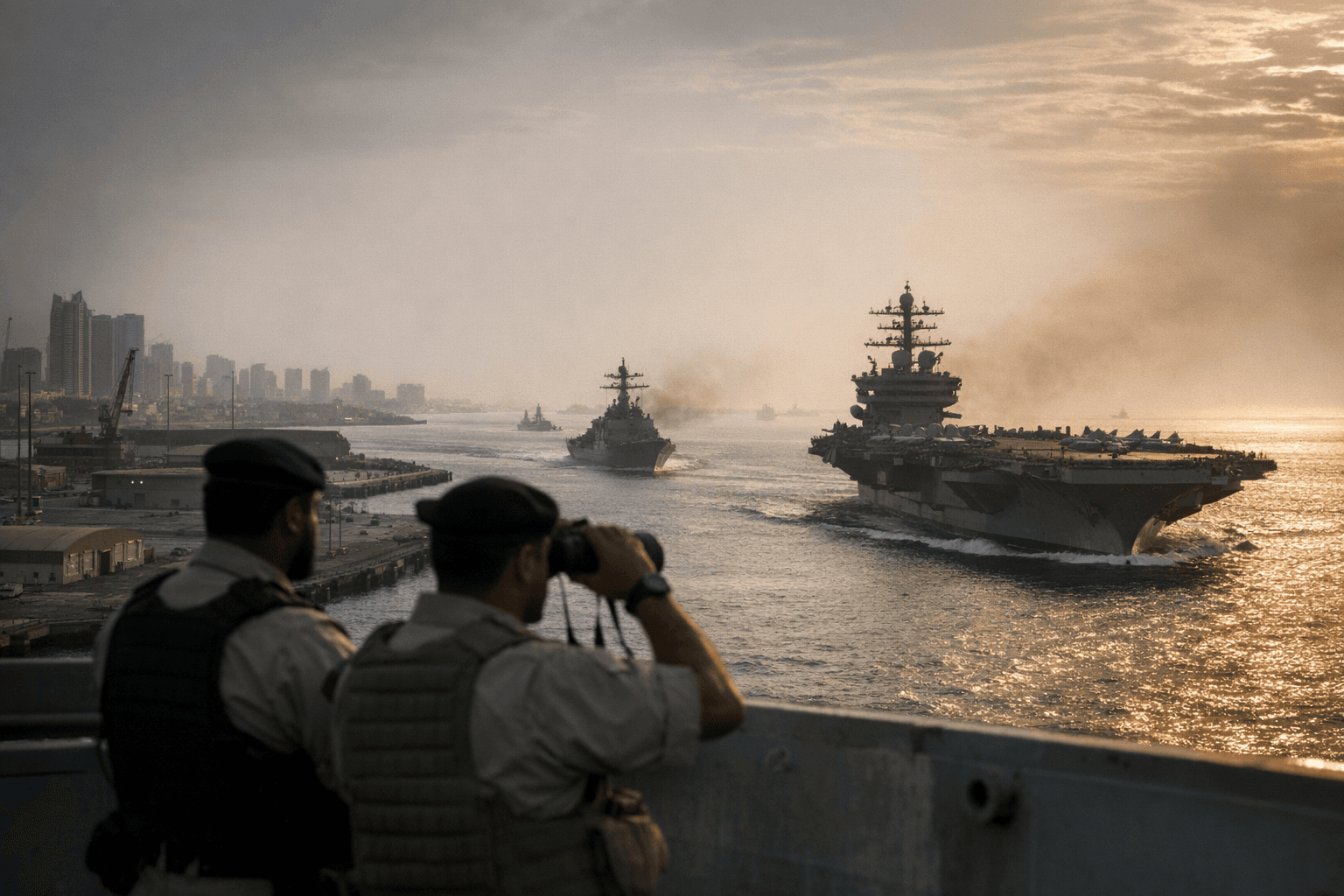
Satellite imagery and multiple open-source intelligence accounts show all U.S. Navy vessels normally berthed at the Fifth Fleet headquarters in Bahrain have steamed out of port and are anchored or underway in international waters, a precaution taken as tensions with Iran escalate. The port at Naval Support Activity Bahrain appears largely empty, reducing onshore visibility of U.S. assets and signaling a defensive posture intended to blunt the risk of a concentrated strike.
The operational move removes a fixed, high-value target from the harbor but also widens the effect on local systems and people. Naval logistics, maintenance and provisioning contracts that sustain fleet operations rely heavily on Bahraini and expatriate workers. With ships at sea, scheduled on-base work shifts and supplier deliveries are disrupted, threatening pay and income for service workers and small businesses that depend on the base for daily revenue.
Public health officials and hospital administrators in Manama and surrounding governorates face immediate secondary risks. In a conflict scenario the Fifth Fleet base is considered a prime target, and wartime casualties would likely increase demand on emergency departments and trauma services. Displacement of military medical assets off the island could slow medevac and on-site surgical capacity, leaving civilian hospitals to absorb additional strain. Bahrain’s sizable migrant worker population, which provides much of the port and service labor, often has more limited access to health care and safety nets, making them especially vulnerable to sudden income loss and reduced care access.
The maritime disruption also carries wider economic and health-system implications. The Gulf’s shipping lanes are vital for energy and commodities; roughly one-fifth of global seaborne oil transit passes through the Strait of Hormuz. Any prolonged naval standoff or attacks that threaten merchant traffic could push fuel prices higher, increase transport costs for medical supplies, and complicate deliveries of life-saving medicines to the region.
Policy consequences are immediate. Moving the fleet offshore demonstrates a U.S. decision to prioritize force protection while maintaining operational reach, but it also raises the political stakes with Iran and with Gulf partners who host U.S. facilities. For Bahrain, the relocation places a new burden on civil authorities to protect a civilian population that hosts a major foreign military hub. Regional public health preparedness, from hospital surge capacity to supply chain contingency planning, comes into sharper focus as governments weigh the prospect of escalation.
The empty harbor also creates local uncertainty. Workers, contractors and families connected to naval operations face disrupted income and unclear timelines for return. Community advocates and public health experts warn that lower-income residents and migrant laborers will carry the brunt of economic and health impacts unless targeted protections are implemented.
Officials from U.S. Central Command, the U.S. Navy and Bahraini authorities have not yet released detailed public statements explaining the operational timeline for the fleet’s redeployment. For now the movement is a clear operational precaution with tangible consequences for port operations, local economies and health systems across the island. The next indicators to watch are official briefings on the duration of the offshore posture, maritime traffic through regional chokepoints, and any steps by Bahraini authorities to shore up social and health supports for affected workers and families.
This article was produced by Prism’s automated news system from verified source data, official records, and press releases, then run through automated quality and moderation checks before publishing. The system is built and supervised by the people who set the standards it runs under. Read our full AI policy.
Did this article answer your question?