Alternative asset managers face scrutiny as private credit fundraising slows
Private credit fundraising fell to $10.7 billion, its weakest quarter in three years, even as retail funds still pulled in record cash.
Wall Street’s biggest alternative asset managers are heading into earnings season with a sharper question hanging over the business model: can they still sell investors on growth when private credit fundraising has slowed, AI worries are rising and redemptions are getting harder to dismiss?
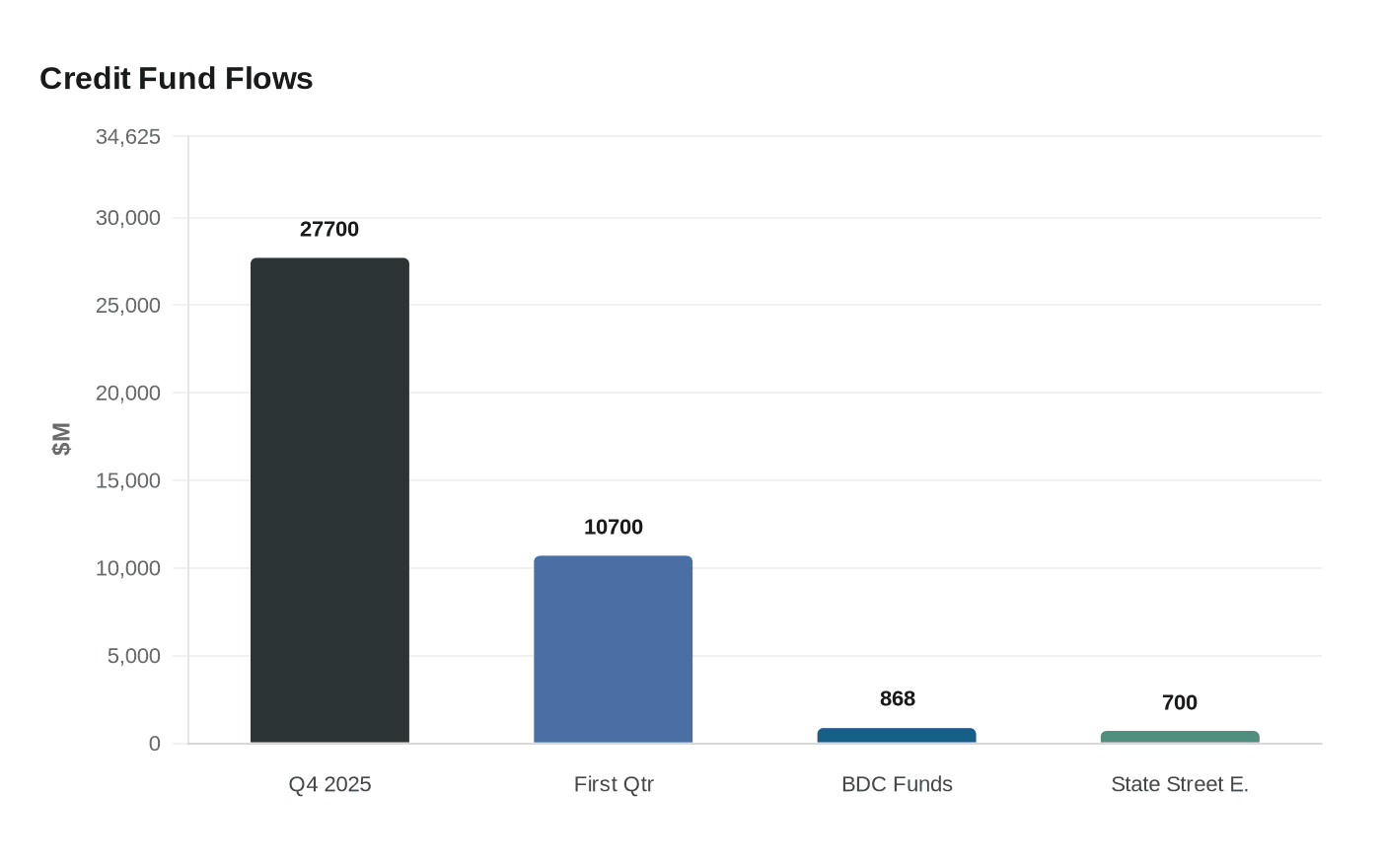
The stress is showing up in the numbers. Direct-lending funds raised just $10.7 billion in the first quarter, the lowest quarterly total in three years, according to data from With Intelligence. That followed seven straight quarters above $20 billion and marked a steep drop from $27.7 billion in the fourth quarter of 2025. For Blackstone, Ares, KKR and Blue Owl, the slowdown adds pressure to show that the industry’s long-running expansion story is still intact.
At the same time, the sector is confronting a credibility problem tied to retail money. Oppenheimer cut price targets on several firms after what it called a shift in investor perceptions, warning that recent retail redemptions have called into question the pace of the industry’s consumer-facing growth story. Glenn Schorr of Evercore ISI said first-quarter results are unlikely to look as strong as the recent bank earnings that have set a high bar for Wall Street. Blackstone is due to report on April 23, making it the first major test of whether managers can reassure markets before more results land.
The pressure intensified after Blue Owl capped withdrawals from two retail-focused funds in early April, a move that sent several alternative asset managers lower and pushed Blue Owl’s shares as much as 8.6% to a record low. Apollo Global, Blackstone, Ares, KKR and Carlyle Group all came under selling pressure after the announcement, underscoring how quickly liquidity concerns can spill across the sector.
Yet the flows picture is not entirely dark. LSEG Lipper data showed 22 BDC funds attracted $868 million in the first quarter, the biggest inflow ever for that category. The State Street IG Public & Private Credit ETF alone drew about $700 million. VanEck’s Brandon Rakszawski said, “we’re not seeing in our flows what we’re seeing in the headlines,” arguing that demand may be more resilient than the market’s mood suggests.
That split between softening institutional fundraising and persistent retail inflows is now the central test for alternative asset managers. Investors want proof that fee growth can keep pace, that exits and valuations can hold up, and that AI disruption will not erode the earnings power of portfolio companies. The next round of results will show whether the industry’s growth story is merely under pressure or starting to lose its grip.
This article was produced by Prism’s automated news system from verified source data, official records, and press releases, then run through automated quality and moderation checks before publishing. The system is built and supervised by the people who set the standards it runs under. Read our full AI policy.
Did this article answer your question?