Stocks slip as Iran deal doubts lift oil and rattle Wall Street
Iran-talk doubts pushed oil higher and knocked the S&P 500 down 0.6%, as traders quickly repriced inflation and rate risk.

A pause in Vice President JD Vance’s trip to join Iran negotiations shook Wall Street, lifting crude fears and knocking the major U.S. stock averages lower as investors recalculated how a Middle East flare-up can travel through inflation expectations and interest-rate bets in a matter of hours.
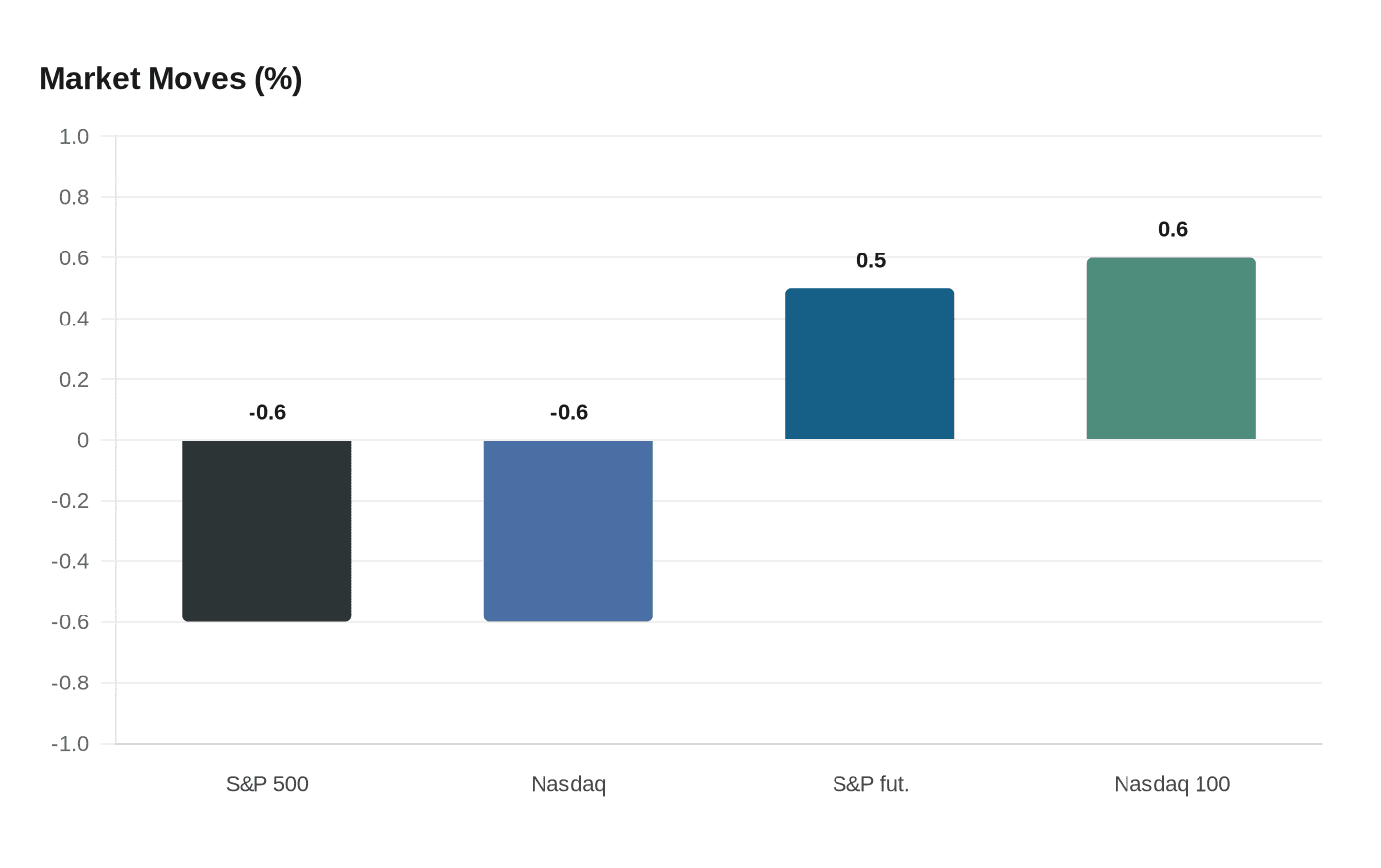
The S&P 500 fell 0.6% at the close, the Nasdaq Composite also lost 0.6%, and the Dow Jones Industrial Average dropped 293 points, or 0.6%, after reports that the trip was paused because Tehran had not shown enough commitment to the talks. That reaction fits the market’s recent pattern: when oil jumps on Iran headlines, traders often move first into energy and defensive shares and out of sectors that depend on cheap fuel and steady consumer demand.
Oil’s influence matters because it feeds directly into the inflation outlook. Bloomberg said the S&P 500 had hovered near a technical correction zone in late March as the Iran war pushed up oil prices and inflation expectations, a reminder that geopolitics can change the path for interest rates just as quickly as it changes the price at the pump. Higher crude tends to harden expectations for sticky inflation, which can make investors less willing to pay rich valuations for growth stocks and more cautious on rate-sensitive parts of the market.

The market had already been swinging hard on every sign of progress or failure in the region. CNBC said a U.S.-Iran ceasefire earlier triggered a relief rally that sent stocks surging and oil plunging below $100, while Bloomberg later reported that the S&P 500 hit a record close on April 15 and was up more than 7% in April by April 16. By Tuesday, though, Brent crude had slipped only modestly, down 0.4% to around $89 a barrel, and the Cboe Volatility Index hovered near 19, showing traders were still hedging against another turn in the talks.
Futures pointed to a steadier start before the opening bell, with S&P 500 futures up 0.5% and Nasdaq 100 futures up 0.6%, but the market was still juggling several large catalysts at once. Kevin Warsh’s Senate Banking Committee hearing and Apple’s decision to name John Ternus as Tim Cook’s successor, with Cook becoming executive chairman on September 1, added to the crosscurrents.
Even after Tuesday’s setback, the broader benchmark remained close to its highs. CNBC’s market page showed the S&P 500 at 7,064.03, down 45.11 points, or 0.63%, against a 52-week high of 7,147.52 reached on April 17. That leaves retirement accounts tethered to the same geopolitical headlines moving crude, rates and stocks all at once.
This article was produced by Prism’s automated news system from verified source data, official records, and press releases, then run through automated quality and moderation checks before publishing. The system is built and supervised by the people who set the standards it runs under. Read our full AI policy.
Did this article answer your question?

