Alternative browsers challenge Chrome and Safari as regulations reshape the web
Browser competition is now about engines, defaults and AI, not just search. Chrome and Safari still dominate, but regulation and privacy features are widening the fight.
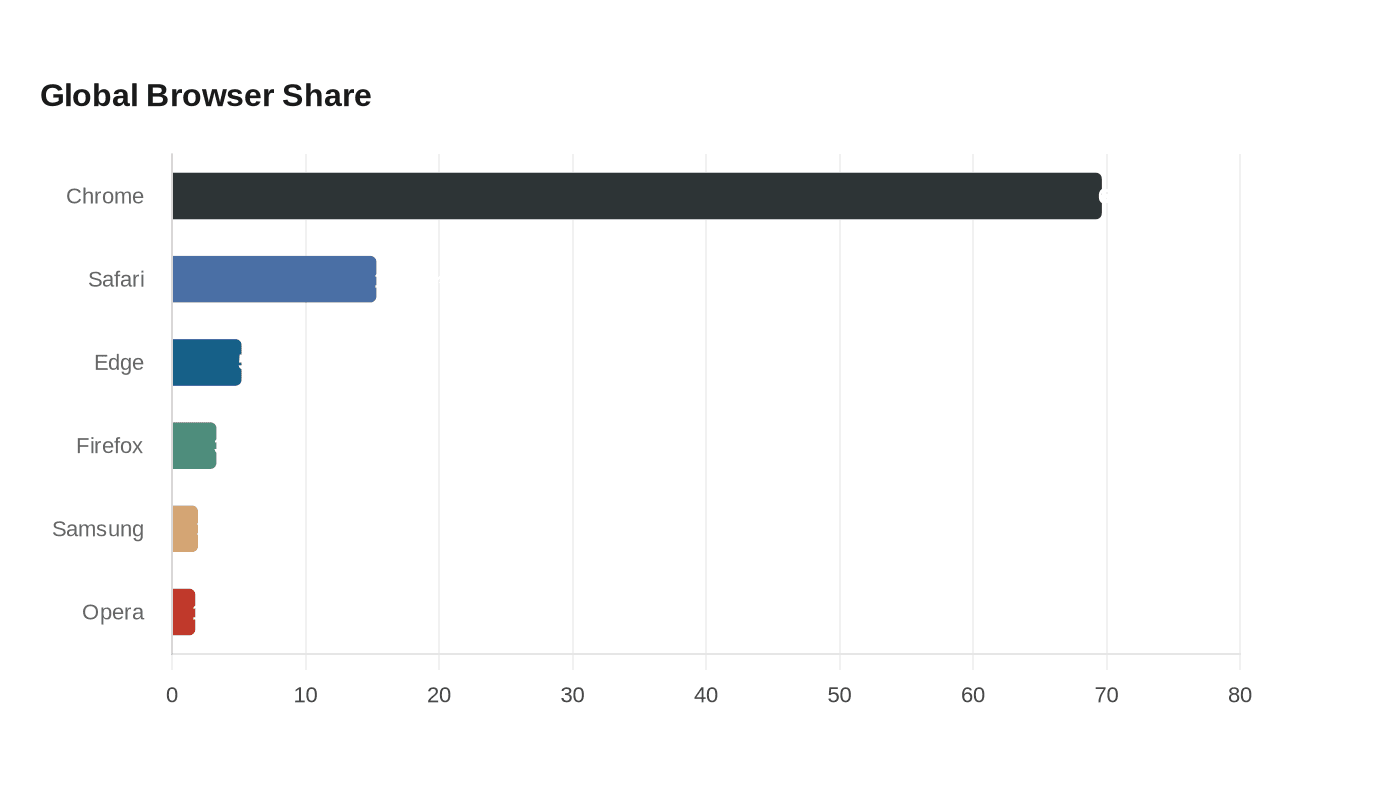
In 2013, Mozilla counted five major browser engines; by 2026, only three remain: Apple’s WebKit, Google’s Blink and Mozilla’s Gecko. The browser market has become a contest over infrastructure, not just preference. Chrome still commands the biggest global share, Safari remains entrenched across Apple devices, and the real leverage now sits in who controls the engine, the default screen and the AI layer sitting on top of the web.
Why the engine layer matters
Gecko is the only remaining independent browser engine, and it powers Firefox on desktop, Android and other Mozilla apps.
Engines shape how sites render, how quickly features arrive and how much power a small number of platform owners hold over developers. When most browsing flows through Blink or WebKit, web standards, compatibility testing and feature decisions increasingly orbit two families of code. Firefox’s continuing existence as an engine independent of the dominant mobile and desktop platforms gives developers and regulators a meaningful counterweight.
What the market share numbers show
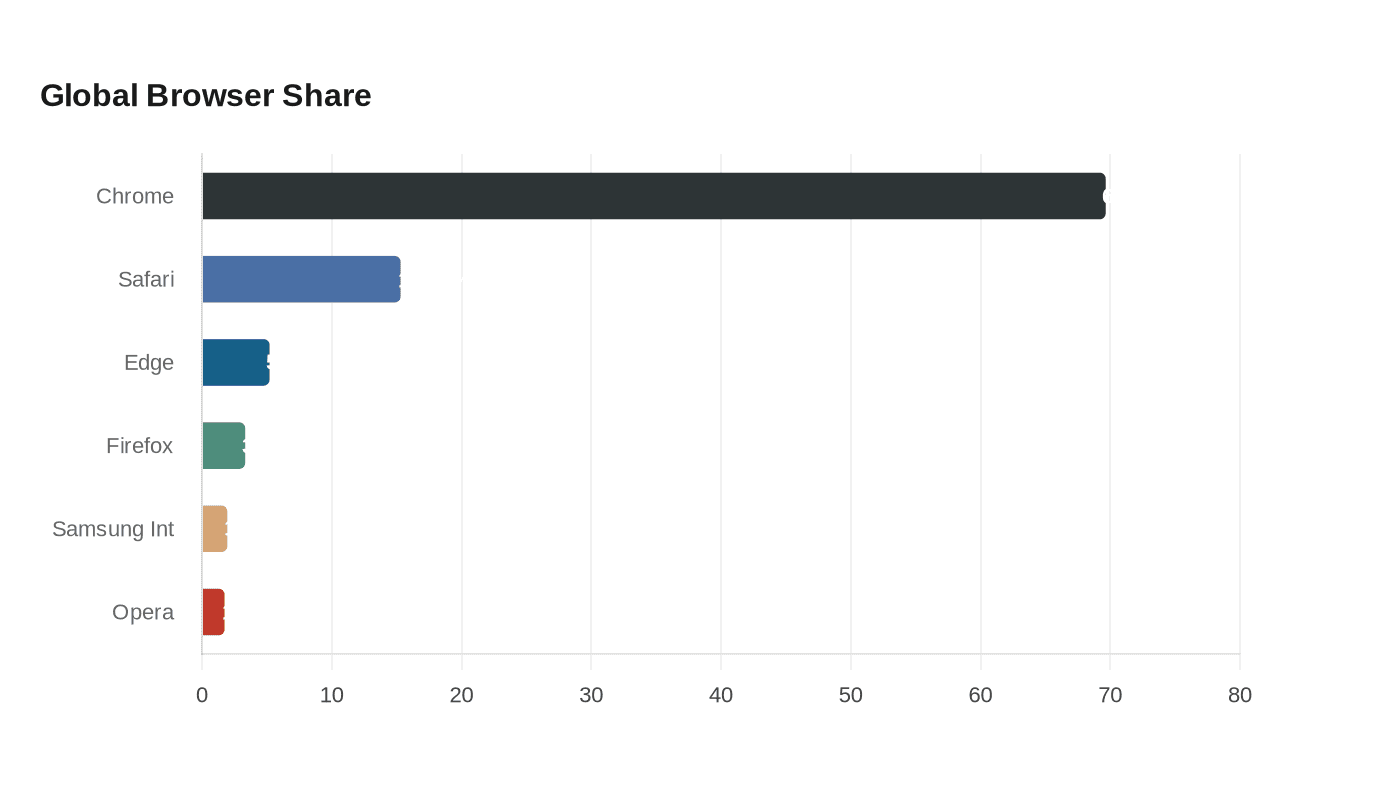
The competitive picture is still heavily skewed toward the biggest two browsers. StatCounter put Chrome at 69.65% of worldwide browser market share in June 2026, with Safari at 15.31%, Edge at 5.21% and Firefox at 3.33%. Samsung Internet stood at 1.95% and Opera at 1.74%, leaving the global market concentrated in a few hands.
StatCounter’s regional split is more revealing. In North America on desktop, Chrome held 60.6% in June 2026, but Firefox reached 12.58%, Edge 12.19%, Safari 9.56%, Brave 2.46% and Opera 1.39%. On mobile in the United States, Safari held 50.06% and Chrome 42.27%, while Firefox was at 1.59% and Brave at 1.39%. Browser competition is often decided less by user enthusiasm than by platform defaults, device ownership and operating-system rules.
Regulation is now part of the browser story
The European Union has forced the sharpest changes. On iOS 17.4+ and iPadOS 18.0+ in the EU, Apple supports alternative browser engines, but browser apps using those engines must obtain the Web Browser Engine Entitlement. The alternative-engine capability is available to EU users on devices running at least iOS 17.4 or iPadOS 18.
The European Commission said in April 2025 that Apple changed its browser choice screen to streamline how users select and set a default browser on iPhone, following a DMA-related investigation into Apple’s user-choice obligations. The Commission also said the choice screen in EU Member States includes Safari and 11 third-party browsers that were the most downloaded on iOS in each country the prior year. The change was a direct effort to make default selection less sticky and to reduce the advantage Apple’s own browser receives from the operating system.
Firefox sells independence as a civic check
Firefox’s pitch remains rooted in control and neutrality. It is focused on speed, privacy and control, and Mozilla emphasizes that it is the not-for-profit behind the browser. That positioning sets it apart in a market where the most dominant engines are tied to the biggest platform businesses.
Gecko gives Firefox its distinctive place in the market because it is the only major independent engine left.
Brave turns privacy into the main product
Brave competes on a different axis: default protections. Brave says its Shields block third-party ads, trackers, cross-site cookies, phishing and fingerprinting by default, and that the browser is designed to save data and battery life. Those claims map directly to user concerns about speed, surveillance and mobile efficiency.
The model turns the browser from a passive window into an active gatekeeper. Instead of asking users to add extensions or change settings later, Brave tries to make privacy the starting point.
Edge is betting on AI as the next browser battleground
Microsoft is pushing Edge as an AI browser rather than just a faster or more private one. Edge integrates Copilot and features that summarize information, answer questions and let users compare tabs without leaving the browser.
Browser competition is shifting from search boxes to workflow control. If a browser can synthesize pages, compare sources and keep users inside one interface, it becomes more than a navigation tool.
Arc and the Chromium question
The Browser Company has taken a different route with Arc and Dia. Arc is marketed as a calmer, more personal browser designed to cut clutter and distractions, and it is available for Windows, macOS and iPhone.
Release notes show Chromium updates as recently as July 2, 2026. Some alternative browsers are not replacing the underlying engine at all. Instead, they are building new interfaces, workflows and AI features on top of Chromium.
This article was produced by Prism’s automated news system from verified source data, official records, and press releases, then run through automated quality and moderation checks before publishing. The system is built and supervised by the people who set the standards it runs under. Read our full AI policy.
Did this article answer your question?