Wayve bets on AI-driven self-driving, wins $2.8 billion backing
Wayve said its AI stack can learn like a human driver, and investors just backed that bet with $2.8 billion. Nissan is still checking the system’s safety before a Japan rollout in 2028.

Wayve has pulled in $2.8 billion from investors and strategic partners, giving the London startup one of the biggest war chests in autonomous driving as it pushes an end-to-end AI system that learns from sensor data instead of following hard-coded rules. The company says the software is meant to work across different vehicles, sensors and chips, a pitch aimed squarely at automakers that want autonomy without rebuilding the stack for every market.
The claim at the center of Wayve’s strategy is simple: its system learns more like a human driver than a rule-based machine. Alex Kendall, Wayve’s co-founder and chief executive, has said he wants to make full self-driving possible for any vehicle, any brand and anywhere around the world. Wayve says that flexibility could let it license software more broadly than rival systems that depend on detailed maps and pre-programmed responses.
The money is now being paired with a tighter commercial timeline. Wayve said in February that it closed a $1.2 billion Series D and had secured $1.5 billion in total capital for commercial rollout, with Uber adding milestone-based funding tied to robotaxi deployment. The company says it plans commercial robotaxi trials in 2026 and supervised autonomy software in consumer vehicles from 2027, a schedule that puts its technology on a near-term path rather than a distant research horizon.
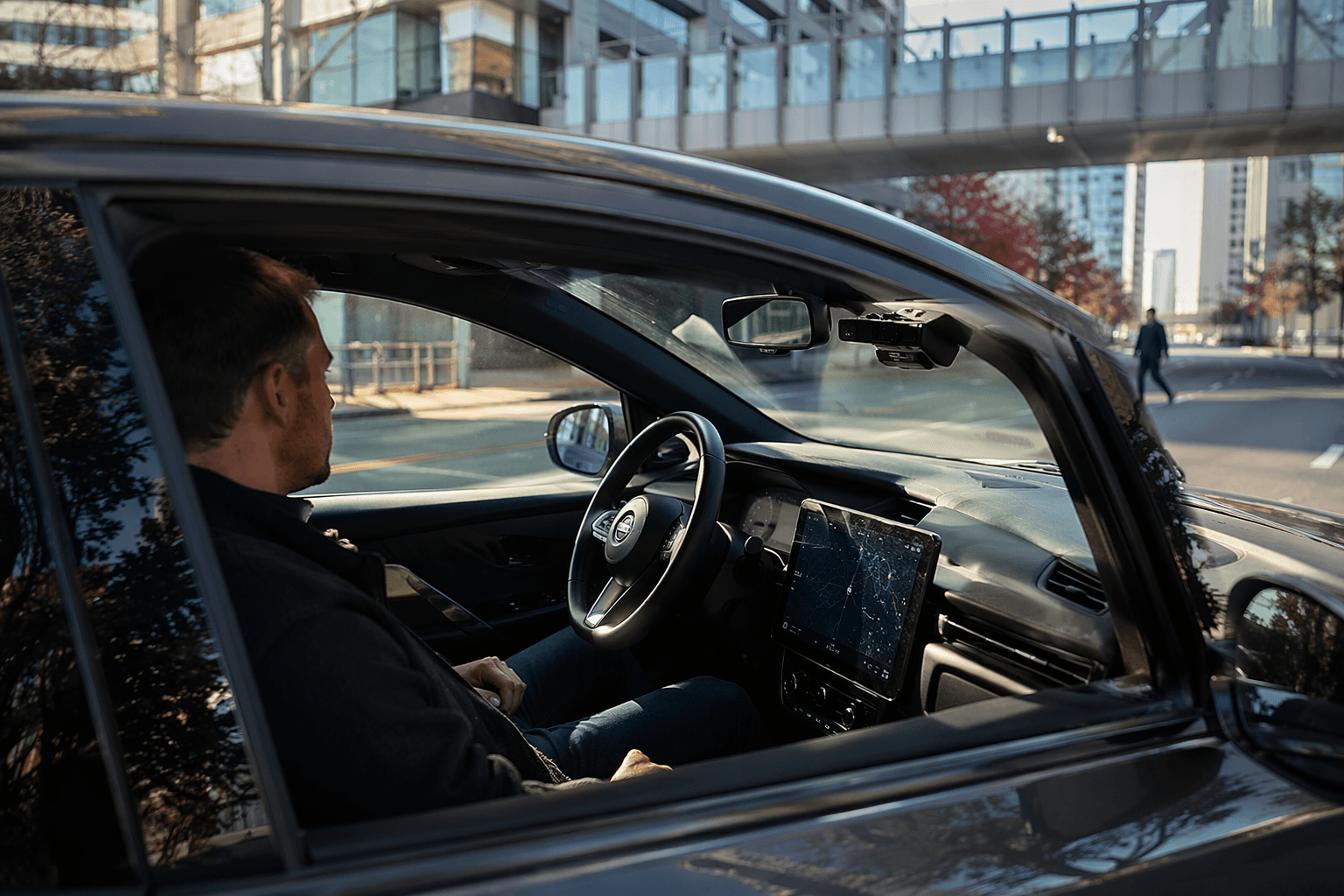
Automakers are moving cautiously. Nissan signed definitive agreements with Wayve on December 10, 2025, to integrate Wayve AI with its next-generation ProPILOT series across a broad range of Nissan vehicles. In March, Nissan, Uber and Wayve unveiled a robotaxi tie-up in Tokyo, with a prototype Nissan Leaf robotaxi shown publicly with surround camera, radar and LiDAR sensors. Nissan’s tech chief, Eiichi Akashi, said the company is closely assessing Wayve’s safety approach ahead of a planned rollout in Japan by March 2028.
Wayve is also leaning on scale to prove the system generalizes. The company says it has tested zero-shot generalization in more than 500 cities across Europe, North America and Japan in a single year, a claim meant to show that the software can adapt without the costly retraining and mapping loops that have slowed earlier autonomy programs. For carmakers, that could make end-to-end AI look less like a science project and more like a licensing layer they can actually deploy, but only if the safety case holds up outside the demo.
This article was produced by Prism’s automated news system from verified source data, official records, and press releases, then run through automated quality and moderation checks before publishing. The system is built and supervised by the people who set the standards it runs under. Read our full AI policy.
Did this article answer your question?