American Jews Report Rising Fear, Assaults, and Visible Antisemitism
A London attack sharpened a daily calculus for American Jews, as surveys found fear is reshaping where they go, how they dress and how visibly they live Jewishly.
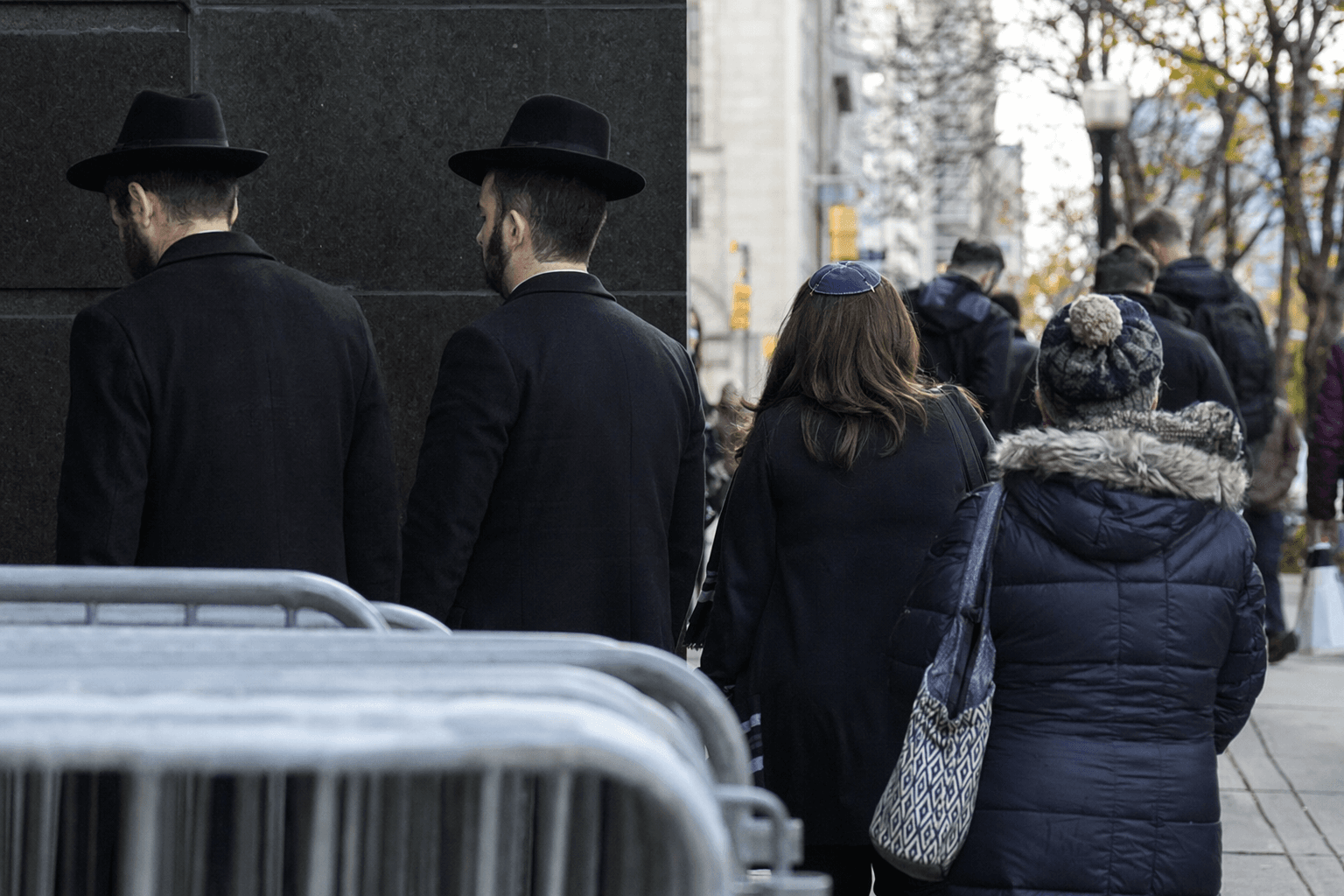
A new attack in London has deepened a sense of caution that many American Jews already treat as part of ordinary life. The fear is no longer confined to moments of crisis. It is showing up in daily choices, from how visible people are as Jews to the security steps they take around synagogues and community spaces.
That shift is captured in major surveys by the Anti-Defamation League and Jewish Federations of North America, which polled 1,877 Jewish respondents in March 2025 and 2,982 more in June. More than half said they had experienced antisemitism in the previous year. About 79% said they were concerned about it, and nearly one-third reported increased participation in Jewish life, suggesting that fear has not driven people away so much as pushed them to cling more tightly to communal ties.
The same research found that nearly one in five American Jews said they had been physically assaulted, physically threatened, or verbally harassed because of their Jewish identity in the past year. It also found signs of strain that extend beyond the immediate incidents themselves: nearly one-third of those who experienced or witnessed antisemitic incidents showed signs of anxiety, and about one-fifth showed signs of depression. The message from the data is blunt: antisemitism is not only scaring people, it is changing their emotional baseline.
That anxiety is visible in the way many Jews now calculate exposure. Some are installing security systems and buying guns, according to survey data collected nearly two years into the Israel-Hamas war in Gaza. Others are making smaller but still consequential adjustments, such as thinking harder about where they go, what they wear, and how publicly they identify as Jewish. The cumulative effect is a form of vigilance that has become normalized, not exceptional.
The unease has only intensified after a string of violent attacks. An American Jewish Committee report released Feb. 10, 2026, found that 91% of American Jews felt less safe as Jews in the United States after the arson attack on the Pennsylvania governor’s residence during Passover, the murders of Sarah Milgrim and Yaron Lischinsky outside the Capital Jewish Museum in Washington, and the firebombing of a Boulder, Colorado, march in support of hostages held by Hamas. The ADL’s 2024 audit recorded 9,354 antisemitic incidents in the United States, the highest annual total since tracking began in 1979.
The pattern is not just national. After the London stabbings, Britain raised its terrorism threat level to severe, and Prime Minister Keir Starmer said Jewish people were living in fear. For American Jews, the lesson has been harder to escape with each attack: vigilance is becoming a permanent condition of community life.
This article was produced by Prism’s automated news system from verified source data, official records, and press releases, then run through automated quality and moderation checks before publishing. The system is built and supervised by the people who set the standards it runs under. Read our full AI policy.
Did this article answer your question?

