Enrollment declines force schools to rethink staffing, space, and funding
Enrollment loss is no longer just an empty-seat problem. In New York and beyond, it is driving fights over closures, staffing, zoning, and which schools get protected.
The new politics of scarcity
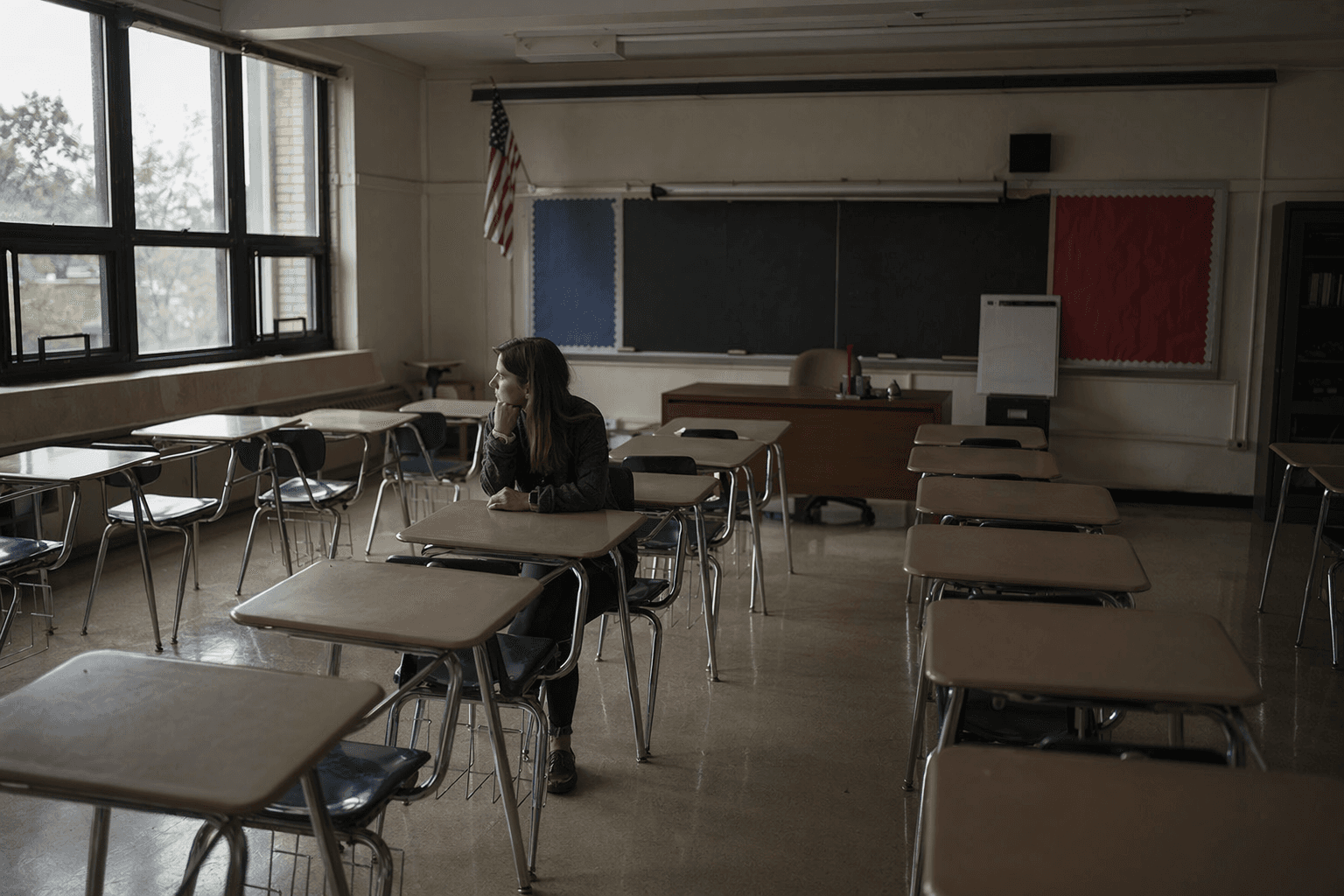
Fewer students are forcing school systems to make choices that once seemed remote: which buildings stay open, which classrooms lose staff, which neighborhoods get redraws, and which families are protected from disruption. In New York, those decisions are playing out in real time, and the stakes extend far beyond one city. What looks like a budgeting problem is becoming a test of how districts distribute loss, power, and opportunity when enrollment shrinks.
The pattern is not random. Brookings has found that U.S. public school enrollment rose only about 2% from 2012 to 2019 before the pandemic accelerated the decline, and it warns that shrinking headcounts create immediate fiscal stress because most state and federal aid is distributed on a per-pupil basis. That means every lost student can weaken a district’s finances even before officials decide whether to close a school, merge programs, or reassign staff.
Why enrollment is falling
The causes of the decline differ by place, but the pressures are familiar. Lower birthrates are reducing the number of children entering the system, family patterns are shifting, and some communities are losing residents altogether. At the same time, charter schools, private schools, and home schooling are pulling students out of district systems that once could count on a more stable population.
Brookings says districts are increasingly weighing redistricting, repurposing space, and closing schools as enrollment drops deepen. The researchers also note a hard political reality: the steeper the enrollment loss, the higher the odds of a permanent closure. That turns demographic change into a governance fight, because every closure carries consequences for transportation, staffing, neighborhood identity, and the distribution of public resources.
New York City’s funding response
New York City has tried to respond by putting money toward smaller classes instead of simply absorbing the decline. NYC Public Schools announced on May 28, 2024, a $182 million funding plan for the 2024 to 2025 school year to support class-size reduction. Of that total, $45 million came from Contracts for Excellence funds and $137 million was earmarked specifically for class-size reduction.
The plan gave principals flexibility to pursue different strategies, including hiring staff, repurposing space, and reallocating funding. City officials said the approach was designed to keep the system in compliance with the state’s class-size law, which sets phased benchmarks over five years. That matters because the policy challenge is not just how to spend money, but how to meet legal targets while enrollment keeps moving in the opposite direction.
The tension is clear: a district can be losing students and still be pressed to add staff or reconfigure space in order to satisfy a class-size mandate. That is the politics of scarcity in public education. The same decline that leaves some buildings underused also raises the cost of doing business in every remaining classroom.
A shrinking system, unevenly distributed
New York City’s enrollment decline has not been a one-year blip. Gothamist reported that public school enrollment has fallen every academic year since 2020, with one exception in 2023, and that lower birthrates and outmigration are the main drivers. Another report said the city’s charter schools enrolled more than 150,000 students last year, a reminder that the public-school system is losing students in a broader ecosystem where families have more options.
The scale of the shift becomes clearer in the latest enrollment counts. One education commentator cited city public school enrollment of 793,300 for the 2025 to 2026 school year, down 2.3% from the previous year and nearly 10% since 2020. That same reporting said 112 city public schools had fewer than 150 students, up from 80 two years earlier. Small schools are not automatically failing schools, but when their numbers keep sliding, they become easier targets in budget fights and harder to defend politically.
The pressure is not spread evenly across the city. Neighborhoods such as the Upper West Side, Ocean Hill, Brownsville, Mott Haven, Melrose, Stuyvesant Heights, and Crown Heights have all been part of the broader debate over who gets protected when decisions about space and staffing are made. In these fights, the question is rarely whether change will come. It is which communities absorb it first.
New York statewide trends show how deep the decline runs
The city’s losses sit inside a much larger statewide slide. Empire Center analysis found that New York public schools enrolled about 2.38 million students in 2022 to 2023, the lowest level since the mid-1950s and about 10% below the 2013 to 2014 total. The steepest decline was in the Bronx, a fact that underscores how demographic and economic pressures can hit some communities harder than others.
A Cornell-backed account of 2024 to 2025 data said New York enrollment fell to its lowest level since the early 1950s, even as charter schools gained students. It also noted that the Big Five districts now serve a smaller share of all students than they did a decade ago. That shift is more than a statistical footnote. It changes the balance of power in state education politics, because districts with declining shares of enrollment have less leverage when funding, zoning, and school-closure decisions are on the table.
What districts are doing now
School systems confronting enrollment decline are moving from abstract warnings to concrete action. In some places, that means consolidating campuses. In others, it means revising attendance zones, redistributing staff, or using empty rooms for different programs. Each option has tradeoffs, and each can trigger resistance from parents, teachers, and elected officials.
Brookings argues that shrinking enrollment intensifies fiscal stress because aid follows students. That creates a difficult feedback loop. When enrollment drops, districts have fewer resources. When resources shrink, it becomes harder to preserve programs that might attract families back. Eventually, leaders face a blunt institutional question: how to resize a system without hollowing out the neighborhoods it serves.
The national warning sign
New York is not an outlier. K-12 Dive’s 2026 tracker says districts are closing or consolidating schools amid falling enrollment, declining birthrates, and school-choice competition. The report points to San Jose Unified School District, which approved closing five elementary schools after enrollment fell 20% since 2017 to 2018. That case shows how quickly a sustained decline can force a district past incremental adjustments and into irreversible decisions.
The broader lesson is that demographic contraction does not simply leave extra space behind. It invites conflict over who keeps access to the remaining seats, which buildings stay in service, and how the costs are shared. In New York, as in San Jose, enrollment decline is reshaping public education into a politics of scarcity, where every lost student can set off a fight over funding, staffing, zoning, and the future of the neighborhood school.
This article was produced by Prism’s automated news system from verified source data, official records, and press releases, then run through automated quality and moderation checks before publishing. The system is built and supervised by the people who set the standards it runs under. Read our full AI policy.
Did this article answer your question?

