AP photos capture Thailand’s lively Songkran New Year celebrations
Water fights, a Donald Trump mask and a powder-dusted police officer showed Songkran as both sacred New Year ritual and national spectacle.
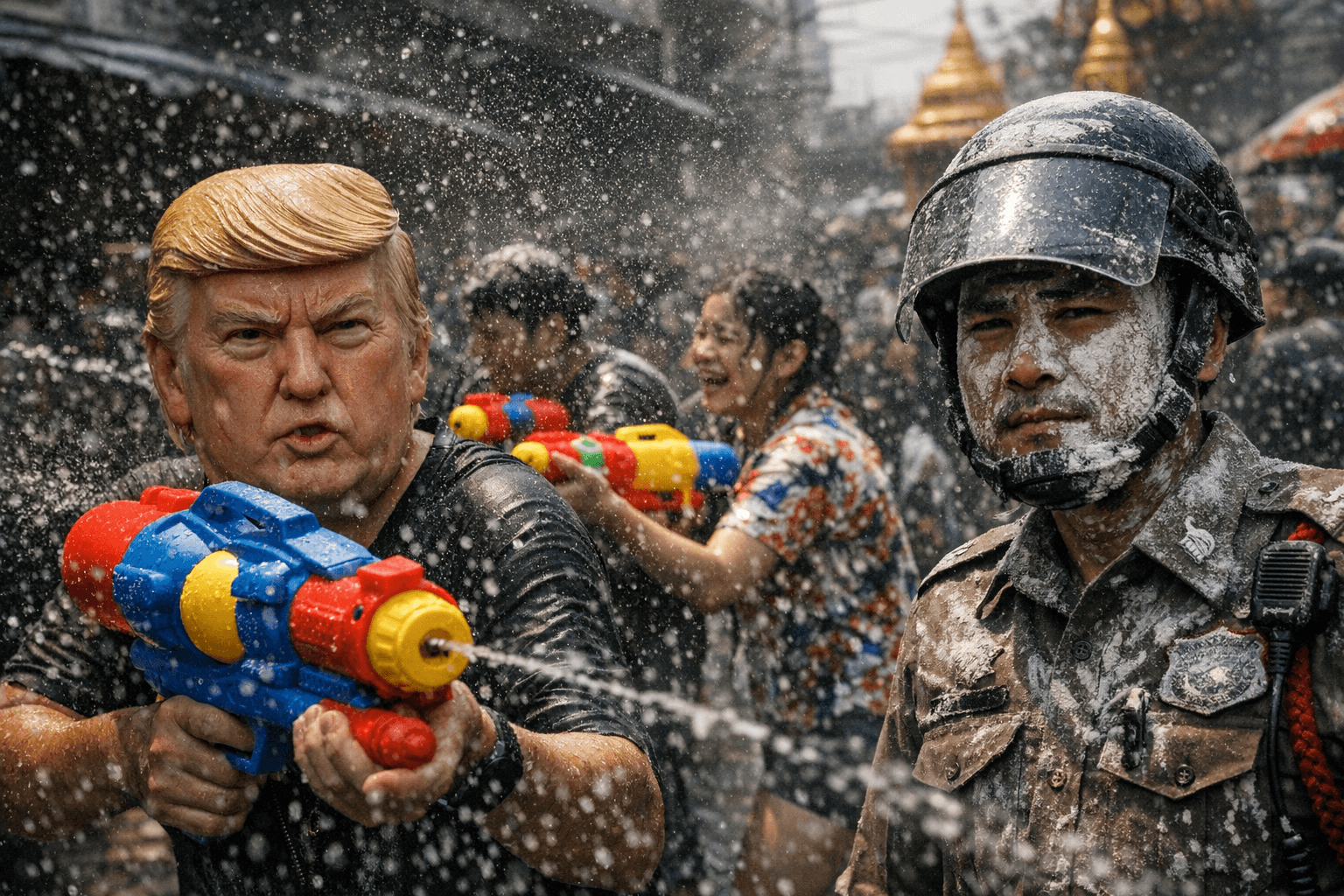
Bright splashes in Bangkok and Prachinburi province turned Songkran into more than a street party. The photographs captured the Thai New Year at its most public and playful, with revelers dousing one another, a participant wearing a mask of former U.S. President Donald Trump and another pressing powder onto a Thai police officer’s face.
The annual festival marks the start of the Thai calendar year, and the water is not just for show. Songkran is tied to cleansing, renewal and good fortune, with the act of pouring water carrying a deeper meaning in a country where the April heat can be punishing. The images showed how that meaning survives inside a mass celebration that now moves easily between ritual, humor and spectacle.
UNESCO inscribed Songkran in Thailand, traditional Thai New Year festival, on its Representative List of the Intangible Cultural Heritage of Humanity in 2023. UNESCO describes the festival as linked to the sun’s annual passage into Aries, traditionally observed in mid-April after the rice harvest, when families reunite, show respect to older adults, honor ancestors and sacred Buddha images, and pour water as an act of cleansing, reverence and good fortune. Thai cultural authorities say the recognition made Songkran the country’s fourth UNESCO intangible heritage element, after Khon, Thai massage and Nora.
The holiday is officially observed from April 13 to 15, though celebrations often run longer. In Bangkok, the Maha Songkran World Water Festival 2026 opened at Benchakitti Park with five days of cultural displays, concerts, a parade, sacred water rituals, family-friendly play zones and EDM areas, a sign of how the country is packaging its best-known New Year tradition for both residents and visitors.
That balance between heritage and commerce now sits at the center of Songkran’s public life. The Tourism Authority of Thailand said the 2026 festival period was expected to generate more than 30.35 billion baht in tourism revenue, a 6% increase from the previous year, with about 500,000 international visitors expected during April 11 to 15. The scale underlines how a ritual once rooted in seasonal renewal has become a national asset, drawing global attention while still retaining the communal customs that give it meaning.
The photos make that tension visible: police joining the fun, strangers sharing water, and a festival that remains unmistakably Thai even as it is increasingly staged for the world.
This article was produced by Prism’s automated news system from verified source data, official records, and press releases, then run through automated quality and moderation checks before publishing. The system is built and supervised by the people who set the standards it runs under. Read our full AI policy.
Did this article answer your question?


