China Balances Gulf Diplomacy and Cheap Iranian Oil Supplies
China is pressing for calm in the Israel-Iran war, but its real aim is to protect discounted oil flows, Gulf ties and room to maneuver against Washington.
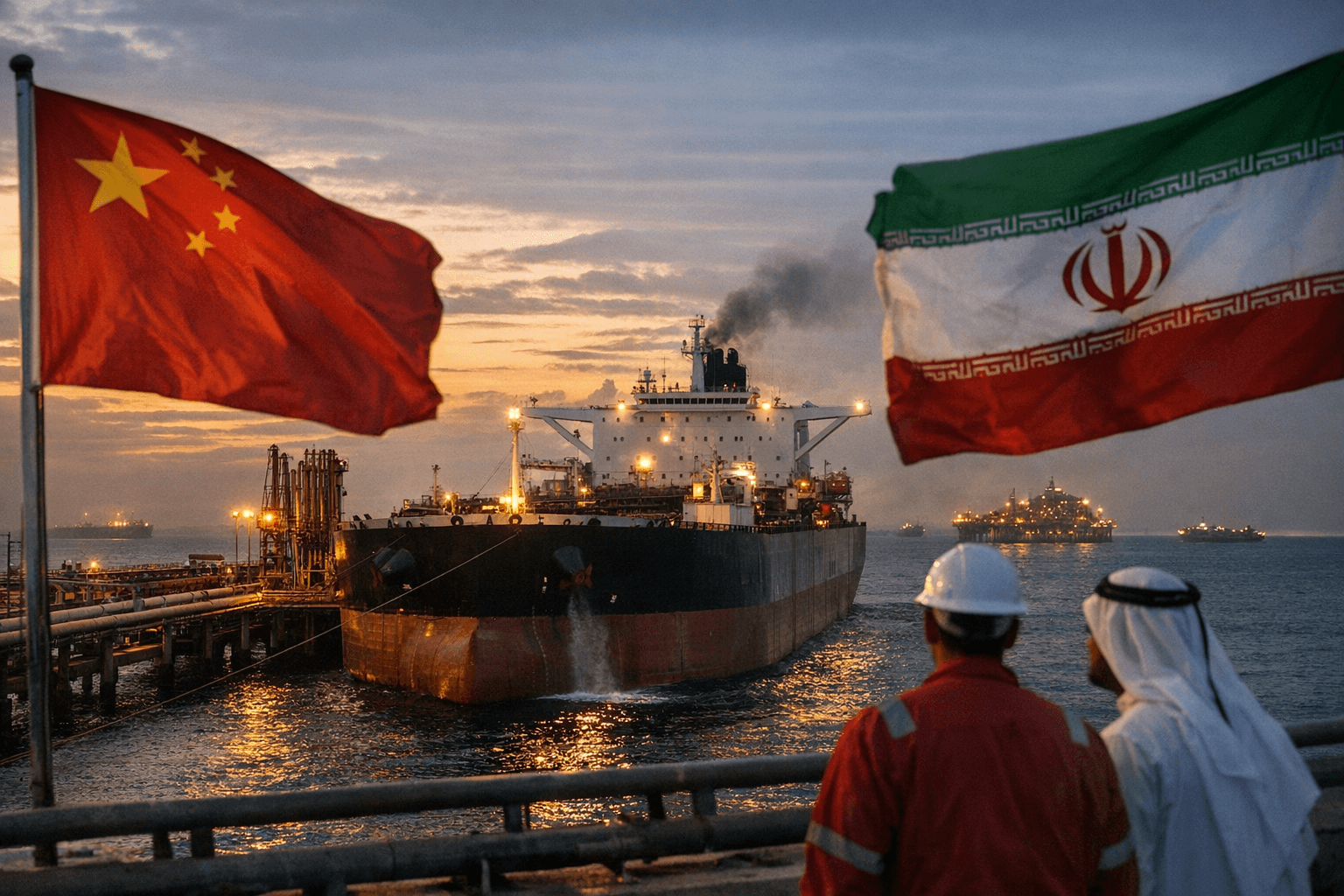
Beijing wants the fighting to stop, but not at the cost of its leverage
China has moved quickly to sound like a responsible broker in the Israel-Iran war, but its caution is also self-protection. Beijing has condemned Israel’s strikes, called for de-escalation and framed itself as a defender of sovereignty, yet it is careful not to burn the strategic advantages it has built with Iran, Saudi Arabia and the broader Gulf.
That balancing act matters because China is not just another outside power weighing in on the Middle East. It is the world’s largest importer of energy, heavily exposed to any shock that lifts oil prices or disrupts shipping lanes. A prolonged war could raise costs for Chinese industry, tighten fuel markets and threaten the Gulf stability on which Beijing’s economic model still depends.
Why Beijing’s public line is so sharp
China’s rhetoric has been unusually direct. On June 13, 2025, Beijing said it was deeply concerned about Israel’s attacks on Iran and opposed actions that violated Iran’s sovereignty, security and territorial integrity. Two days later, Foreign Minister Wang Yi told his Iranian counterpart, Seyed Abbas Araghchi, that China condemned Israel’s actions and supported Iran in safeguarding its sovereignty and the safety of its people.
That language does two things at once. It signals solidarity with Tehran, which has long seen China as a diplomatic backer against U.S. pressure, while also allowing Beijing to present itself as a defender of international order rather than a passive observer. In the Middle East, where image and access often matter as much as formal alliances, that positioning helps China keep doors open on multiple sides.
The strategy also builds on a precedent Beijing likes to cite: its role in the March 10, 2023 Saudi-Iran agreement, when China helped broker a deal in Beijing that restored diplomatic relations between two regional rivals. That episode gave China proof that it could be more than a trade power in the Gulf. It could be a political actor, one capable of bridging divides without deploying troops.
The oil tie that makes stability non-negotiable
The economic link between China and Iran is the core reason Beijing cannot afford open-ended conflict. Analysts and shipping-data specialists estimate that China imported roughly 1.2 million to 1.4 million barrels per day of Iranian crude in the first half of 2024. One estimate put China’s average Iranian oil purchases for the year at about 1.48 million barrels per day, equal to roughly 14.6 percent of China’s total imports.
That is not a marginal trade. It is a major feedstock stream for Chinese refiners, especially independent buyers in Shandong province, who have become the main destination for discounted Iranian crude. Those purchases have continued despite U.S. sanctions by moving through a shadow supply chain and yuan-denominated payments, a financial workaround that helps both sides preserve commerce while minimizing exposure to Washington’s enforcement tools.
For China, the attraction is obvious. Discounted Iranian oil reduces input costs for refiners and supports a supply chain that the world’s largest energy importer cannot easily replace overnight. For Iran, the arrangement provides revenue, market access and a way around sanctions that have otherwise narrowed its economic options.
A partnership built for pressure, not trust
The energy relationship sits inside a broader strategic framework. China and Iran signed a 25-year comprehensive strategic partnership agreement in March 2021, a signal that both governments intended to deepen cooperation across trade, infrastructure and diplomacy. The arrangement has given Tehran a political lifeline and given Beijing a foothold in a country that Washington has tried to isolate for years.
But the partnership is not the same as a military alliance. It is better understood as a pragmatic alignment under pressure. Iran wants China’s economic backing and diplomatic cover; China wants Iranian oil, regional access and leverage in a part of the world where the United States still remains the dominant security power.
That is why Beijing’s repeated calls for restraint should not be confused with neutrality. China has an interest in keeping Iran afloat, but it does not want to be dragged into defending Tehran in a way that could jeopardize ties with Saudi Arabia, other Gulf Arab states or Israel. Beijing’s diplomacy is designed to keep all of those relationships usable at once.
The limits of Chinese influence
The war has also exposed how limited Beijing’s leverage really is. Analysts say China can call for restraint, condemn attacks and offer diplomatic language, but it has little ability to control Tehran’s decisions or guarantee regional security. That weakness is important because it shows the gap between China’s ambitions and its power.
Beijing has built a reputation as a mediator, yet it does not have the military presence or alliance network that Washington has long used to shape Gulf security. If the conflict widens, China can lobby, pressure and message. It cannot easily stop missiles, protect shipping lanes or dictate outcomes on the ground.
That is why the stakes are so high. Any prolonged war could raise global energy prices, disrupt maritime routes through the Gulf and complicate the shadow trade that keeps Iranian oil flowing to Chinese buyers. Even if the fighting stays contained, uncertainty alone can rattle markets and make Chinese refiners, shippers and policymakers more cautious.
What China is really trying to preserve
Beijing’s goal is not simply peace for its own sake. It is stability without surrendering leverage. China wants a Middle East calm enough for trade, flexible enough for discounted oil imports and open enough for Beijing to present itself as a responsible great power.
That is a difficult line to hold. Supporting Iran politically, protecting energy interests and preserving ties with Gulf Arab states and Israel all pull in different directions. But for China, the calculation is straightforward: a region at war is expensive, unpredictable and dangerous for a country whose economic strength still depends on imported energy and regional access. Stability is the prize, but leverage is the real asset Beijing is determined not to lose.
This article was produced by Prism’s automated news system from verified source data, official records, and press releases, then run through automated quality and moderation checks before publishing. The system is built and supervised by the people who set the standards it runs under. Read our full AI policy.
Did this article answer your question?


