Mexico Faces Pressure to Confront Surge in Missing Persons Crisis
Mexico’s registry says 130,178 people are missing, but families say a data cleanup cannot erase a crisis that has swallowed more than 133,000 lives.
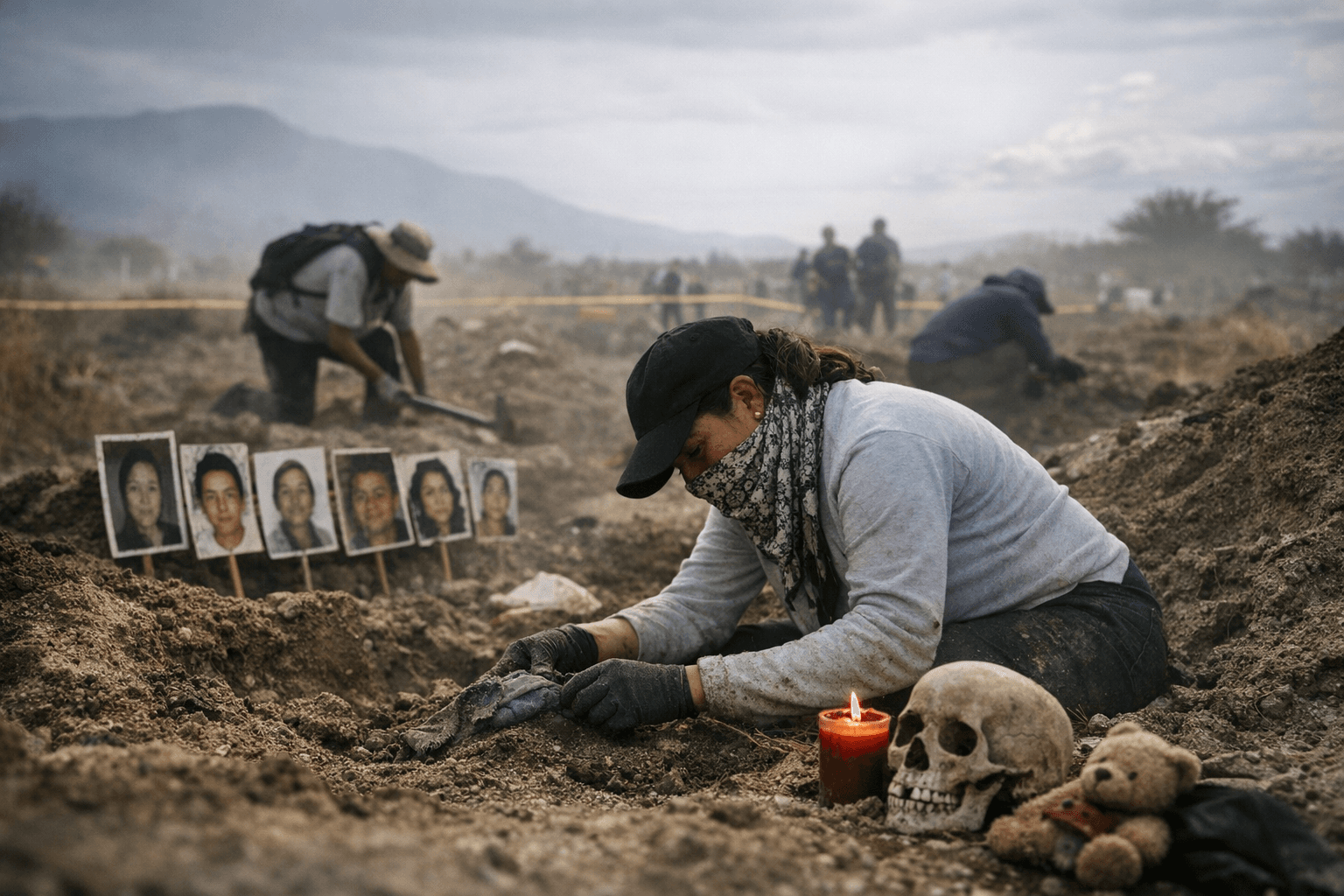
Claudia Sheinbaum entered office promising order and accountability, but Mexico’s missing-persons crisis has become the harder test of legitimacy: more than 133,000 people remain unaccounted for, and families say no official accounting can soften that reality.
Mexico’s National Registry of Missing and Unlocated Persons listed 130,178 missing people from 2006 to 2026 as of March 27, a number that tracks the years since the government launched its militarized war on organized crime. Authorities then said a year-long review of records stretching from 1952 through 2026 found 394,645 individual files, of which 262,111 had been located and 92% of those were found alive. Officials also said 40,308 entries, about 31% of the total, showed signs of life after cross-checking tax records, marriage registries and other databases.
That effort immediately collided with the trauma of relatives who have spent years searching in cartel-heavy territory from Jalisco to the scrubland around El Ajusco National Park outside Mexico City. Search collectives such as Guerreros Buscadores and Hasta Encontrarles said the government’s accounting risks turning a national tragedy into a bureaucratic exercise, especially when more than a third of the cases still lack enough data for a proper search. Missing names, birth dates and disappearance circumstances leave investigators with files that are too thin to guide a real search.
The dispute cuts to the heart of Sheinbaum’s promise to confront violence without repeating the failures that deepened it after 2006. For families, the relevant measure is not how many registry entries can be reclassified, but how many people are still absent from their homes and how many remain stuck in a system that has normalized delay, misclassification and impunity.
Pressure escalated further in early April when the UN Committee on Enforced Disappearances asked the UN secretary-general to refer Mexico’s case to the General Assembly, saying there were well-founded indications that enforced disappearances in Mexico had been and continued to be committed as crimes against humanity. Sheinbaum rejected the committee’s findings as biased and said the government was reviewing the case.
Amnesty International then urged Mexico on April 14, 2026, to declare the disappearance crisis a national emergency. The warning underscored the central contradiction now confronting the government: a state that says it is finding people alive must still answer for the scale of the disappearance machine that has endured across multiple administrations. The 133,000 missing remain the measure of whether the campaign to restore public security can claim any legitimacy at all.
This article was produced by Prism’s automated news system from verified source data, official records, and press releases, then run through automated quality and moderation checks before publishing. The system is built and supervised by the people who set the standards it runs under. Read our full AI policy.
Did this article answer your question?


