Appeals court lets White House ballroom construction continue briefly, seeks review
A federal appeals panel gave the White House a few more days to keep building its ballroom, but sent the security fight back to a lower court.

A federal appeals panel gave the Trump administration a short reprieve on its disputed White House ballroom, allowing construction to continue until April 17 while judges pushed the fight back to a lower court for more findings on security claims. The order, from the U.S. Court of Appeals for the District of Columbia Circuit, did not bless the project’s legal footing; it instead extended the pause on enforcement long enough for the administration to seek further review.
The three-judge panel, Judges Patricia Millett, Bradley Garcia and Neomi Rao, said the administration still had not “explained how, if at all, the injunction interferes with their existing plans for safety and security at the remaining portions of the White House during the construction project.” The majority, in the consolidated appeals docketed as Nos. 26-5101 and 26-5108, remanded the case to U.S. District Judge Richard J. Leon for more factual development on the national-security questions. Leon had issued a preliminary injunction on March 31, ordering construction paused absent congressional authorization, while carving out work “necessary to ensure the safety and security of the White House and its grounds.”
The dispute centers on a ballroom project the White House described last summer as about 90,000 square feet with seating for roughly 650 people, initially pegged at about $200 million. Subsequent reporting and filings have put the cost far higher, commonly in the $300 million to $400 million range. The White House announced the project on July 31, 2025, and demolition of the East Wing began publicly in October, drawing swift backlash from preservation groups and others who said the work had outrun public review and congressional approval.
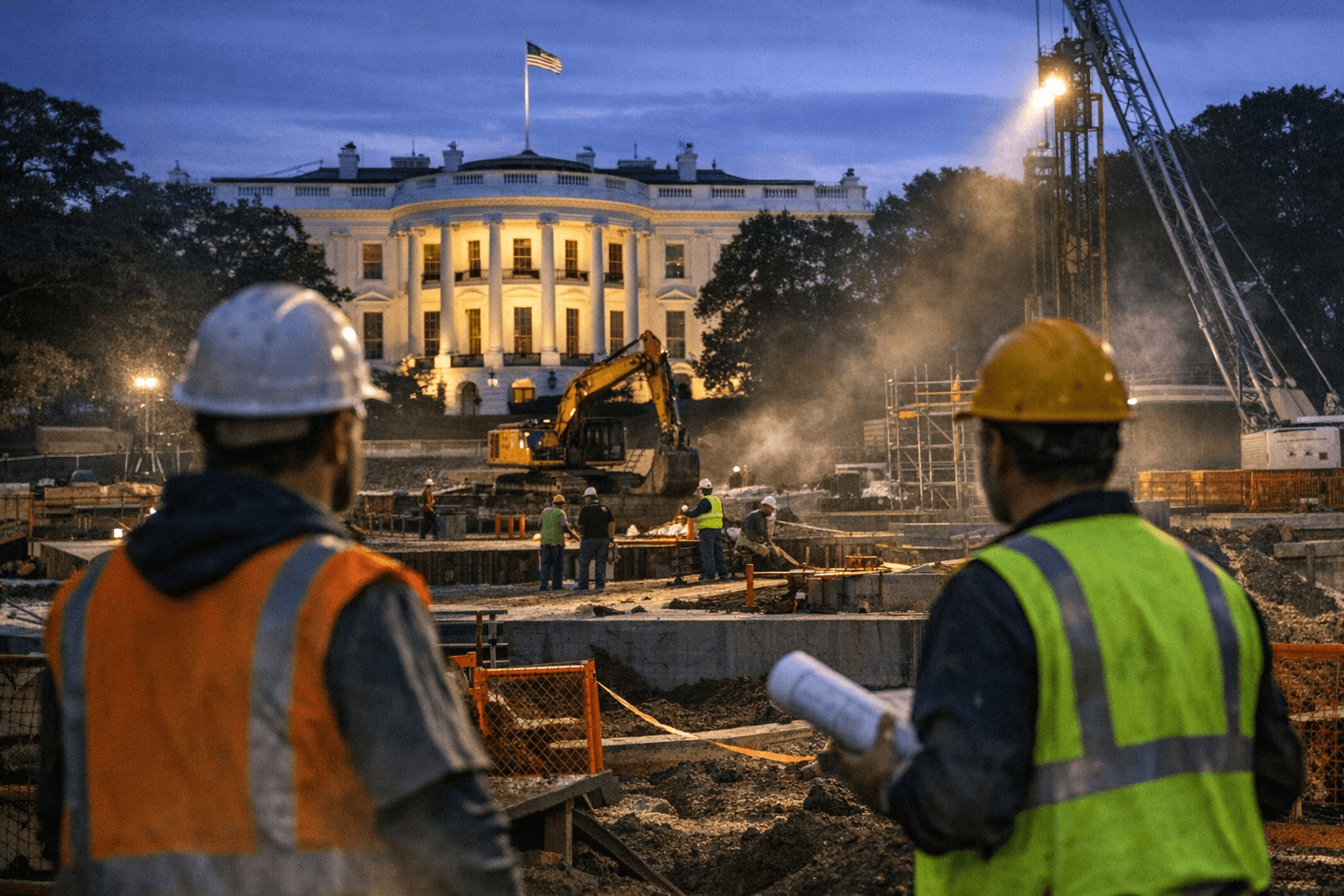
The National Trust for Historic Preservation sued on Dec. 12, 2025, after the East Wing teardown accelerated. Judge Leon later wrote that “no statute comes close to giving the President the authority he claims to have” to demolish and replace the wing without express approval from Congress, adding that the president is “the steward of the White House for future generations of First Families. He is not, however, the owner!” The administration has countered that stopping above-ground work could endanger Secret Service operations, pointing to court filings describing bomb shelters, a hospital and medical area, protective partitioning and classified military installations beneath the site.
The legal clash has unfolded alongside quick approvals from federal design bodies. The U.S. Commission of Fine Arts approved the designs 6-0 on Feb. 19, 2026, and the National Capital Planning Commission gave final approval on April 2, but those actions did not end the lawsuit. Public opposition has also been substantial, with late-October polling showing about 56% of Americans opposed to demolishing the East Wing for the ballroom. Carol Quillen, the trust’s president and chief executive, said the group “appreciate[d] the court of appeals acting quickly” and would await further clarification from the district court as the administration decides whether to ask the Supreme Court to intervene.
Sources:
Know something we missed? Have a correction or additional information?
Submit a Tip