Arctic storm knocks out power to 850,000 customers and halts flights
More than 850,000 customers lost power and over 10,000 flights were canceled as a winter storm swept from the southern Plains to the Northeast.
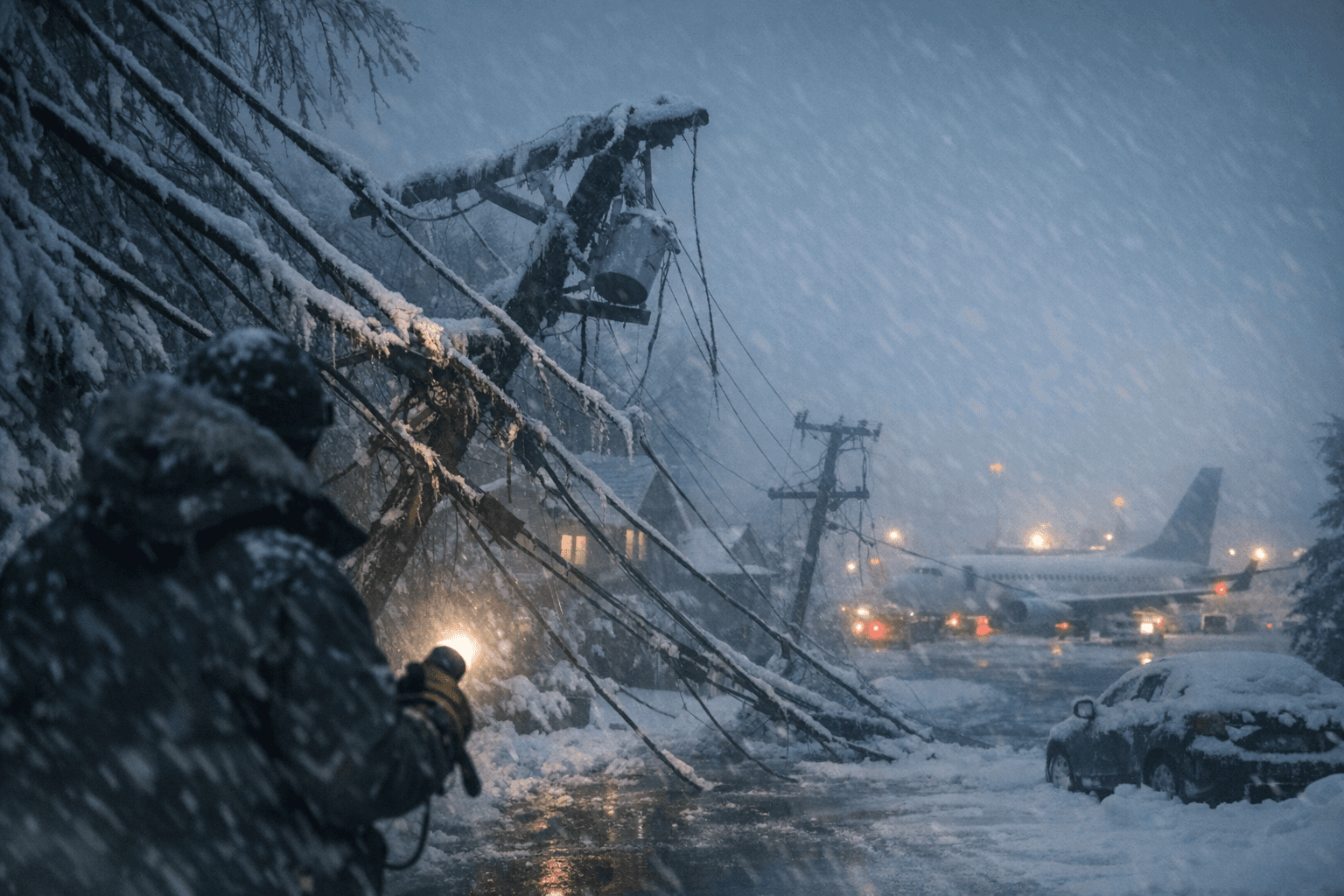
A sprawling winter storm is leaving more than 850,000 electricity customers without power and forcing the cancellation of over 10,000 U.S. flights as it sweeps from the southern Plains into the Northeast. The system brought heavy snow, freezing rain and bitter Arctic temperatures that strained energy networks, disrupted travel and raised immediate concerns about public safety and economic disruption.
Utilities reported widespread outages across multiple states as ice-laden trees and high winds damaged lines and equipment. Restoration efforts are complicated by continued precipitation and subfreezing temperatures, which slow repair crews and increase the risk of further failures. For households and businesses, prolonged outages in near-record cold create acute risks for people who rely on electricity for heat or medical equipment and raise the potential for burst pipes and property damage that will widen the economic toll.
Airlines canceled more than 10,000 flights across the United States as operators battled de-icing delays, limited visibility and unsafe runway conditions. Major hubs in the storm’s path experienced cascading disruptions, leaving thousands of passengers stranded and freight movement slowed. The cancellations and delays have immediate economic consequences: airlines lose ticket revenue and incur additional ground-handling and crew-costs, while delayed cargo and parts shipments can ripple through manufacturing and retail supply chains that already operate on tight schedules.
Energy markets are also sensitive to such events. Arctic outbreaks typically push heating demand higher, which can lift natural gas consumption and, in some markets, wholesale electricity prices. Grid operators face a two-sided strain: higher demand for heating at the same time that weather-related damage reduces supply and distribution capacity. The combination increases the risk of prolonged outages and can prompt emergency measures by system operators, including appeals for conservation or temporary deployment of backup generation.
The storm underscores longer-term vulnerabilities in U.S. infrastructure. Power grids in many regions were built decades ago and face growing stress from more frequent extreme weather events. Insurers and municipal budgets feel the impact as emergency repairs and claims rise. For airlines and airports, the economic cost of recurring weather disruptions reinforces calls for more resilient operations and contingency planning, as well as the economic value of redundancies in logistics networks.
Policy choices will shape how costs are allocated and how quickly systems recover. Investments in grid hardening, tree trimming programs, better cold-weather preparedness for generation assets, and improved coordination between utilities and state emergency officials can reduce outage duration and economic losses. For transportation, expanded capacity for de-icing, more flexible crew scheduling and infrastructure improvements at critical airports could temper future shocks.
As the storm continues to track northeast, travel and power disruptions are likely to persist into Monday in affected regions. Officials and industry leaders face immediate operational hurdles and longer-run questions about how to adapt infrastructure to a climate pattern that is producing more frequent events capable of disrupting both energy and transport systems.
This article was produced by Prism’s automated news system from verified source data, official records, and press releases, then run through automated quality and moderation checks before publishing. The system is built and supervised by the people who set the standards it runs under. Read our full AI policy.
Did this article answer your question?


