Argungu festival returns as fishermen net 59kg croaker and crowds surge
Tens of thousands wade into the milky Matan Fadan river as the Argungu fishing festival peaks; champion lands a 59kg croaker and President Tinubu attends.
Tens of thousands of fishermen wade chest-deep into the milky Matan Fadan river today as the Argungu International Fishing and Cultural Festival reaches its climax, a return to full spectacle after multi-year interruptions that had left the town’s economy and traditions on pause. President Bola Tinubu joined thousands of spectators on the riverbank as competitors used only hand-woven nets, calabash gourds and bare hands to haul catches from the water.
The fishing contest, which caps four days of ceremonies, archery, music, traditional wrestling and the combat sport dambe, is governed by the Sarkin Ruwan, the custodian of the river, who performed a pre-competition ceremony and oversaw proceedings from his canoe. Photographs by Sani Maikatanga for AFP via Getty Images frame the event in stark silhouettes and crowded, gourd-floats, with rows of fishermen trudging through water that at points reaches to their chins.
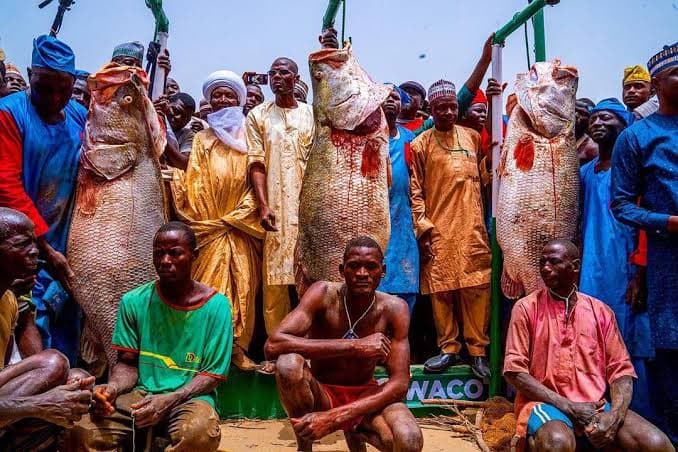
This year’s champion landed a 59 kg, 130-pound croaker and won a cash prize, Al Jazeera reported citing the Associated Press. Social media posts shared by local outlets and a TRT Afrika video on Facebook said winners received cash and cars, a claim not confirmed by festival organisers in available accounts. Participants and vendors also sold their smaller catches, providing an immediate cash infusion for local markets and fishmongers who line Argungu’s streets during the festival.
The event is a visual and cultural showcase. Drummers beat the traditional rhythm of the Kabawa people, archers in dark blue attire stooped on dusty ground, and musicians strummed guitar-like instruments as crowds cheered. Anadolu Images captured a woman cradling a large red drum with a sickle-like beater, underscoring the festival’s music and pageantry. Archival Getty Images photographs from 2004 and 2008 show the festival’s capacity to draw vast numbers in peak years, with captions noting over 30,000 fishermen and a 62 kg catch in 2008 by a runner-up, Abdullahi Gumi.
Organisers and media reports differ on the recent pattern of suspensions. BBC and AFP described the contest as returning after a six-year break attributed to Covid and security concerns. Al Jazeera provides a longer chronology, saying the festival ran continuously for decades until a 2010 suspension tied to infrastructure problems and regional insecurity, briefly resumed in 2020, and then paused again until this year. The mixed accounts highlight a recurring tension: the festival’s value as a cultural and economic engine against persistent security and logistical challenges in northwestern Nigeria.

The immediate economic impact is tangible. Besides prize money for winners, thousands of local sellers and transport providers benefit when the contest draws visitors and media attention. Longer term, sustaining that income depends on restoring reliable infrastructure, clarifying prize and attendance records, and addressing security that has repeatedly interrupted the festival’s continuity.
Among the participants, 63-year-old fisherman Aliyu Muhammadu expressed a private measure of relief and purpose. Quoted to the Associated Press, he said, "I thank God that I got something to take home to my family to eat. I am very happy that I came."
Photographs by Sani Maikatanga for AFP via Getty Images and archival images from Getty and Anadolu capture the ceremony and its scale, but organisers’ exact attendance figures and a full prize list remain to be confirmed for an official tally of the festival’s economic returns and cultural revival.
This article was produced by Prism’s automated news system from verified source data, official records, and press releases, then run through automated quality and moderation checks before publishing. The system is built and supervised by the people who set the standards it runs under. Read our full AI policy.
Did this article answer your question?