Arizona Hiker Airlifted After Being Stung Over 100 Times by Bees
A man in his 30s was hoisted off Lookout Mountain by helicopter after more than 100 bee stings dropped his blood pressure to dangerous levels Saturday.
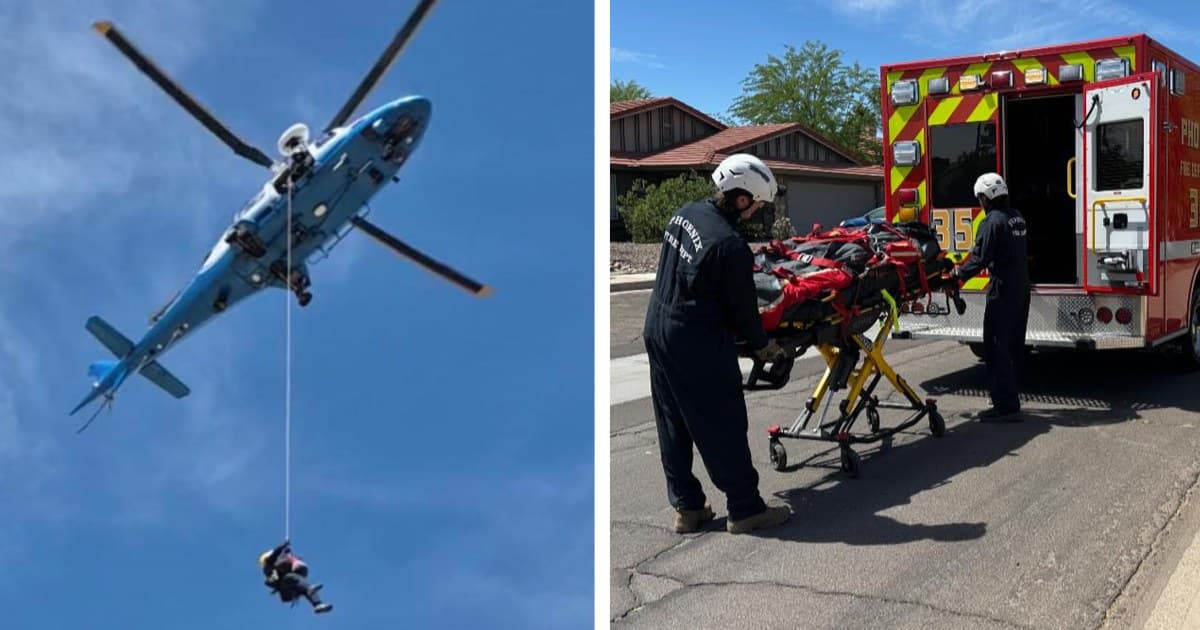
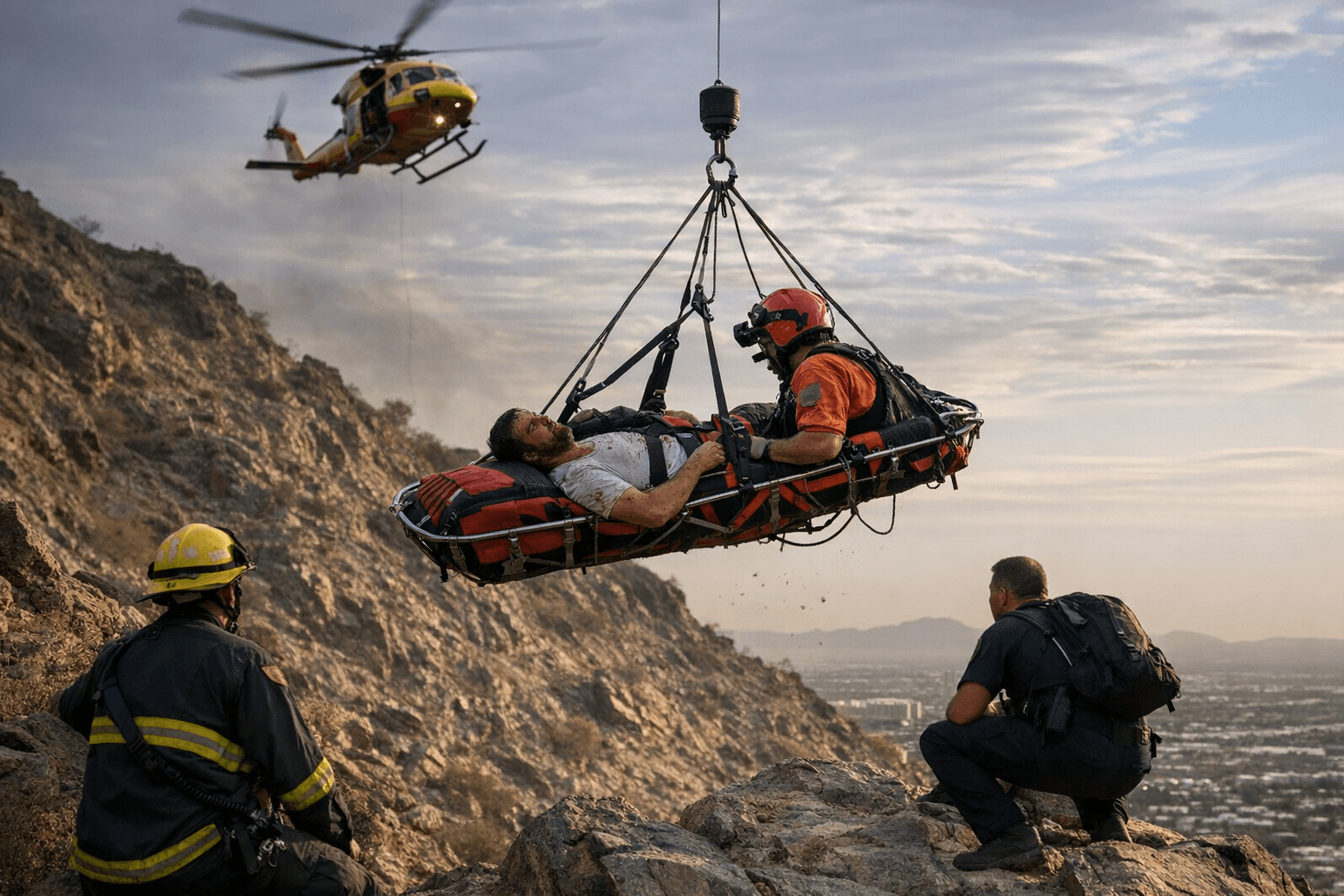
A man in his 30s endured more than 100 bee stings on a popular Phoenix hiking trail Saturday morning before firefighters hoisted him to safety by helicopter as his blood pressure fell to dangerous levels, prompting a multi-agency technical rescue operation from one of the region's most visited mountain preserves.
The attack unfolded around 10 a.m. at Lookout Mountain Preserve in north Phoenix, near 16th Street and Greenway Park. The man was not the only hiker stung that morning — multiple people reported bee encounters — but he was by far the most severely affected. Phoenix firefighters hiked up the trail and found him approximately three-quarters of the way to the summit, alert and speaking but unable to continue his descent on his own.
Phoenix Fire Department Capt. Todd Keller confirmed the victim reported being "stung over 100 times" and told rescuers he was "unable to continue his descent" because of the injuries. Emergency crews treated him with medication and IV fluids at the scene before the Phoenix Firebird 10 helicopter performed a technical hoist rescue to lift him off the mountain. He was then transported by ambulance to a nearby hospital in critical condition. A subsequent update placed him on the road to recovery.
Technical rescue teams from both the Phoenix and Glendale fire departments responded to the scene, reflecting the complexity of the operation.
The severity of the incident is tied directly to the nature of Arizona's bee population. According to the Center for Invasive Species Research, nearly 100% of wild bees in Arizona are Africanized honey bees, the species commonly referred to as "killer bees," which descended from a hybrid strain accidentally released in Brazil in the 1950s and have since spread throughout the Americas and into the southwestern United States. Arizona holds one of the highest concentrations of Africanized bees in the country, and that population has grown year over year.
Dr. Frank Lovecchio, an emergency physician and ASU professor, described the systemic damage mass bee venom can inflict. "The venom kind of goes in and it kind of crushes your muscle. And that muscle breakdown can cause all these problems," he said. On why swarms escalate so rapidly, Lovecchio explained: "It's always about protecting the queen bee, protecting the hive — and it sends signals that the other bees come over and kind of attack you." He cautioned that in Arizona, Africanized bees make even casual encounters potentially life-threatening. "If you see them going in and out of a hole or cavity, don't walk up to it — call a professional," he said.
The 2026 spring season has intensified that risk. Bee removal professional Cutrona reported a marked change from prior years: "The season's been very different for us. It seems like every colony is much larger, much more aggressive." Arizona's bee activity normally peaks during the first week of April, but this year the surge arrived ahead of schedule.
The Phoenix Fire Department offered safety guidance in response: avoid throwing rocks at or disturbing hives, wear light-colored clothing since bees are attracted to hues resembling natural predators, skip perfumes and scents before heading out on trail, and if confronted by a swarm, run quickly, find cover, and shield the head and face. With Africanized colonies already larger and more defensive than usual this season, those precautions carry added urgency across Arizona's trail systems.
This article was produced by Prism’s automated news system from verified source data, official records, and press releases, then run through automated quality and moderation checks before publishing. The system is built and supervised by the people who set the standards it runs under. Read our full AI policy.
Did this article answer your question?