Arm Develops Its First In-House Chip in 35 Years, With Meta as Launch Customer
Arm unveiled the AGI CPU, its first in-house chip in 35 years, with Meta as launch customer and OpenAI among seven committed buyers.
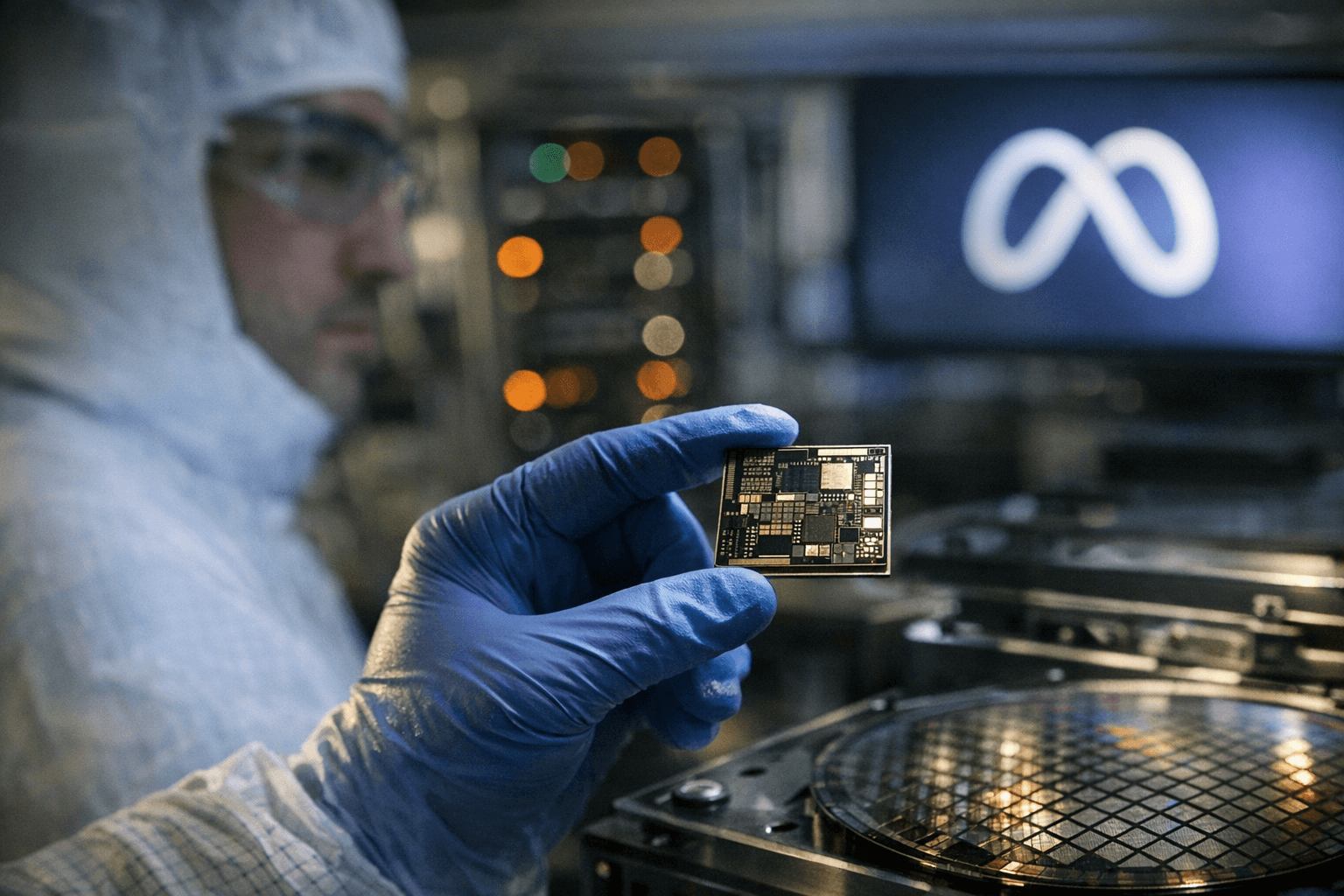
Arm CEO Rene Haas unveiled his company's first in-house chip Tuesday at an event in San Francisco, ending more than three decades in which the British semiconductor giant licensed its designs to the world's biggest chipmakers without ever producing a processor of its own. Arm is calling the new data center central processing unit the AGI CPU.
Arm produced the CPU with Meta, which is also the chip's first customer. Meta software engineer Paul Saab, who worked on the project from its start in 2023, said the chip offers "a lot more flexibility in our software stack and in our supply chain." Saab described it as "a full replacement, drop-in replacement, for our current compute CPUs" that would be transparent to developers. The collaboration reflects Meta's rapidly expanding hardware ambitions: the company is spending up to $135 billion on capital expenditures this year and is building out multiple gigawatts of AI data center capacity.
Meta is the first official customer for the new chip, with seven other committed customers including OpenAI, Cloudflare and SAP. Arm told reporters about 50 partners signaled support ahead of the launch. Saab said the first conversations with Arm centered on a shared intent: "Hey, if we build this, we don't want to keep this only within the company."
The launch represents a major shift in Arm's business model, from only licensing chip architecture to giants like Apple, Nvidia, Amazon and Google to competing with them in physical silicon. For more than 35 years, Arm Holdings licensed its instruction sets to the world's biggest chipmakers and collected royalties on every processor made with its designs. Now the U.K.-based company is making physical silicon of its own for the first time.
Arm spent $71 million and about 18 months building three new lab rooms at its campus in Austin, Texas, where a once-tiny team has grown to over 1,000 people. The company started developing the chips back in 2023, and the processors are already ready to order. Production will be outsourced: data center customers can license the chip designs from Arm and handle manufacturing on their own, or buy the finished chips from Arm, which will outsource the actual production to TSMC.
The move carries real competitive risk. Arm's ambitious plans for the data center market could still impact Qualcomm and MediaTek, which are both expanding into servers with their latest AI-oriented chips. Since Arm does not need to pay its own royalties and licensing fees, it can likely afford to sell its AI accelerator chips at lower prices than its own chipmaking customers. Qualcomm faces a compounding tension: the company is currently embroiled in a legal dispute with Arm over licensing terms.
Mohamed Awad, Arm's cloud AI head, told reporters: "It's a $1 trillion market, and what we're seeing over and over again is actually our partners coming out and understanding and realizing this is actually great for the industry."
The chip launch fits inside a broader strategic arc. SoftBank founder Masayoshi Son has positioned Arm at the center of his Stargate initiative with OpenAI, which will spend an estimated £400 billion building AI infrastructure, with Abu Dhabi state fund MGX and Oracle providing additional funding alongside Microsoft and Nvidia as key technology partners. The move to build its own chips is part of Son's plans to create a vast infrastructure network for AI.
Arm is best known as the leading architecture for mobile chips in almost every smartphone. It got into data center chips in 2018 with the launch of its Neoverse platform. Amazon took Neoverse mainstream in its first custom processor, Graviton, and Google and Microsoft now also base their AI chips on Arm. More than 300 billion chips based on Arm designs have shipped since the company was founded in 1990, with almost all of the world's smartphones running on Arm technology, a reach that Arm's own figures put even higher at 325 billion chips touching 100 percent of the connected global population.
Arm's expansion into first-party data center chips makes strategic sense, as it can reduce dependence on the maturing smartphone market and gain a foothold in AI. The move could squeeze near-term profits, but analysts expect Arm's revenue and earnings per share to grow 20 percent and 34 percent respectively from fiscal 2025 to 2028 as AI chip sales accelerate.
Know something we missed? Have a correction or additional information?
Submit a Tip