Army adopts containerised WAAM-plus-CNC units for field repair
Phillips Federal won an IDIQ order to deliver containerised WAAM-plus-CNC systems to the Army, enabling deployable metal repair and faster sustainment at the point of need.

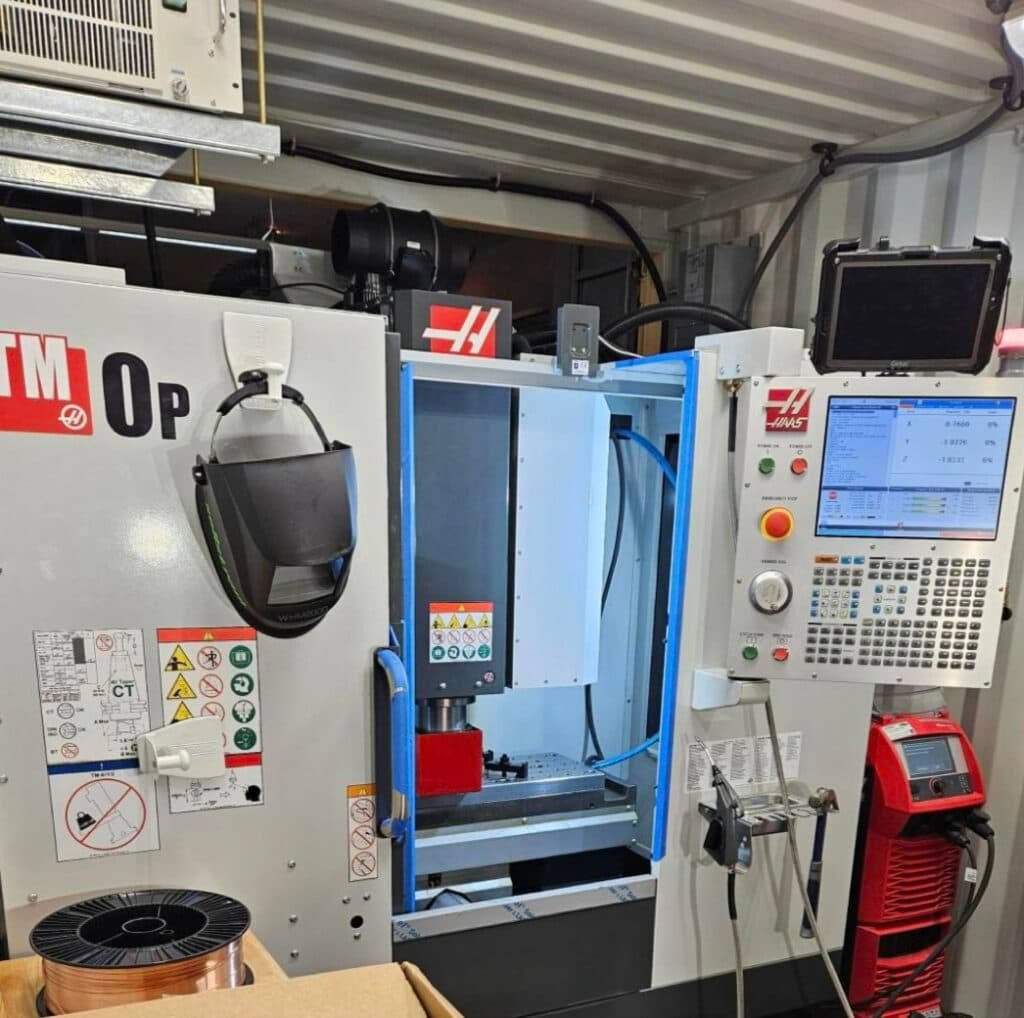
Phillips Corporation’s Federal Division won a delivery order under a five-year IDIQ to supply containerised Wire Arc Hybrid Manufacturing systems to the U.S. Army, advancing a pilot to retrofit Metal Working Machine Shop Sets (MWMSS) with WAAM capability. The boxed systems combine wire-arc additive deposition and CNC machining in a single transportable cell to enable expeditionary metal repair and on-site manufacturing.
The containerised units integrate a Fronius iWave 400i welder for WAAM deposition with Haas vertical machining centers for finish machining, creating a hybrid workflow that moves parts from build to final dimensions without multi-site transport. The award is managed through the Naval Surface Warfare Center Carderock Division Additive Manufacturing Project Office and is designed to strengthen both field and depot-level sustainment by cutting repair timelines and increasing manufacturing self-sufficiency.
For the 3D printing community this is a notable step toward operationalized, hybrid metal additive systems. WAAM plus CNC answers common pain points for metal work: as-built WAAM surfaces often need substantial post-processing, and integrating machining into the same cell reduces handoffs, lowers logistical burden, and shortens the time from diagnostic to serviceable part. The containerised form factor makes hybrid metal additive practical for forward units and mobile repair outfits, not just fixed depots.
Phillips’ leadership frames the award as a maturation of expeditionary manufacturing into a hybrid system optimized for field operations. That means attention to robust wire-feed welding power, reliable torch control, standardized toolpaths for deposition, and CNC finishing strategies that tolerate the rougher WAAM as-built condition. For community shops and service providers, the prominence of Fronius welding power modules and Haas vertical machining centers signals vendor choices likely to influence future turnkey hybrid cells in civilian and defense markets.

Practical implications for makers, small shops, and service bureaus include planning for hybrid workflows, learning wire-arc deposition strategies, and investing in inspection and qualification protocols that bridge additive and subtractive processes. Expect greater demand for operators who can program deposition sequences, manage interpass temperatures, and generate CNC finishing passes directly from WAAM-produced stock.
The takeaway? Hybrid WAAM-plus-CNC in transportable containers brings metal additive beyond bench setups and into operational repair lanes. Our two cents? Get comfortable with wire-fed WAAM fundamentals, post-build machining techniques, and inspection standards now—those skills will be in higher demand as hybrid, deployable systems become part of routine sustainment.
Sources:
Know something we missed? Have a correction or additional information?
Submit a Tip