Army official defends Hegseth authority after abrupt firing of top general
Republicans pressed Dan Driscoll over Randy George’s abrupt ouster, exposing a GOP split over who controls Army leadership and readiness.
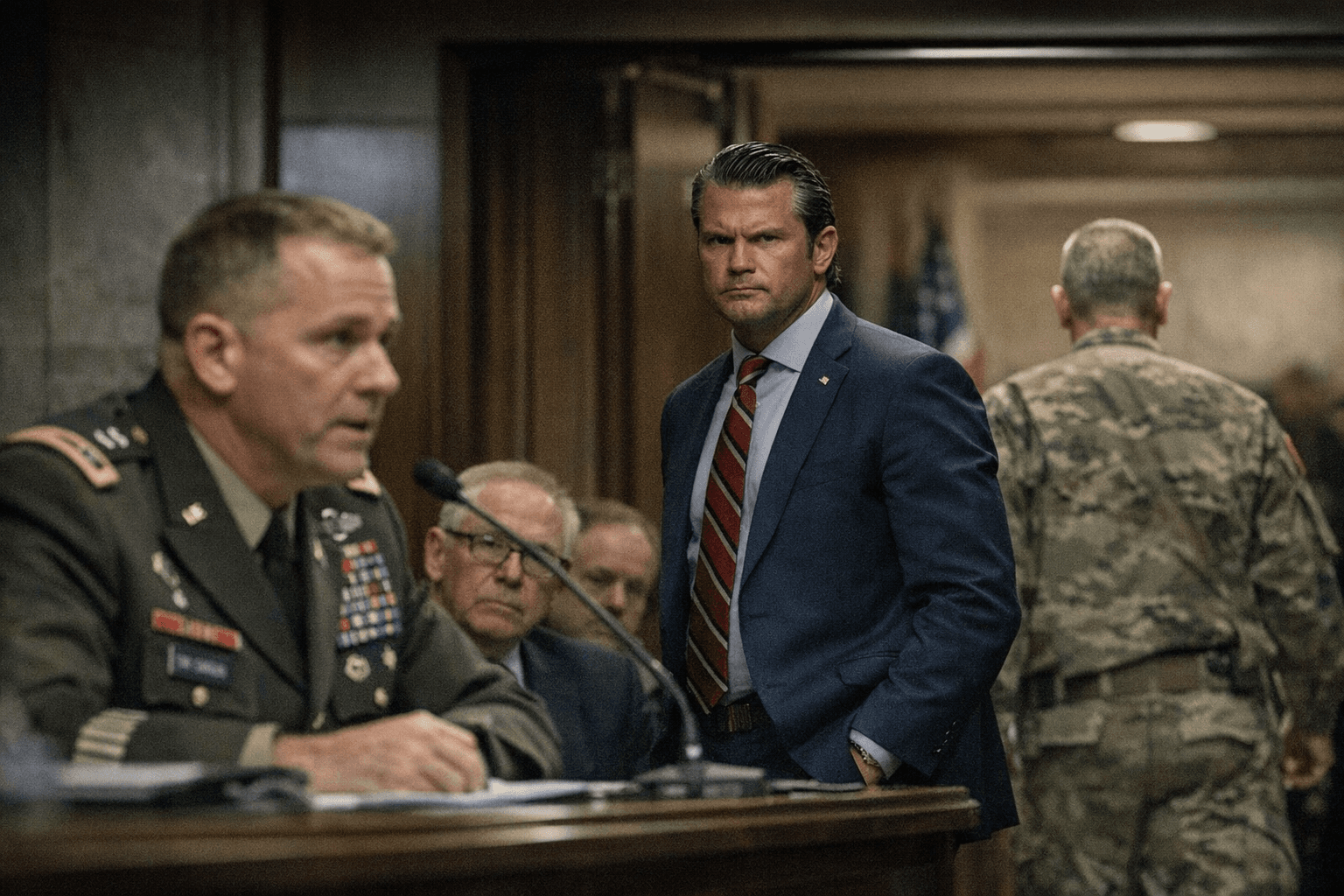
Republican unease over Pete Hegseth’s sudden removal of Army Chief of Staff Gen. Randy George spilled into public view Thursday as Dan Driscoll, the Army’s top political appointee, defended the civilian leadership’s power to pick military leaders while trying to contain the fallout from the Pentagon’s latest purge.
At a House Defense Appropriations hearing on the Army’s budget request in Washington, Driscoll faced questions from lawmakers in both parties about George’s forced retirement. Driscoll praised George as an “amazing, transformational leader” and said he had visited George at home after the firing. He also drew a firm line around civilian control of the military, saying, “The civilian leadership, the design of our system is that they get to pick the leaders that they want,” and “we execute on those orders.”
The questions reflected how jarring George’s removal has been inside the Army. Hegseth asked him to step down in early April and retire immediately, despite George having been expected to serve until October 2027 after becoming chief of staff in fall 2023. The Pentagon has not publicly explained why he was pushed out.
The backlash has been especially noticeable among Republicans. House Appropriations Chair Tom Cole of Oklahoma called George a “great patriot” and said his departure was a “real loss” for the military. Rep. Steve Womack of Arkansas also said he regretted the conditions under which George left. The criticism from both men signaled that Hegseth’s personnel moves are not being absorbed quietly on Capitol Hill, even among members usually aligned with the administration.
George’s exit is part of a broader turnover campaign under Hegseth. Since he became defense secretary in January 2025, more than a dozen generals and admirals have been pushed out or retired early, including the chairman of the Joint Chiefs of Staff, the chief of naval operations and the Air Force vice chief of staff. Christopher LaNeve, who had been Hegseth’s senior military aide, is now serving as acting Army chief of staff after previously replacing Gen. James Mingus as vice chief of staff, a post Mingus held for fewer than two years despite the role’s traditional four-year term.
The fight also cuts into the Army’s modernization push. George had been a central figure in the Army Transformation Initiative and efforts to speed a new main battle tank by about five years. His removal, combined with the unusual number of top-level departures, has intensified concerns that the service’s leadership bench is being reshaped from the top down while the Army is still trying to execute a major reform agenda.
This article was produced by Prism’s automated news system from verified source data, official records, and press releases, then run through automated quality and moderation checks before publishing. The system is built and supervised by the people who set the standards it runs under. Read our full AI policy.
Did this article answer your question?

