Artemis II Astronauts Will Dine on Beef Stew and Cherry Cobbler Near the Moon
Beef stew, cherry cobbler and 58 tortillas are among 189 shelf-stable items packed for four astronauts orbiting the moon on NASA's 10-day Artemis II mission.
Three days into their 10-day journey around the moon, the crew of NASA's Artemis II mission is approaching one of the most extraordinary dining settings in human history. Commander Reid Wiseman, pilot Victor Glover, mission specialist Christina Koch, and Canadian Space Agency astronaut Jeremy Hansen are set to swing past the lunar surface on Monday, April 6, and when they do, lunch options will include beef stew, roast turkey, and cherry cobbler.
The full Artemis II menu, developed by NASA food scientists in coordination with the crew, spans 189 shelf-stable items selected for nutrition, safety, and ease of use in microgravity. Standouts include barbecued beef brisket, macaroni and cheese, vegetable quiche, couscous with nuts, mango salad, granola with blueberries, broccoli au gratin, and tropical fruit salad. For dessert beyond cherry cobbler, the crew can choose from pudding, cookies, chocolate, cake, and candy-coated almonds. Five different hot sauces made the manifest, along with maple syrup, honey, peanut butter, almond butter, strawberry jam, chocolate spread, spicy mustard, and cinnamon. Exactly 58 tortillas were loaded before liftoff, chosen specifically because they minimize crumbs that could drift into spacecraft systems in zero gravity.
The Orion spacecraft carries no refrigerator and no means of resupply, which meant every item had to be packed in advance and remain stable for the full duration of the flight. Each crew member's meals are packaged into a single container covering two to three days of eating at a time. Certain freeze-dried items require rehydration using Orion's onboard potable water dispenser, while a compact briefcase-style food warmer handles heating. The water dispenser is not available during all phases of flight, so foods designated for launch and re-entry must be ready-to-eat without preparation.
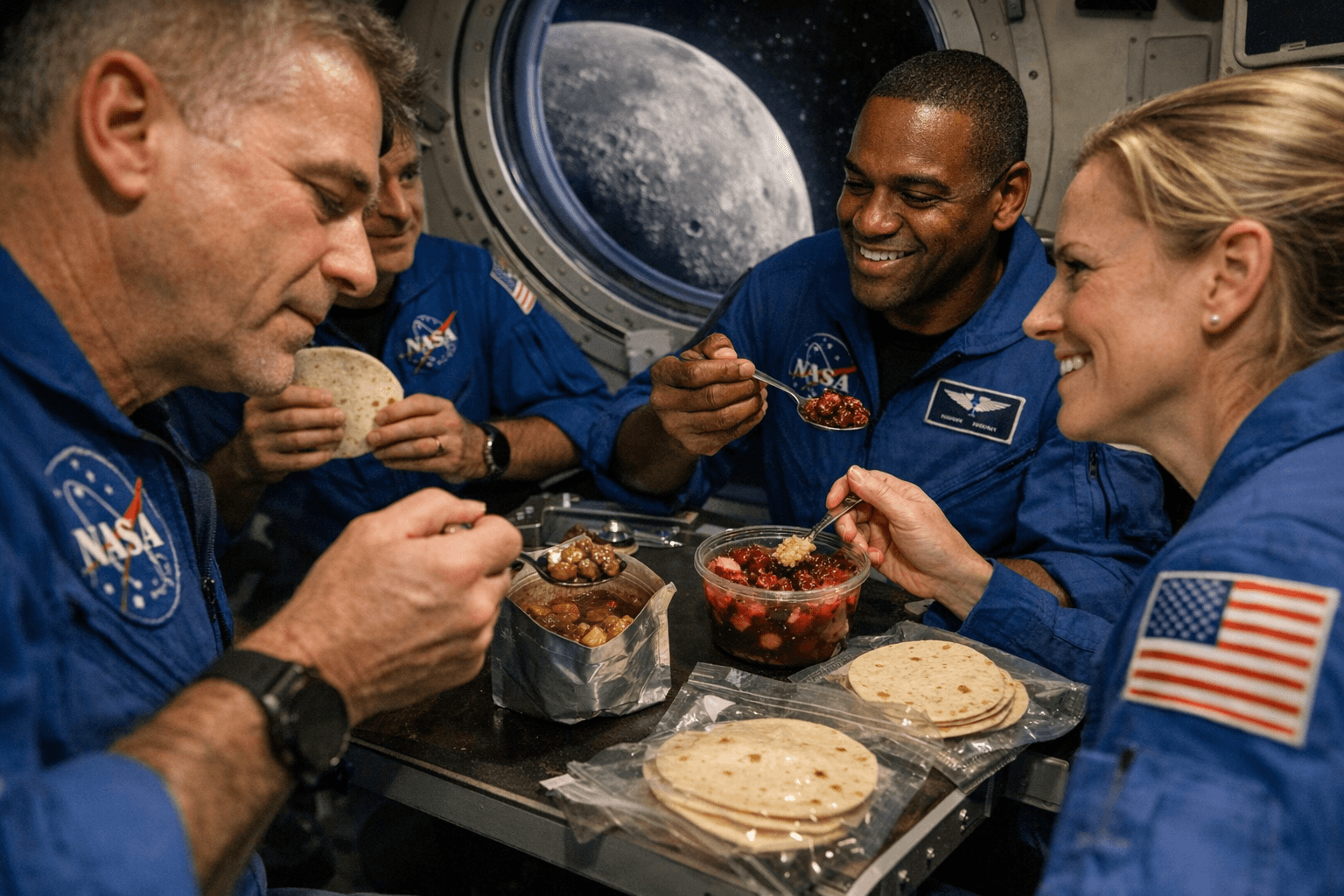
Wiseman, Glover, Koch, and Hansen sampled and rated items from NASA's standard menu during preflight testing, with their preferences balanced against caloric requirements and the spacecraft's tight constraints on mass, volume, and power. The result is a menu that leans into comfort: beef stew and roast turkey carry the kind of caloric density and familiarity that NASA nutrition teams have long favored for high-stress spaceflight environments.
The mission, which lifted off from Kennedy Space Center in Florida on April 1, will carry the four astronauts approximately 230,000 miles from Earth, farther than any human has traveled since the Apollo program. Their six-hour lunar observation window on Monday, April 6, will give them their closest views of the moon's surface while the Orion spacecraft loops around and begins its journey back. Whatever is on the menu that day, it will be consumed with a view that very few humans have ever seen.
This article was produced by Prism’s automated news system from verified source data, official records, and press releases, then run through automated quality and moderation checks before publishing. The system is built and supervised by the people who set the standards it runs under. Read our full AI policy.
Did this article answer your question?