Artemis II Crew Begins Intense 24-Hour Systems Check Before Heading to Moon
Reid Wiseman called it a 'crazy first day' as Artemis II's crew spent 24 hours testing Orion's life support, including a toilet malfunction, before heading moonward.
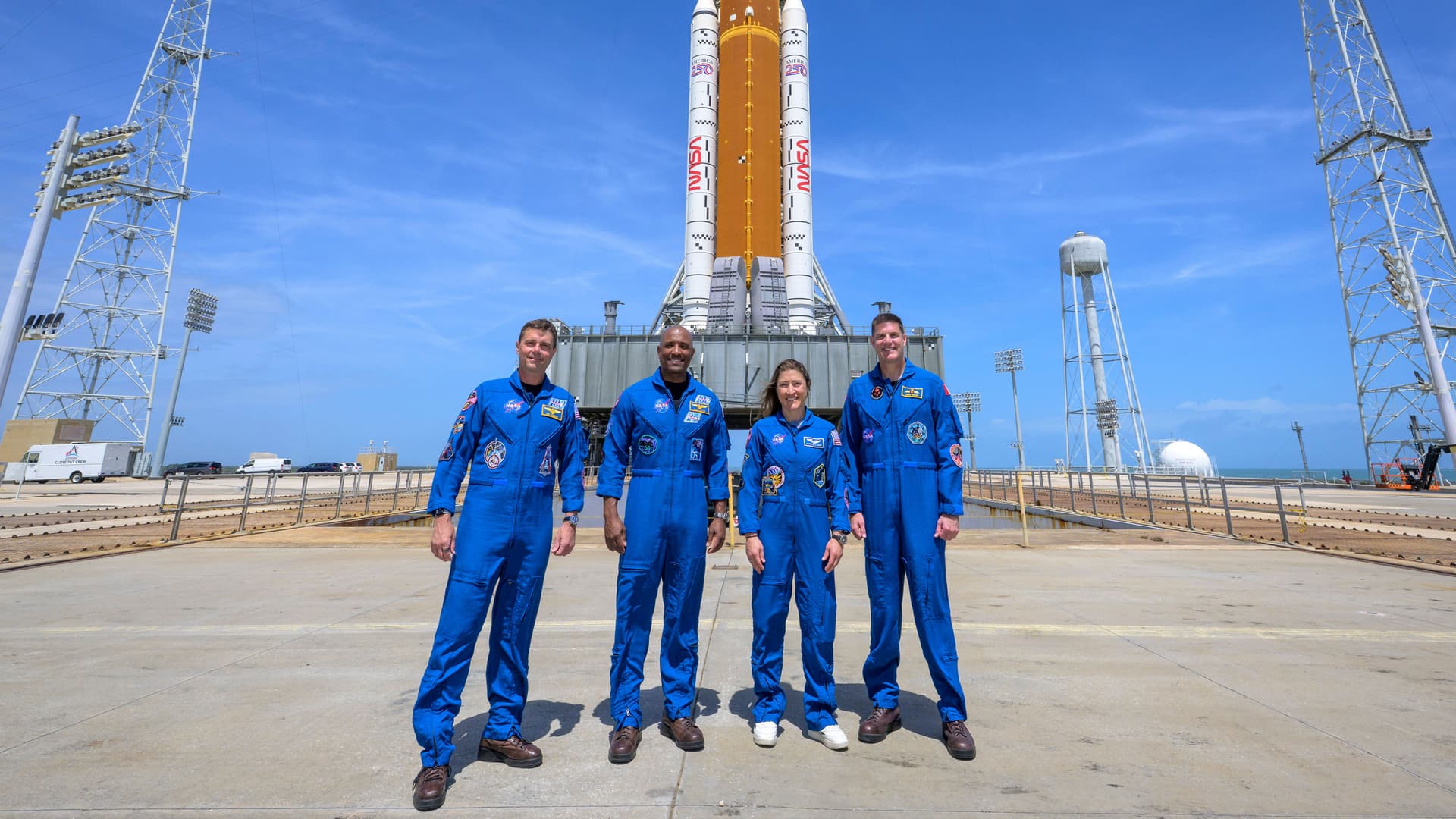
Before Artemis II's crew could set their sights on the Moon, they had to prove their spacecraft could handle something far more basic: keeping them alive.
Commander Reid Wiseman called the opening stretch of the mission a "crazy first day" and "24 hours of intense work," an Earth-orbit shakedown designed to stress-test every system aboard Orion before the crew commits to the four-day journey to the Moon. The capsule, which the crew named "Integrity," lifted off from Launch Pad 39B at Kennedy Space Center at 6:35 p.m. EDT on April 1, marking the first crewed lunar mission in over 50 years.
Wiseman laid out the logic plainly: "That one 24-hour orbit gives us time to check out all of [Orion's] environmental control, life support systems. Can it scrub our carbon dioxide? Can it keep us alive? Can we drink water? Can we go to the bathroom? All those basic human functions. We've got to go get those things tested before we press out to the moon."
The checklist is not ceremonial. NASA structured the 24-hour orbital phase specifically to create a decision gate: if critical systems fail, the crew remains close enough to Earth for a rapid return. Once the Translunar Injection burn fires, a roughly six-minute engine firing from Orion's European Service Module scheduled for April 2, that window closes.
Day one also revealed how quickly a manageable problem can surface. Mission specialist Christina Koch reported a toilet malfunction shortly after reaching orbit, prompting a flight controller in Houston to radio back: "Christina, with the toilet, the fault that you reported, the toilet cannot spin up." The issue underscored why the checkout phase exists: to surface exactly these contingencies while the crew can still do something about them.
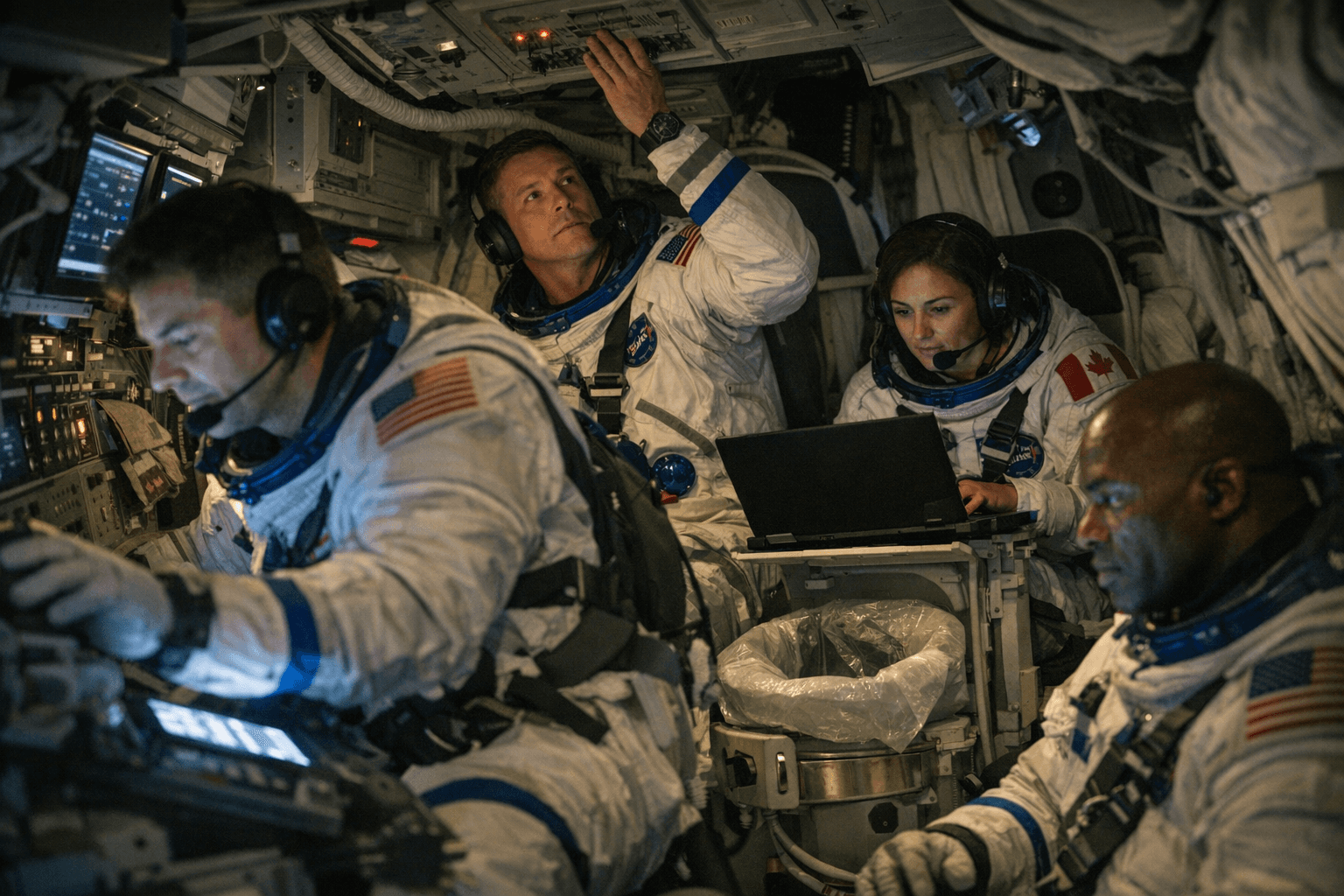
Pilot Victor Glover added to the workload with proximity operations, testing Orion's maneuverability while flying in formation with the SLS upper stage, a handling validation required before deep-space transit. NASA Administrator Jared Isaacman confirmed the crew was "safe, secure, and in great spirits" following the Day 1 work.
The crew carries historic weight. Koch becomes the first woman to fly to the Moon's vicinity. Jeremy Hansen of the Canadian Space Agency becomes the first Canadian to make the journey. The mission timeline builds quickly from here. The TLI burn on April 2 sets Orion on a free-return trajectory around the Moon. On April 6, the capsule will pass within approximately 4,100 miles of the lunar surface, with the crew spending roughly 40 minutes out of contact with Mission Control at Johnson Space Center while crossing the far side. At maximum distance, Orion will reach approximately 252,800 miles from Earth, surpassing the human spaceflight record set by Apollo 13 in 1970 at 248,655 miles. Splashdown is targeted for April 10 in the Pacific Ocean off Southern California.
Artemis II is a 10-day test flight; the crew will not land on the Moon. The mission builds on the uncrewed Artemis I in November 2022 and overcame a series of technical setbacks that pushed the launch from a February 2026 target, including a liquid hydrogen leak, a valve issue, and a helium flow problem that forced a Vehicle Assembly Building rollback on February 25.
This article was produced by Prism’s automated news system from verified source data, official records, and press releases, then run through automated quality and moderation checks before publishing. The system is built and supervised by the people who set the standards it runs under. Read our full AI policy.
Did this article answer your question?