Artemis II crew captures stunning Earthset behind the Moon
Artemis II’s crew filmed Earthset from behind the Moon, a record-setting view that ties NASA’s lunar return to the Apollo 8 era.
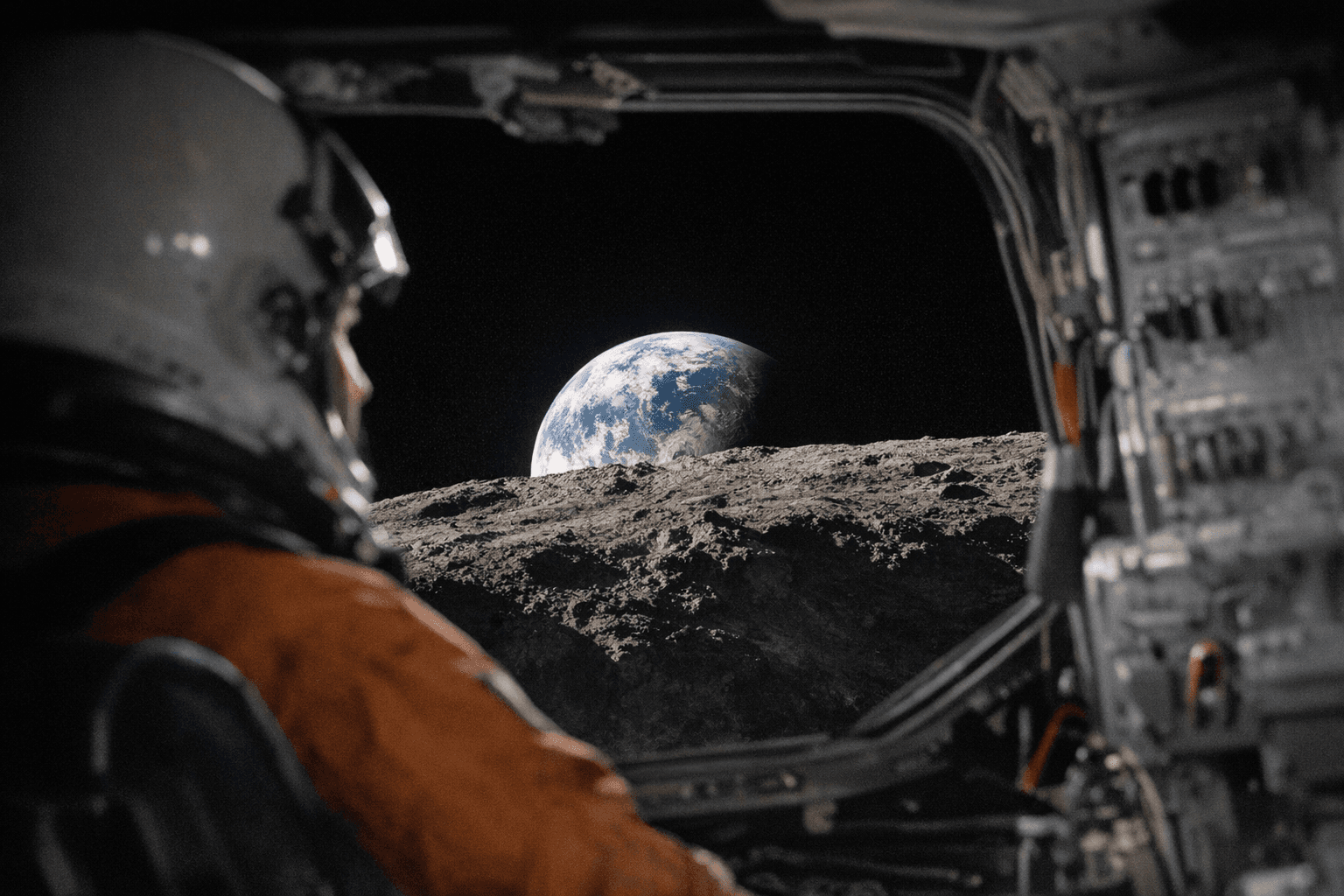
Earth slipped below the Moon’s horizon in a frame that instantly linked Artemis II to Apollo’s most enduring images. At 6:41 p.m. EDT on April 6, 2026, Mission Commander Reid Wiseman filmed the view from Orion as the spacecraft flew around the Moon’s far side, while Christina Koch photographed it through a 400mm lens and Victor Glover and Jeremy Hansen looked on from adjacent windows.
The image, which NASA has described as “Earthset,” came during Artemis II’s roughly 10-day journey and marked the first crewed lunar mission since Apollo 17 in 1972. The flight launched April 1, 2026, from Launch Complex 39B at Kennedy Space Center in Florida, beginning NASA’s first crewed flight test of the Space Launch System rocket and Orion spacecraft around the Moon. The mission’s purpose is larger than the photograph: verify systems for future deep-space exploration and clear the way for lunar surface missions.
While Earth receded behind the Moon, the crew also studied the lunar landscape in detail. NASA said the astronauts used the flyby to photograph impact craters, ancient lava flows, and surface cracks and ridges, noting differences in color, brightness and texture that can help scientists better understand the Moon’s composition and history. The seven-hour pass around the Moon’s near and far sides gave the crew a close look at terrain that has not been viewed by astronauts in more than half a century.
Artemis II also pushed human spaceflight farther from home than any mission before it. NASA said the crew reached 252,756 miles from Earth, a record for human spaceflight that surpassed Apollo 13. The spacecraft splashed down April 10, 2026, at 5:07 p.m. PDT in the Pacific Ocean off the coast of San Diego, ending a journey that was as operationally important as it was visually striking.
Wiseman later said the scene was “like watching sunset at the beach from the most foreign seat in the cosmos,” a line that captures both the intimacy and the scale of the moment. The Earthset image also carries a deliberate echo of Apollo 8’s Earthrise, taken 58 years earlier by Bill Anders, when the first crewed spacecraft to circumnavigate the Moon helped reshape how people saw Earth. Artemis II’s photograph does the same for a new era, turning a technical test flight into a visual marker for the next phase of U.S. space exploration.
This article was produced by Prism’s automated news system from verified source data, official records, and press releases, then run through automated quality and moderation checks before publishing. The system is built and supervised by the people who set the standards it runs under. Read our full AI policy.
Did this article answer your question?

