Artemis II Crew Captures Stunning Photos During Lunar Journey
Artemis II commander Reid Wiseman's Earth photos show auroras and zodiacal light, but the crew's unglamorous daily routine of flywheel workouts and zero-g CPR drills is the real story.
Three days into humanity's first crewed lunar voyage in more than half a century, Commander Reid Wiseman pressed his face to one of the Orion spacecraft's windows and shot a photograph that stopped the entire crew cold. The image, captured shortly after the translunar injection burn on April 2 and downlinked to Earth on April 3, shows the full globe glowing against the black of space, twin auroras visible at the top right and bottom left, with zodiacal light shining as Earth passed in front of the sun.
"You could see the entire globe from pole to pole," Wiseman said. "You could see Africa, Europe, and if you looked really close, you could see the northern lights. It was the most spectacular moment and it paused all four of us in our tracks."
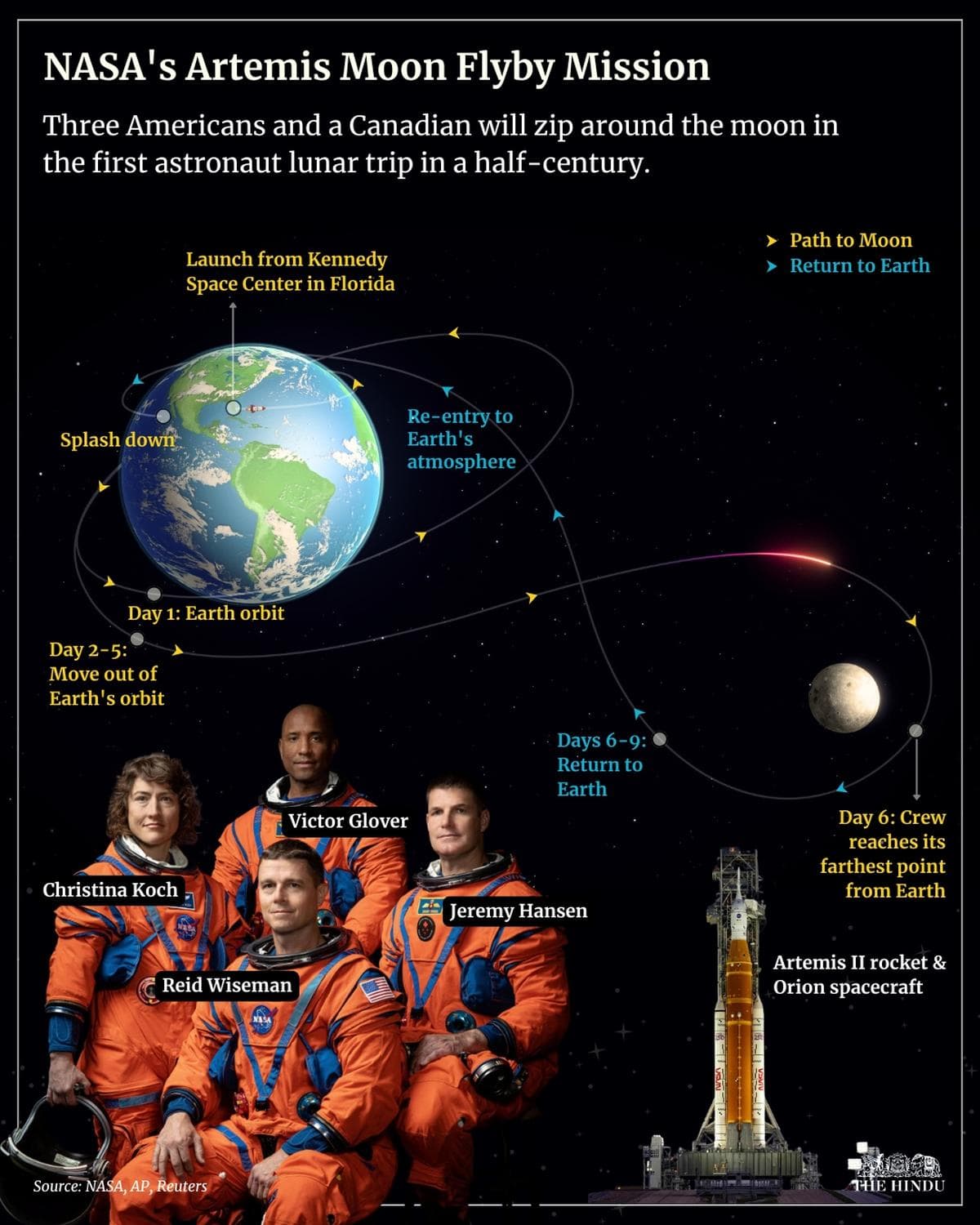
But the photographs, arresting as they are, represent only the most visible layer of what NASA is methodically learning during this 685,000-mile, 10-day mission. The Artemis II crew lifted off April 1 at 6:35 p.m. ET from Kennedy Space Center in Florida, and will fly a lunar flyby trajectory around the moon. The four-person crew, comprising Wiseman, pilot Victor Glover, mission specialist Christina Koch, and Canadian Space Agency astronaut Jeremy Hansen, has spent the coasting days between Earth and the moon running a continuous and unglamorous stress test of deep-space living.
The day begins with exercise. On flight day 2, Wiseman and Glover set up and checked out Orion's flywheel exercise device and began the first workout session of the mission, while Koch and Hansen had exercise scheduled later. The flywheel uses a cable-based mechanism that supports both aerobic exercises like rowing and resistive movements such as squats and deadlifts. That is not scheduling filler: on a spacecraft making the first crewed deep-space trip in over half a century, ordinary physical load on crew members tests life support systems under real operational conditions.
The crew also conducted a CPR and choking-response demonstration to evaluate emergency medical procedures aboard the spacecraft, and continued regular exercise sessions using the flywheel device. Medical kit checkout and an emergency communications system test on the Deep Space Network rounded out the daily schedule, each item generating data that will directly inform the design of longer Artemis surface stays and, eventually, the years-long transit to Mars.

Flight day 4 had 20 minutes specifically dedicated to taking photos of celestial bodies from Orion's windows, with the crew also spending an hour each reviewing the lunar geography targets they will be asked to photograph on flight day 6. That geographic preparation matters: since the specific targets vary depending on the crew's final launch time and day, the review sessions give the astronauts a precise picture of what they will be looking for as Orion draws close to the lunar surface.
Mission specialist Koch described the Earth views as emotional preparation for what lies ahead. "Having just experienced incredible views of planet Earth, and seeing the entire planet out the window in one pane, knowing that we're about to have some similar views of the moon in that same way is definitely getting me more excited for it," she said.
The crew will travel more than 4,000 miles above the far side of the moon, on a flight path that will take them farther into space than any humans before them. The lunar flyby is scheduled for Monday, April 6, with a roughly 40-minute communications blackout expected while the spacecraft passes behind the moon. The data gathered during the quiet days between launch and that moment will be among the most valuable the mission produces.
Sources:
Know something we missed? Have a correction or additional information?
Submit a Tip