Santa Ana Winds Drive Fast-Moving Brush Fires Across Southern California
Two brush fires ignited by Santa Ana winds forced evacuations across Riverside and LA counties Friday, threatening hundreds of structures as flames raced through dried grasslands.
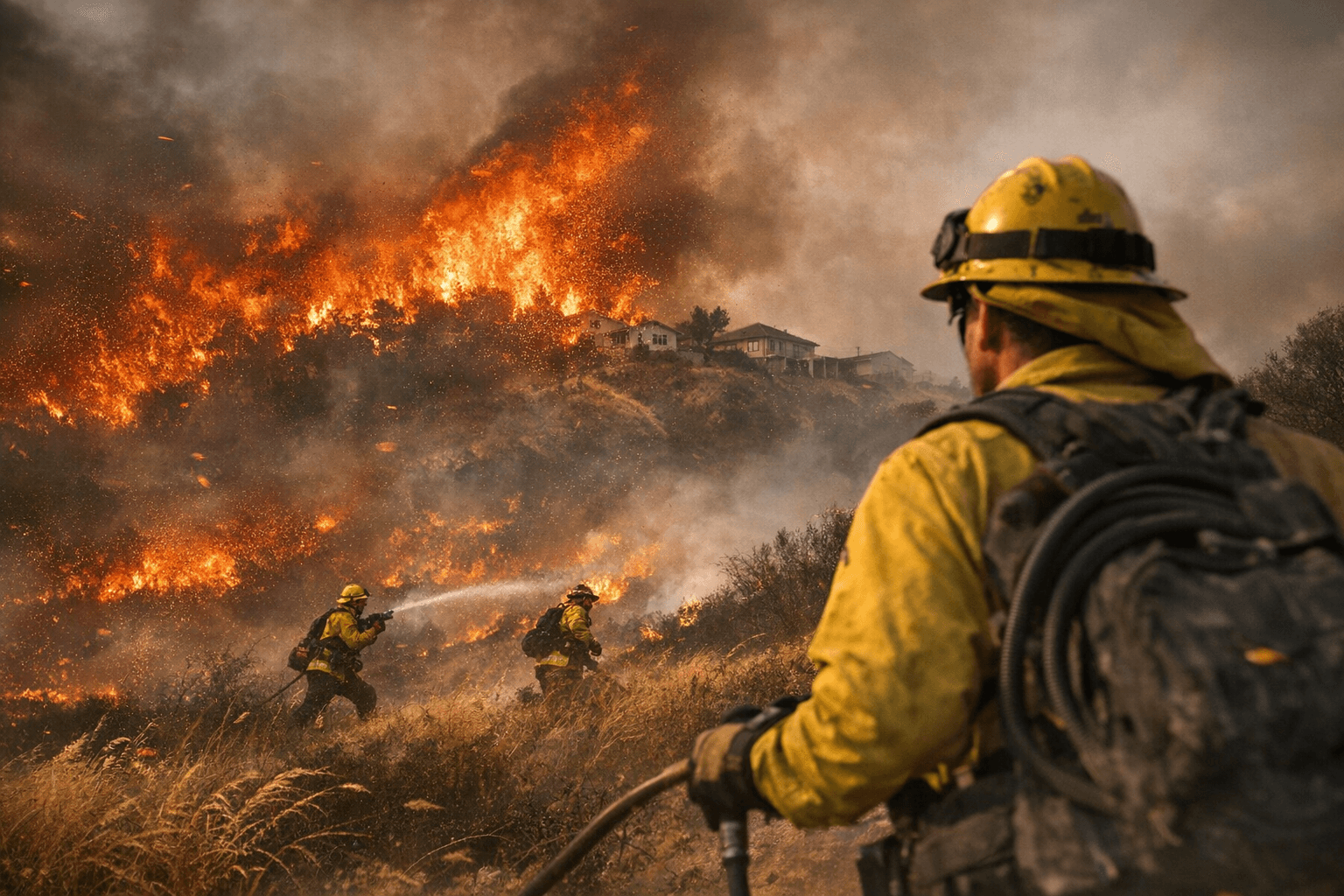
Two wind-driven brush fires erupted across Southern California Friday, forcing residents from their homes in Riverside and Los Angeles counties as gusty Santa Ana winds pushed flames rapidly through sun-dried brush and grass.
The Springs Fire, burning near Moreno Valley in Riverside County, ignited around late morning and spread quickly across brushy slopes. A second blaze, identified in emergency broadcasts as the Crown Fire, broke out near the Acton area in northern Los Angeles County. Within hours of the Springs Fire's ignition, the combined footprint of both incidents exceeded several hundred acres, threatening dozens to hundreds of structures in their projected paths.
Evacuation orders and warnings swept across residential neighborhoods, and motorists on affected highways were directed to turn back. County authorities established evacuation centers and pushed alerts through reverse-911 systems, social media and countywide emergency notification channels. A county official, in broadcast comments relayed by local outlets, urged immediate compliance: "We are asking residents to evacuate now when ordered, and to stay out of harm's way while our crews do the dangerous work of protecting lives and property."
Cal Fire and county fire agencies mounted aggressive mutual-aid responses, deploying engine companies, hand crews and aerial resources for water and retardant drops wherever gusts permitted. Fire officials pointed to a particularly dangerous combination fueling both blazes: Santa Ana winds, driven by a high-pressure system to the east that forces hot, dry air downhill through mountain passes, meeting an abundance of fine fuels that built up during an earlier wet season.
That winter rainfall encouraged rapid grass and brush growth across the region's wildland-urban interface zones. But the same vegetation dried out quickly once warm offshore winds arrived, creating what officials described as "flashy fuels": light grasses and brush that ignite easily and carry flame at speed across hillsides. Officials had warned repeatedly that such cycles, wet growth followed by rapid drying, produce some of the most hazardous fire conditions in the state.
Smoke plumes from both fires drifted into populated valleys downwind, prompting air quality advisories for residents with respiratory conditions and adding a public health dimension to an already strained emergency response.
As containment efforts continued Friday, investigators had not yet determined ignition sources for either fire. Past wind-driven fires in Southern California have been traced to downed power lines, vehicle sparks and human activity. Agencies will assess structure damage and potential mass care needs as conditions evolve over the next 24 to 72 hours, with residents in affected zip codes urged to monitor county emergency channels for updated orders throughout the weekend.
This article was produced by Prism’s automated news system from verified source data, official records, and press releases, then run through automated quality and moderation checks before publishing. The system is built and supervised by the people who set the standards it runs under. Read our full AI policy.
Did this article answer your question?

